
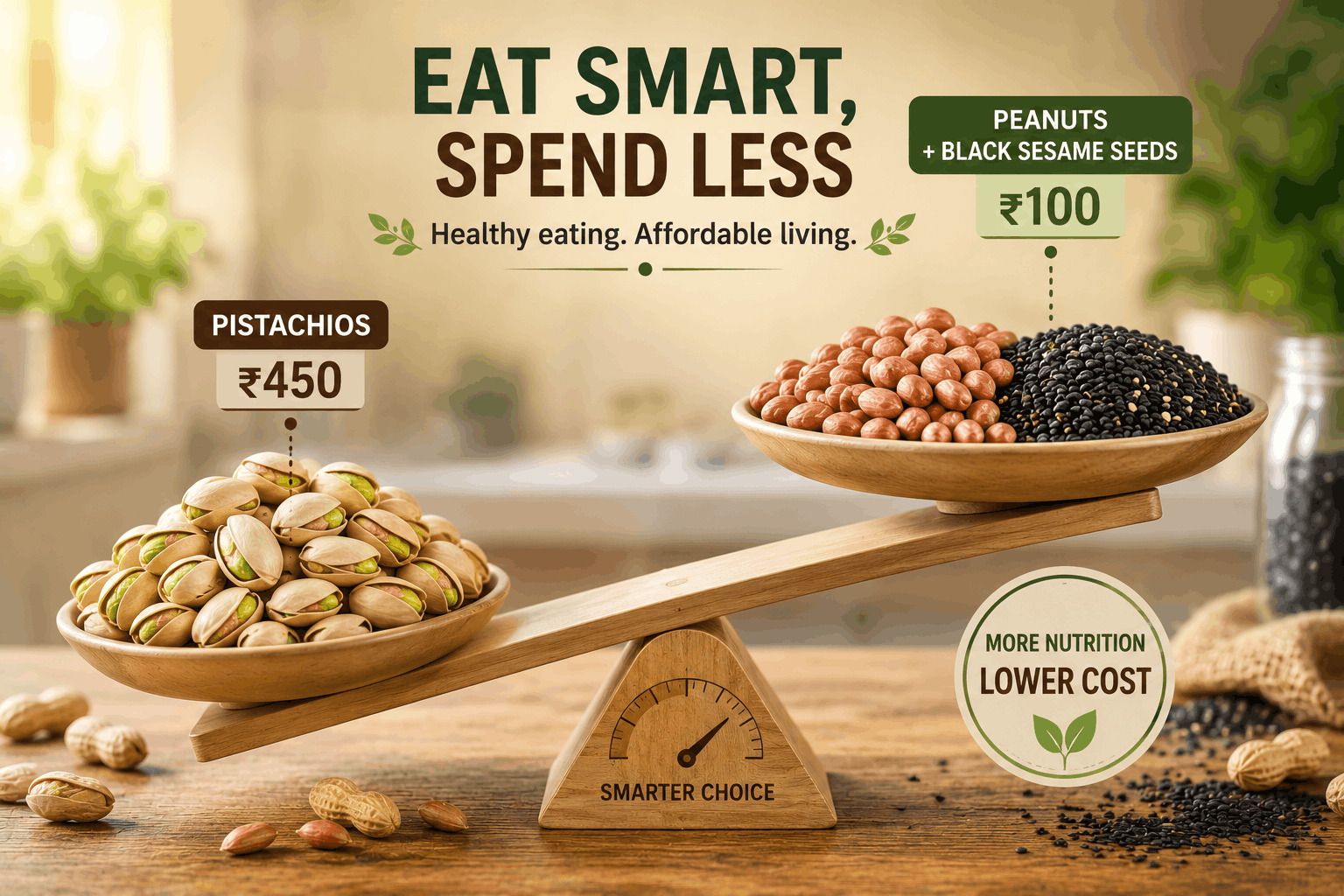

Eating Healthy Doesn’t Have to Be Expensive
Can’t afford pistachios? You’re not alone. Pistachios are known as one of the healthiest nuts, but their rising price means they’re not an everyday option for many people. The good news is that eating healthy doesn’t have to be expensive. If you’re looking for Affordable alternatives of pistachios, there are two affordable everyday foods that offer protein, healthy fats, antioxidants, and essential minerals for a fraction of the cost. They can help you maintain a nutritious diet, save money, and support your overall health without compromising on nutrition.
According to nutrition experts, a healthy diet is built on overall eating habits rather than a single “superfood.” While pistachios are highly nutritious, affordable foods such as peanuts and black sesame seeds also provide valuable protein, healthy unsaturated fats, fiber, vitamins, minerals, and antioxidants. Choosing nutrient-dense foods that fit your budget can make it easier to maintain healthy eating habits over the long term, which is more important than relying on expensive ingredients alone.
The 2 Best Affordable Alternatives to Pistachios
If you want to enjoy the nutritional benefits of nuts without spending a lot of money, these two everyday foods are excellent choices. They are widely available, easy to include in your diet, and together provide a balanced mix of protein, healthy fats, fiber, essential minerals, and antioxidants. While they don’t have the exact same nutrient profile as pistachios, they offer outstanding nutritional value for their price.
1. Peanuts (Groundnuts)
Peanuts are one of the most affordable protein-rich foods available. Although they are technically legumes, their nutritional profile is very similar to many tree nuts.
Health Benefits of Peanuts
- Rich in plant-based protein to help build and maintain muscles.
- Contain heart-healthy unsaturated fats.
- Good source of vitamin E, magnesium, niacin, and folate.
-
Contains antioxidants, including vitamin E and small amounts of resveratrol, which help protect cells from oxidative stress.
- Help keep you full for longer, which may reduce unnecessary snacking.
Best way to eat: Choose unsalted, dry-roasted, or boiled peanuts instead of heavily salted or fried varieties.
2. Black Sesame Seeds
Black sesame seeds may be tiny, but they’re packed with nutrients. They are especially rich in minerals that many people don’t get enough of.
Health Benefits of Black Sesame Seeds
- Excellent source of calcium for strong bones and teeth.
- Rich in iron, zinc, copper, and magnesium.
- Provide healthy fats that support heart health.
- Contain lignans such as sesamin and sesamol, antioxidant compounds that help protect cells from oxidative damage.
- Add fiber to support healthy digestion.
Best way to eat: Sprinkle them over oatmeal, yogurt, salads, vegetables, or mix them with roasted peanuts.
Nutritional Comparison (Per 100 g)
| Nutrient (per 100g) | Pistachios | Peanuts | Black Sesame |
|---|---|---|---|
| Protein | 20g | 26g | 18g |
| Fiber | 10g | 8.5g | 12g |
| Healthy Fat | 45g | 49g | 50g |
| Calcium | 105mg | 92mg | 975mg |
| Magnesium | 121mg | 168mg | 351mg |
Note: Nutrient values are approximate and may vary depending on the variety and processing method.
Why This Combination Works So Well
Instead of relying on one expensive food, combining peanuts and black sesame seeds gives you a wider variety of nutrients.
Peanuts and black sesame seeds complement each other nutritionally. While peanuts are rich in protein, healthy fats, vitamin E, and magnesium, black sesame seeds provide exceptional amounts of calcium, iron, zinc, and antioxidant lignans. Together, they create a balanced, nutrient-dense snack that’s both affordable and satisfying.
Peanuts + Black Sesame vs. Pistachios
| Nutrient | Peanuts + Black Sesame | Pistachios |
|---|---|---|
| Protein | ⭐⭐⭐⭐⭐ | ⭐⭐⭐⭐ |
| Healthy Fats | ⭐⭐⭐⭐⭐ | ⭐⭐⭐⭐⭐ |
| Calcium | ⭐⭐⭐⭐⭐ | ⭐⭐ |
| Magnesium | ⭐⭐⭐⭐⭐ | ⭐⭐⭐⭐ |
| Iron | ⭐⭐⭐⭐ | ⭐⭐⭐ |
| Antioxidants | ⭐⭐⭐⭐ | ⭐⭐⭐⭐⭐ |
| Cost | ✅ Much Lower | ❌ Expensive |
While pistachios contain a broader range of antioxidant compounds, peanuts and black sesame seeds provide excellent nutrition at a significantly lower cost.
How Much Should You Eat?
For most healthy adults, a simple serving is:
- 30 grams (one handful) of peanuts
- 1 tablespoon (10–15 grams) of black sesame seeds
You can enjoy them as a snack or add them to breakfast, salads, smoothies, or homemade energy balls.
Easy Peanut and Black Sesame Snack
Ingredients: 30g roasted peanuts, 1 tablespoon black sesame seeds, 1 teaspoon honey (optional)
Mix everything together and enjoy as a healthy snack. You can also sprinkle the mixture over oatmeal, yogurt, smoothies, or fruit for extra nutrition.
Best Time to Eat Peanuts and Black Sesame
You can enjoy this combination as:
- With breakfast
- As a mid-morning snack
- As an evening snack
- Before a workout for lasting energy
Avoid eating large quantities late at night if you’re trying to reduce calorie intake.
Who Should Be Careful?
Although these foods are healthy for most people, they may not be suitable for everyone.
Avoid or limit them if you:
- Have a peanut or sesame allergy.
- Need to follow a calorie-controlled diet without adjusting portion sizes.
- Have been advised by your doctor to avoid seeds or nuts for a specific medical reason.
If you have a medical condition or dietary restrictions, consult a qualified healthcare professional before making major changes to your diet.
Conclusion
You don’t have to spend a fortune to eat healthy. While pistachios are an excellent source of nutrients, peanuts and black sesame seeds prove that affordable foods can also be packed with protein, healthy fats, minerals, and antioxidants. By making this simple swap, you can nourish your body, save money, and build healthy eating habits that last.
Healthy eating isn’t about buying the most expensive foods—it’s about choosing nutritious foods you can enjoy consistently. By making simple, budget-friendly swaps, you can support your overall health while keeping your grocery bill under control.
FAQs
1. What are the best cheap alternatives to pistachios?
Peanuts and black sesame seeds are two affordable alternatives that provide protein, healthy fats, antioxidants, and essential minerals at a much lower cost than pistachios.
2. Is eating peanuts every day healthy?
Yes, for most people, eating a moderate amount of unsalted peanuts daily can be part of a healthy diet. They are rich in protein, healthy fats, fiber, and important vitamins and minerals.
3. What are the health benefits of black sesame seeds?
Black sesame seeds are rich in calcium, iron, magnesium, zinc, healthy fats, and antioxidants that support bone health, heart health, and overall wellness.
4. Can peanuts and black sesame seeds replace pistachios?
They can be a nutritious and budget-friendly alternative, but they are not identical. Pistachios contain some nutrients and antioxidants in different amounts, while peanuts and black sesame seeds provide their own unique nutritional benefits.
5. How much peanuts and black sesame should I eat daily?
A healthy serving for most adults is about 30 grams of unsalted peanuts and 1 tablespoon (10–15 grams) of black sesame seeds as part of a balanced diet.
Sources
- U.S. Department of Agriculture (USDA) FoodData Central (nutrient composition)
- World Health Organization (WHO) – Healthy diet guidance
- American Heart Association – Healthy dietary fats
Disclaimer: This article is for informational purposes only and is not intended as medical advice. Consult a healthcare professional for personalized guidance.