

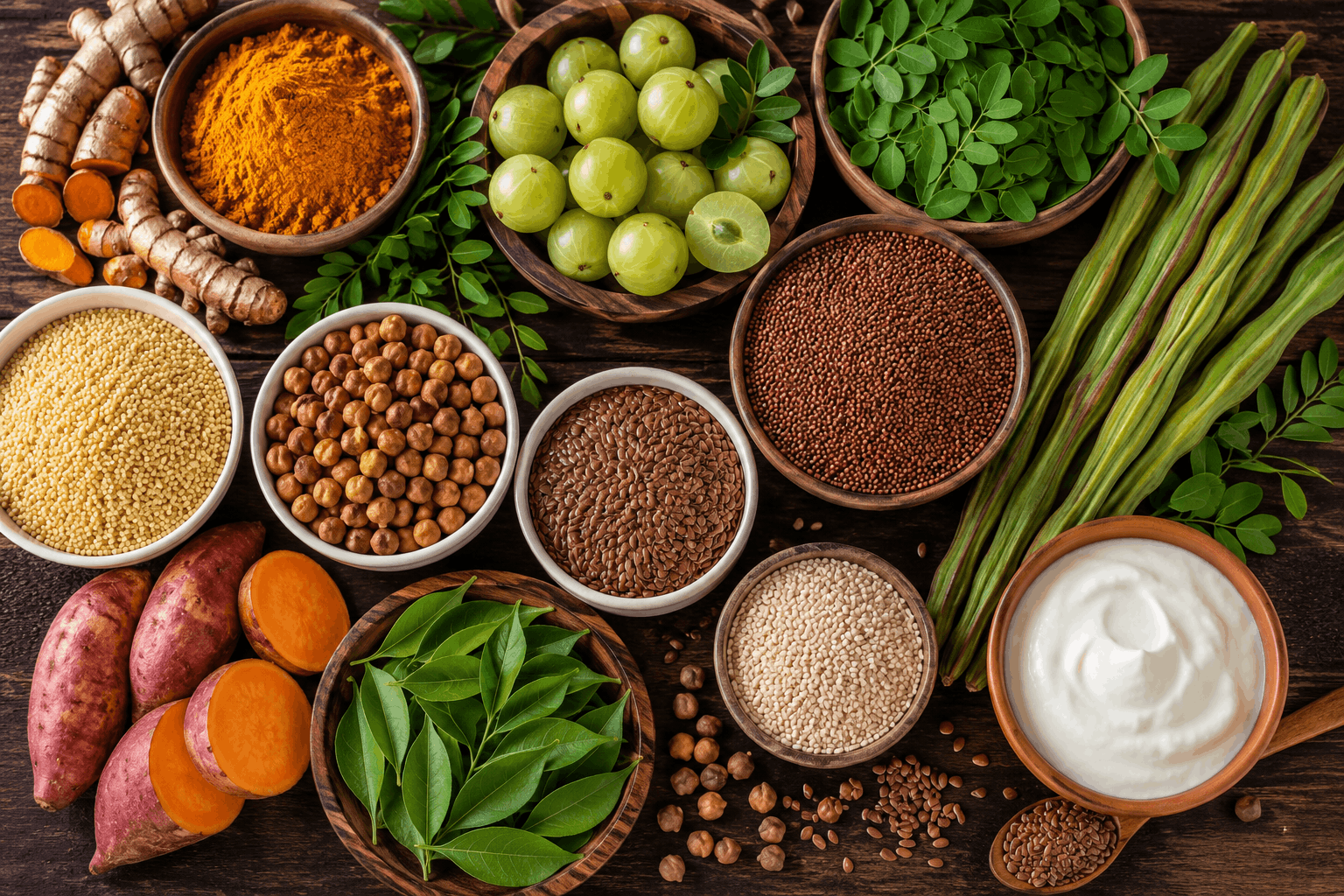

Many healthy foods found in Indian kitchens are packed with vitamins, minerals, fiber, and antioxidants. These Indian superfoods are affordable, easy to include in your meals, and can support a healthy lifestyle. From turmeric and amla to ragi and moringa, these nutrient-rich foods have been part of traditional Indian diets for generations.
According to the World Health Organization (WHO), eating a variety of nutritious foods is essential for good health. In this article, you’ll discover 12 Indian superfoods you should start eating every week, their key health benefits, and simple ways to add them to your daily diet.
Why Should You Eat Indian Superfoods?
Indian superfoods are more than just healthy ingredients—they’re foods that have been part of traditional diets for generations. Many are naturally rich in fiber, vitamins, minerals, healthy fats, or plant compounds that contribute to a balanced diet. Eating a variety of these foods instead of relying on a single ingredient can help you meet your nutritional needs more effectively.
12 Indian Superfoods You Should Eat Every Week
1. Turmeric (Haldi)
Turmeric (Haldi) is one of the most popular Indian superfoods and a staple spice in Indian kitchens. Rich in curcumin, it contains natural antioxidant and anti-inflammatory compounds. Adding turmeric to your regular meals is an easy way to enjoy its nutritional benefits as part of a balanced diet.
How to consume: Add turmeric to dals, curries, vegetables, soups, or warm milk. Pair it with a pinch of black pepper to help improve curcumin absorption.
2. Amla (Indian Gooseberry)
Amla is one of the most nutritious Indian superfoods and one of the richest natural sources of vitamin C. It also provides antioxidants, fiber, and several plant compounds that support overall health. Regularly eating amla is a simple way to add more nutrients to your diet while enjoying its refreshing tangy flavor.
How to consume: Eat fresh amla, drink unsweetened amla juice, or add it to chutneys, pickles, smoothies, or homemade murabba.
3. Moringa Leaves
Moringa leaves are a nutrient-rich Indian superfood packed with vitamins A and C, calcium, iron, and plant protein. Often called the “miracle tree,” moringa has been used in Indian households for generations. Including it in your meals is an easy way to increase your intake of essential nutrients.
How to consume: Add fresh moringa leaves to dal, soups, vegetable stir-fries, parathas, or prepare a warm cup of moringa tea.
4. Ragi (Finger Millet)
Ragi is a traditional whole grain that’s naturally rich in calcium, iron, fiber, and complex carbohydrates. This wholesome Indian superfood keeps you feeling full for longer and is a healthier alternative to many refined grains. It’s suitable for people of all ages.
How to consume: Prepare ragi porridge, rotis, dosa, idli, malt drinks, or healthy homemade snacks.
5. Millets
Millets are ancient grains that have become popular again because they’re naturally rich in fiber, protein, vitamins, and minerals. They’re also gluten-free and make a nutritious replacement for refined grains in everyday meals.
How to consume: Replace white rice with millet, or prepare millet khichdi, pulao, upma, rotis, or breakfast porridge.
6. Flaxseeds
Flaxseeds are tiny seeds packed with omega-3 fatty acids, fiber, protein, and antioxidants. Despite their small size, they provide impressive nutrition and are easy to include in your daily diet. They also add a mild nutty flavor to many dishes.
How to consume: Sprinkle ground flaxseeds over yogurt, oatmeal, salads, smoothies, or mix them into homemade chapati dough.
7. Sesame Seeds (Til)
Sesame seeds are rich in calcium, healthy fats, protein, iron, and antioxidants. They have been used in Indian cooking for centuries and are a simple way to improve the nutritional value of your meals.
How to consume: Add sesame seeds to chutneys, salads, vegetable dishes, laddoos, rotis, or sprinkle them over stir-fried vegetables.
8. Curry Leaves
Curry leaves are much more than a flavorful garnish. They contain antioxidants, iron, calcium, and several beneficial plant compounds that make them a nutritious addition to traditional Indian meals.
How to consume: Add fresh curry leaves to dals, curries, rice dishes, chutneys, or brew them into herbal tea.
9. Sweet Potato
Sweet potatoes are naturally rich in fiber, vitamin A, vitamin C, and potassium. Their natural sweetness and high nutrient content make them a healthier alternative to regular potatoes in many recipes.
How to consume: Bake, boil, roast, steam, or mash sweet potatoes for a healthy snack or side dish.
10. Chickpeas (Kala Chana)
Kala chana is a protein-rich legume loaded with fiber, iron, and complex carbohydrates. It’s filling, nutritious, and widely enjoyed across India, making it an excellent addition to a balanced weekly diet.
How to consume: Enjoy boiled kala chana, prepare chana curry, add it to salads, or make healthy roasted chana snacks.
11. Curd (Yogurt)
Curd is a popular dairy food that provides protein, calcium, and beneficial bacteria. It’s refreshing, easy to digest for many people, and pairs well with a variety of Indian meals.
How to consume: Eat plain curd with lunch or dinner, prepare raita, blend it into smoothies, or enjoy it with fresh fruits.
12. Drumsticks
Drumsticks are rich in vitamin C, fiber, potassium, and several essential nutrients. They’re commonly used in Indian cooking and add both nutrition and flavor to curries, soups, and sambar.
How to consume: Cook drumsticks in sambar, curries, soups, or vegetable stews, then scoop out and eat the soft inner pulp.
Indian Superfoods Nutrition Comparison Chart
| Indian Superfood | Key Nutrient | Main Benefit |
|---|---|---|
| Turmeric (Haldi) | Curcumin | Rich in natural antioxidants |
| Amla | Vitamin C | Supports immune health |
| Moringa Leaves | Vitamins A & C, Iron | Nutrient-rich leafy green |
| Ragi | Calcium, Fiber | Supports bone health |
| Millets | Fiber, Protein | Promotes digestive health |
| Flaxseeds | Omega-3, Fiber | Supports heart health |
| Sesame Seeds | Calcium, Healthy Fats | Supports strong bones |
| Curry Leaves | Iron, Antioxidants | Rich in plant nutrients |
| Sweet Potato | Vitamin A, Fiber | Supports eye and digestive health |
| Chickpeas (Kala Chana) | Protein, Fiber | Keeps you full for longer |
| Curd (Yogurt) | Protein, Calcium | Supports gut and bone health |
| Drumsticks | Vitamin C, Potassium | Nutrient-rich vegetable |
Note: The nutrient content of foods may vary depending on the variety, growing conditions, and cooking method.
How to Add These Indian Superfoods to Your Weekly Diet
- Start your day with ragi by making porridge, dosa, or rotis for a nutritious breakfast.
- Add turmeric to curries, dals, soups, and vegetable dishes for extra flavor and nutrition.
- Sprinkle ground flaxseeds over yogurt, oatmeal, salads, or smoothies.
- Enjoy fresh amla as a snack or drink unsweetened amla juice.
- Include moringa leaves in dal, soups, stir-fries, or parathas.
- Replace white rice with millets once or twice a week for a healthier meal.
- Snack on roasted kala chana instead of processed snacks.
- Eat a bowl of plain curd with lunch or dinner, or prepare a healthy raita.
- Add sesame seeds to salads, chutneys, rotis, or vegetable dishes.
- Cook drumsticks in sambar, curries, or soups for added nutrition.
Tip: Instead of relying on just one superfood, try including a variety of these nutrient-rich foods in your weekly diet to enjoy a wider range of vitamins, minerals, fiber, and antioxidants.
Conclusion
Adding Indian superfoods to your weekly diet is a simple way to enjoy more vitamins, minerals, fiber, and antioxidants. Instead of relying on a single food, eat a variety of these nutrient-rich foods as part of a balanced diet to support your overall health and well-being.
FAQs
1. What are Indian superfoods?
Indian superfoods are nutrient-rich foods that provide vitamins, minerals, fiber, and antioxidants to support a healthy diet.
2. Which Indian superfood is the healthiest?
There isn’t one healthiest superfood. Eating a variety of foods like turmeric, amla, ragi, and chickpeas gives your body different nutrients.
3. Can I eat Indian superfoods every day?
Yes. Most Indian superfoods can be enjoyed daily as part of a balanced and healthy diet.
4. Are Indian superfoods good for weight management?
Many Indian superfoods are rich in fiber and protein, which can help you feel full for longer when included in a balanced diet.
5. How can I add Indian superfoods to my diet?
You can add them to curries, dals, salads, smoothies, breakfast dishes, or enjoy them as healthy snacks.
References :
- World Health Organization (WHO) – Healthy Diet Guidance
- FAO/WHO – Healthy Diet and Nutrition
- USDA FoodData Central – Nutrient Information
Disclaimer: This article is for informational purposes only and is not intended as medical advice. Consult a healthcare professional for personalized guidance.