
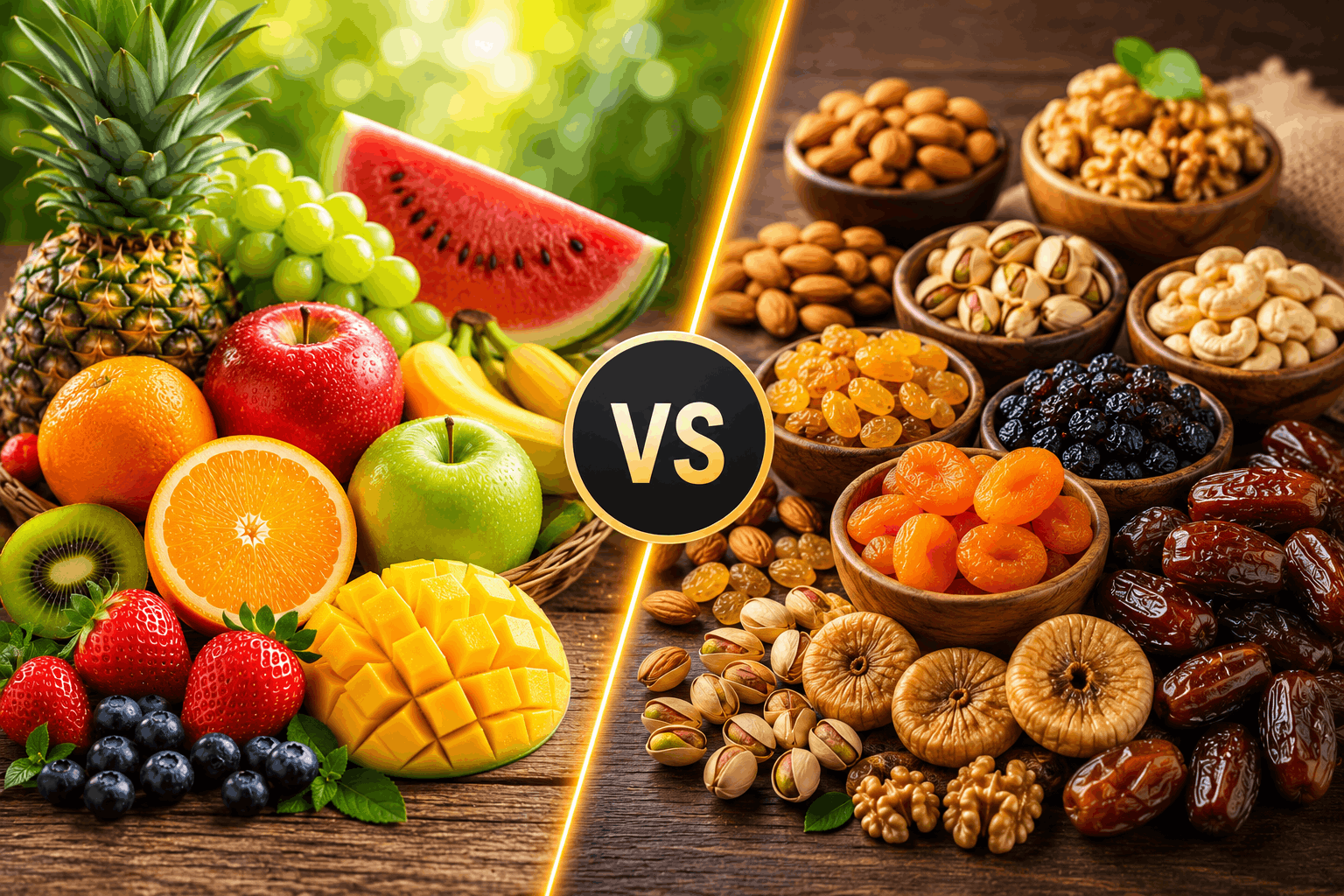

Fresh Fruits vs Dry Fruits is a common comparison because both are healthy in different ways. Fruits are rich in water, vitamins, fiber, and antioxidants, helping you stay hydrated and support digestion. Dry fruits contain more healthy fats, protein, minerals, and natural energy in a smaller serving.
Nutrition experts recommend eating both fresh fruits and dry fruits every day. Fresh fruits provide hydration and vitamins, while a small handful of dry fruits gives healthy fats and lasting energy. Just remember to eat dry fruits in moderation because they are higher in calories. Understanding the difference can help you make smarter food choices every day. In this article, we’ll compare fresh fruits vs dry fruits, explore their nutritional value, health benefits, and find out which one deserves a place in your daily diet.
What Are Fresh Fruits?
Fresh fruits are fruits that are eaten in their natural form without being dried or heavily processed. They contain a high amount of water, making them refreshing and naturally low in calories. Popular fresh fruits include apples, bananas, oranges, mangoes, papayas, grapes, watermelon, and guava.
They are an excellent source of vitamins, minerals, antioxidants, and dietary fiber. Since they contain plenty of water, they also help keep your body hydrated throughout the day.
What Are Dry Fruits?
Dry fruits are fruits or nuts that contain very little moisture. Some fruits are naturally dried, such as raisins, dates, figs, and apricots, while nuts like almonds, walnuts, pistachios, and cashews are commonly grouped as dry fruits because of their nutritional value.
Since most of the water has been removed, dry fruits become smaller but more concentrated in nutrients and calories. They are easy to store, have a longer shelf life, and make a convenient snack for busy lifestyles.
Fresh Fruits vs Dry Fruits: Nutrition Comparison
| Nutrient | Fresh Fruits | Dry Fruits |
|---|---|---|
| Water Content | High | Very Low |
| Calories | Lower | Higher |
| Fiber | Good | Higher per serving |
| Natural Sugar | Moderate | More concentrated |
| Healthy Fats | Very Low | High (in nuts) |
| Vitamins | Rich in Vitamin C | Rich in Vitamin E & B Vitamins |
| Minerals | Good Source | Excellent Source |
| Shelf Life | Short | Long |
Benefits of Fresh Fruits
1. Keeps Your Body Hydrated
Fresh fruits contain a large amount of water, which helps your body stay hydrated naturally. Fruits like watermelon, oranges, and muskmelon are especially refreshing during hot weather. Staying hydrated also supports healthy skin, better digestion, and overall body function.
2. Supports Healthy Weight Management
If you’re trying to lose or maintain weight, fresh fruits are a great addition to your diet. They are naturally low in calories but rich in fiber, helping you feel full for longer. This can reduce unnecessary snacking and make it easier to manage your daily calorie intake.
3. Improves Digestion Naturally
The fiber found in fresh fruits helps keep your digestive system healthy. Eating fruits regularly can support smooth bowel movements and promote a healthy gut. A good digestive system also helps your body absorb nutrients more effectively.
4. Strengthens the Immune System
Many fresh fruits are rich in vitamin C and antioxidants that support your body’s natural defense system. Fruits like oranges, kiwi, guava, and strawberries help protect your cells from damage and may help your body fight common infections.
5. Supports Healthy Skin
Fresh fruits are rich in vitamin C, antioxidants, and water that help keep your skin healthy and glowing. Eating fresh fruits regularly may also support collagen production and protect your skin from damage.
Benefits of Dry Fruits
1. Gives You Long-Lasting Energy
Dry fruits are packed with natural sugars, healthy fats, and important nutrients that provide steady energy. A small handful can help you stay active during a busy day or before a workout. Because they are energy-dense, they are an excellent snack when you need quick nourishment.
2. Supports Heart Health
Many dry fruits, especially almonds and walnuts, contain healthy unsaturated fats that support heart health. They also provide nutrients like magnesium and vitamin E, which contribute to normal body functions. Eating moderate portions as part of a balanced diet can be beneficial for overall cardiovascular health.
3. Helps Keep Your Brain Healthy
Dry fruits like walnuts and almonds contain healthy fats, vitamin E, and other nutrients that support normal brain function. Including a small handful in your daily diet may help improve concentration and keep your mind active. They are also a healthy snack for students and working professionals.
4. Strengthens Bones
Many dry fruits are rich in calcium, magnesium, and phosphorus, which are important for strong bones and teeth. Regular consumption in moderate amounts can support bone health as you age. Pairing them with a balanced diet and regular exercise offers even greater benefits.
5. Easy to Carry and Eat Anywhere
One of the biggest advantages of dry fruits is their convenience. They don’t spoil quickly and can easily fit into your bag or lunch box. Whether you’re traveling, working, or studying, they make a quick and healthy snack without any preparation.
Which Is Better for Weight Loss?
If your goal is to lose weight, fresh fruits are generally the better choice. They contain more water, fewer calories, and plenty of fiber, which helps you feel full for longer. This can reduce cravings and prevent overeating throughout the day.
Dry fruits are also healthy, but they are much higher in calories because most of their water has been removed. Eating a small handful is beneficial, but consuming large amounts regularly may increase your daily calorie intake. The key is portion control.
Which Is Better for People with Diabetes?
People with diabetes can eat both fresh fruits and dry fruits, but portion control is important. Fresh fruits like apples, berries, oranges, pears, and guava are usually a better choice because they contain more water and fiber.
Dry fruits like almonds, walnuts, and pistachios can also be eaten in moderation. Sweet dry fruits such as raisins and dates should be limited because they contain more natural sugar.
Which One Should You Eat Daily?
The good news is that you don’t have to choose one over the other. Fresh fruits and dry fruits offer different nutrients, and including both in your daily diet can help you enjoy a wider range of health benefits.
Health experts also recommend eating one or two servings of seasonal fresh fruits every day and a small handful (about 20–30 grams) of unsalted mixed dry fruits. This combination provides vitamins, minerals, fiber, healthy fats, and natural energy without adding too many calories.
Nutrition Expert Tip
Nutrition Expert Tip: Instead of replacing fresh fruits with dry fruits, think of them as partners. Fresh fruits help keep you hydrated and provide vitamin C, while dry fruits supply healthy fats, protein, and important minerals. Eating both in the right portions is one of the easiest ways to create a balanced daily diet.
Fresh Fruits vs Dry Fruits: Quick Comparison
| Fresh Fruits | Dry Fruits |
| High in water | Low in water |
| Lower in calories | Higher in calories |
| Great for hydration | Great for quick energy |
| Rich in vitamin C | Rich in healthy fats and minerals |
| Best for weight management | Best for healthy snacking |
| Short shelf life | Long shelf life |
FAQs
Can I eat fresh fruits and dry fruits together?
Yes. Eating both together can provide a good mix of vitamins, minerals, fiber, and healthy fats. Just keep your dry fruit portion moderate because it is calorie-dense.
Which is healthier, fresh fruits or dry fruits?
Both are healthy in different ways. Fresh fruits are better for hydration and weight management, while dry fruits provide concentrated nutrients and long-lasting energy.
Are dry fruits good for children?
Yes. Dry fruits can be a healthy snack for children when served in age-appropriate portions. For very young children, chopped or ground nuts may be safer than whole nuts to reduce the risk of choking.
Can dry fruits replace fresh fruits?
No. Dry fruits are nutritious but should not replace fresh fruits completely. Fresh fruits provide more water and certain vitamins, such as vitamin C, that may be reduced during the drying process.
Conclusion
Disclaimer: This article is for informational purposes only and is not intended as medical advice. Consult a healthcare professional for personalized guidance.