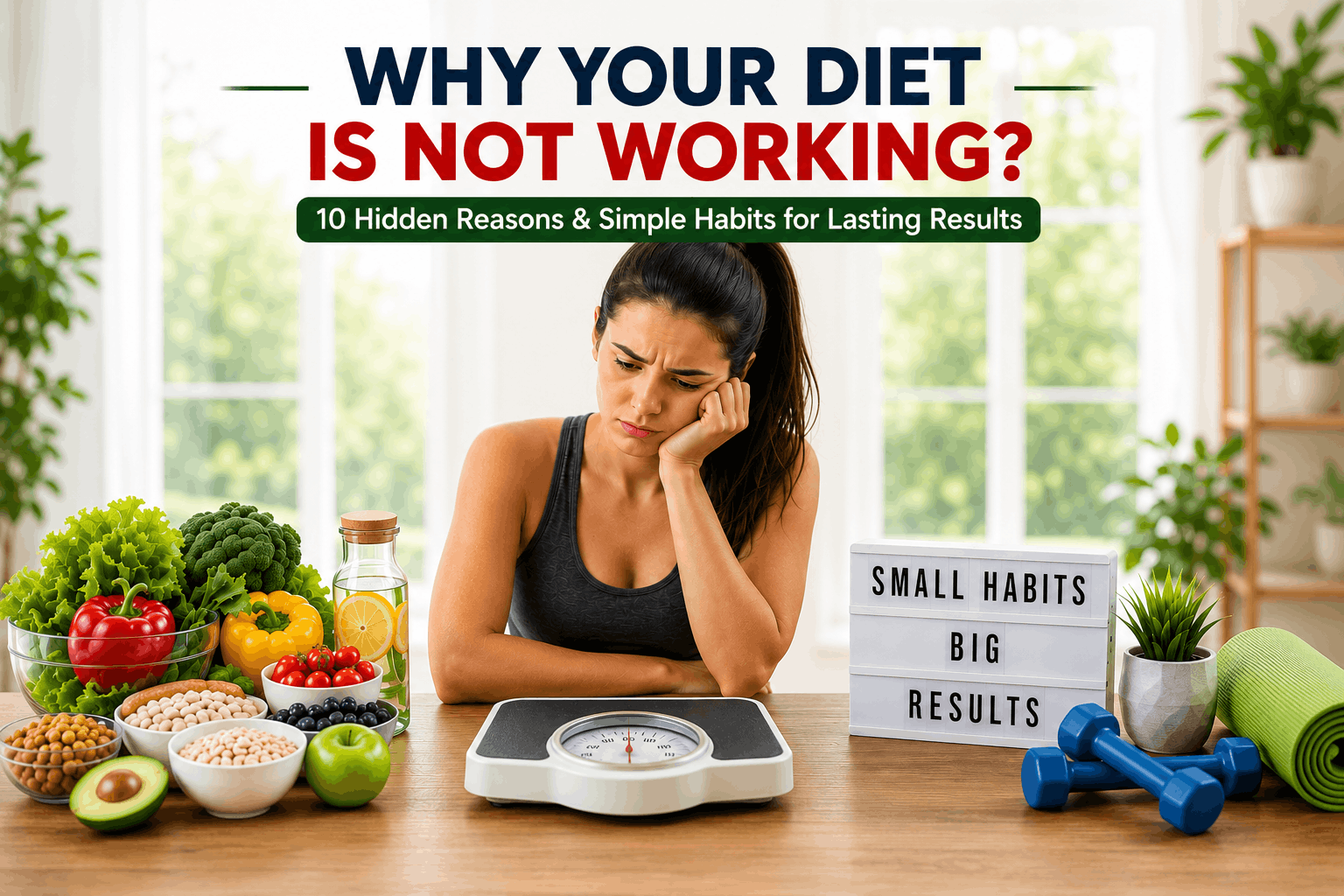

Have you been eating healthy, counting calories, and exercising regularly, yet still wondering why your diet is not working? You’re not alone. Many people start a diet with high hopes, avoid unhealthy foods, and stay committed for weeks, only to feel disappointed when the weighing scale barely changes. The truth is, why your diet is not working often has little to do with willpower. Sleep, stress, gut health, hydration, metabolism, and daily habits all play a major role in your overall health and weight management.
Instead of asking, “Why isn’t my diet working?”, ask yourself, “Is my lifestyle supporting my health?” In this guide, you’ll discover the hidden reasons your diet may not be working and learn simple, science-backed habits to improve your health naturally and achieve lasting results.
10 Hidden Reasons Your Diet May Not Be Working
1. You’re Eating Less but Not Eating Better
One of the biggest diet mistakes is thinking that eating less automatically means eating healthier. Your body needs nutrients, not just fewer calories. A homemade meal with vegetables, whole grains, and protein will nourish your body far better than low-calorie processed snacks.
If your diet lacks protein, fiber, healthy fats, vitamins, and minerals, you may experience:
- Constant hunger
- Low energy
- Sugar cravings
- Poor digestion
Eat Smarter, Not Less: Build your meals with vegetables, fruits, whole grains, lean protein, and healthy fats. These foods keep you full longer and support better overall health.
Quick Tip: Fill half your plate with vegetables or salad before adding rice or roti. It’s an easy way to eat healthier without feeling deprived.
2. Your Gut Health Matters More Than You Think
Your gut does much more than digest food. It contains trillions of good bacteria that help with digestion, support your immune system, and keep your body healthy. If your gut isn’t healthy, you may experience bloating, constipation, gas, low energy, or frequent hunger.
Keep Your Gut Healthy: Support your gut by eating fruits, vegetables, whole grains, beans, curd, and other fermented foods, drinking enough water, and limiting processed foods. A healthy gut helps your body get the most nutrition from the foods you eat.
3. Stress Can Work Against Your Diet
You may be eating healthy, but if you’re constantly stressed, your body may struggle to perform at its best. Stress can increase cravings for sugary or unhealthy foods, reduce your motivation to exercise, and make it harder to stick to healthy habits.
Manage Stress Naturally: Simple activities like walking, yoga, meditation, deep breathing, or spending time with family can help reduce stress. Even 15–20 minutes of relaxation each day can improve both your mental and physical well-being.
4. Sleep Is More Important Than You Think
A healthy diet alone isn’t enough if you’re not getting enough sleep. Poor sleep can leave you feeling tired, increase unhealthy cravings, and reduce your energy for daily activities.
Make Sleep a Priority: Aim for 7–9 hours of quality sleep each night. Try to sleep and wake up at the same time every day, avoid screens before bed, and eat dinner a few hours before sleeping.
5. Choose Whole Foods Over Processed Foods
Many processed foods are high in sugar, unhealthy fats, and salt but low in nutrients. They may satisfy you for a short time, but often leave you feeling hungry again.
Eat More Natural Foods: Choose fresh fruits, vegetables, whole grains, nuts, curd, sprouts, and homemade meals whenever possible. Whole foods provide the nutrients your body needs to stay healthy and energized.
6. Move More Throughout the Day
Going to the gym for an hour is great, but sitting for the rest of the day isn’t. Your body is designed to move, and regular movement supports better health and metabolism.
Stay Active Every Day: Take the stairs, walk after meals, stretch every hour, or go for a short evening walk. Every little bit of movement helps.
7. Don’t Forget to Drink Water
Water is essential for digestion, energy, and overall health. Sometimes what feels like hunger is actually thirst, causing you to snack when your body simply needs water.
Stay Hydrated: Drink water regularly throughout the day and include water-rich foods like watermelon, cucumber, oranges, and tomatoes in your diet.
8. Healthy Eating Is Also About Timing
Eating healthy foods is important, but eating them at the right time also matters. Skipping meals or eating large dinners late at night can leave you feeling tired and encourage overeating.
Eat Mindfully: Try to eat meals at regular times, chew your food slowly, and include protein and fiber in every meal to stay full for longer.
9. Stop Looking for Quick Fixes
There is no magic diet or drink that can transform your health overnight. Crash diets may offer quick results, but they’re difficult to maintain and often lead to weight regain.
Focus on Long-Term Success: Instead of chasing fast results, build healthy habits that fit your lifestyle. Small, consistent changes are far more effective than temporary diets.
10. Healthy Habits Make the Biggest Difference
Good health isn’t about being perfect every day. It’s about making better choices more often. Eating nutritious food, staying active, sleeping well, and managing stress all work together to improve your overall health.
The Secret Is Consistency: Don’t try to change everything at once. Start with one healthy habit today and build on it over time. Small daily improvements can lead to big, lasting results.
Simple Daily Habits That Make a Big Difference
You don’t need a complicated diet plan to become healthier. Start with small, achievable changes.
✔ Fill half your plate with vegetables.
✔ Include a source of protein in every meal.
✔ Walk for at least 30 minutes daily.
✔ Drink enough water throughout the day.
✔ Sleep for 7–9 hours each night.
✔ Eat more whole foods and fewer packaged snacks.
✔ Reduce sugary drinks and processed foods.
✔ Practice mindful eating.
✔ Spend a few minutes outdoors every day.
✔ Focus on consistency instead of perfection.
These simple habits may seem small, but together they create a strong foundation for lifelong health.
FAQs
Why is my diet not helping me lose weight?
Weight management depends on more than food intake. Sleep, stress, physical activity, hydration, medical conditions, medications, and overall lifestyle can all influence your progress.
What is the biggest mistake people make while dieting?
Many people focus only on eating fewer calories instead of improving the quality of their diet and maintaining healthy daily habits.
Can poor gut health affect weight management?
A healthy gut supports digestion and overall health. Eating a fiber-rich diet with plenty of fruits, vegetables, whole grains, legumes, and fermented foods can help maintain a healthy digestive system.
Does drinking more water help with weight loss?
Water supports normal body functions and may help some people reduce unnecessary snacking by preventing dehydration from being mistaken for hunger. However, water alone is not a weight-loss solution.
Is walking every day enough exercise?
Daily walking is an excellent way to improve overall health. Combining walking with strength training and a balanced diet can provide even greater long-term health benefits.
How long does it take to see results from healthy lifestyle changes?
Results vary from person to person depending on age, genetics, activity level, diet quality, sleep, stress, and overall health. Focus on building sustainable habits rather than expecting rapid changes.
Conclusion
If you’re wondering why your diet is not working, the answer may go beyond the food you eat. A healthy diet, quality sleep, regular exercise, proper hydration, stress management, and healthy daily habits all play an important role. Instead of chasing quick results, focus on small, consistent changes. These simple habits can improve your health and help you achieve lasting results.
This article is based on current nutrition research and trusted health guidelines. It is for educational purposes only and should not replace advice from a qualified healthcare professional.
Disclaimer: This article is for informational purposes only and is not intended as medical advice. Consult a healthcare professional for personalized guidance.