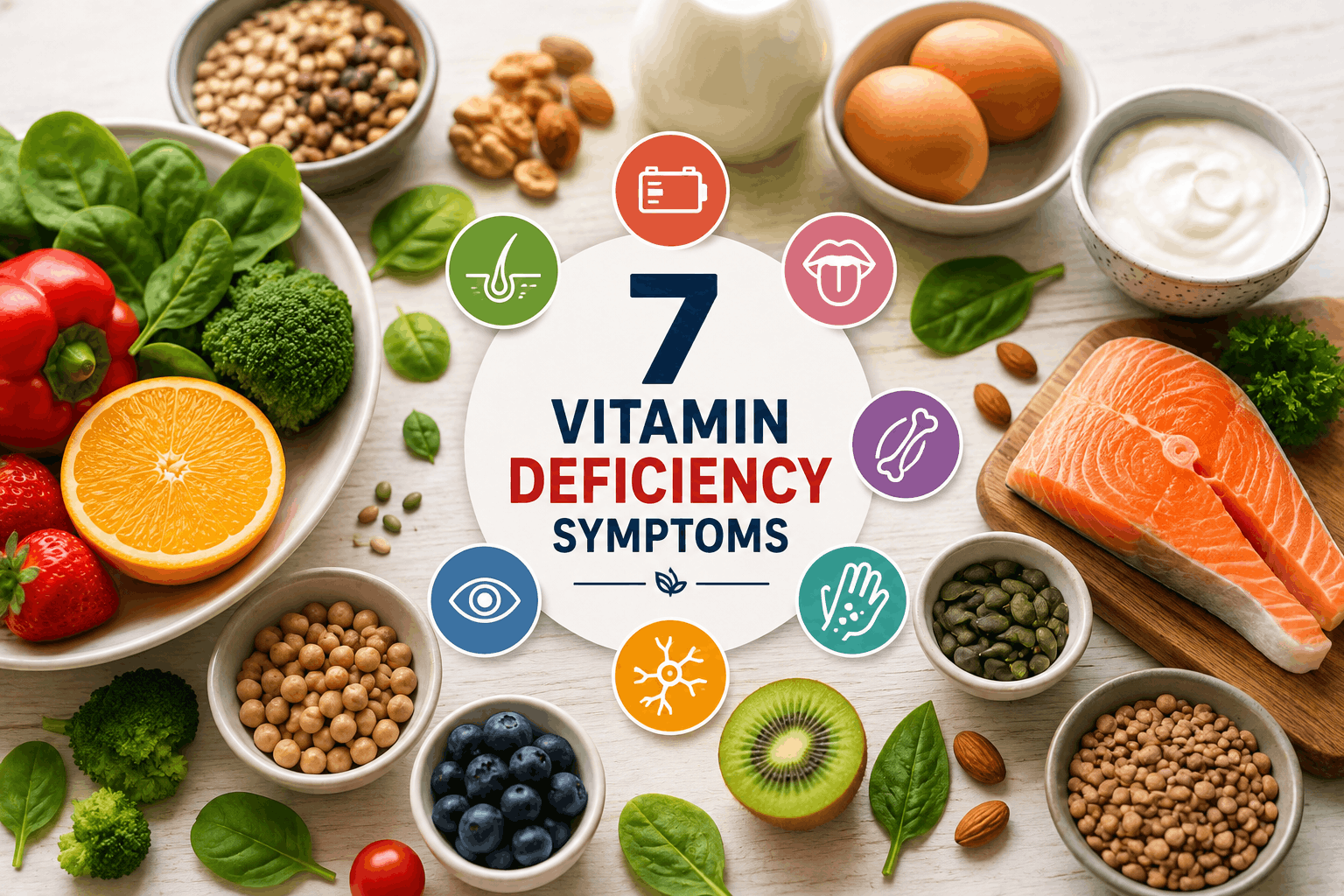

Always tired, noticing changes in your hair, or feeling a little off? These could be possible vitamin deficiency symptoms, especially when your diet isn’t providing enough of the vitamins your body needs.
When you feel tired for no clear reason, notice changes in your hair or skin, or simply feel like something isn’t quite right, it’s natural to wonder if your diet is giving your body what it needs. Vitamins play a part in many things your body does every day, from making healthy blood cells and supporting your nerves to maintaining normal vision and helping your body use nutrients. If you don’t get enough of certain vitamins over time, your body may start showing signs. For example, low vitamin B12 or folate can be linked with tiredness, weakness, mouth or tongue problems, and tingling or numbness. But remember, these symptoms don’t automatically mean you have a vitamin deficiency. They can happen for many other reasons too, so if something feels unusual or continues for a while, it’s better to speak with a healthcare professional instead of taking supplements on your own.
Looking for simple ways to improve your overall health? Explore 10 Powerful Habits for a Healthy and Happy Life.
7 Vitamin Deficiency Symptoms
1. You Feel Tired or Weak More Often
Feeling tired after a long day is normal, but feeling drained most days for no clear reason is worth paying attention to. Your body needs several vitamins and nutrients to keep your energy and blood cells in good shape. Low levels of vitamin B12 or folate (B9) can sometimes leave you feeling weak, tired, or low on energy. But tiredness can have many causes, so it should not automatically be blamed on a vitamin deficiency.
According to health experts, low B12 can also cause tingling, numbness, or balance problems. If your tiredness continues, it’s better to speak with a doctor who can help find the real cause and decide whether testing is needed.
Vitamin B12: eggs, milk, curd, fish, meat, and fortified foods.
Folate: Leafy greens, broccoli, peas, chickpeas, and beans.
Want to add more nutritious foods to your diet? Check out Fiber-Rich Foods for Constipation: Benefits for Digestive Health.
2. Your Hair or Skin Starts Looking Different
We all notice small changes in our hair and skin from time to time. But if your hair seems weaker, your skin looks unusual, or you notice changes that continue for a while, your diet may be worth a closer look. Vitamin C and vitamin A are important for healthy skin, while several nutrients work together to support normal hair growth. Still, hair and skin changes can happen for many reasons, including stress, hormones, illness, and other health conditions.
According to health experts, severe vitamin deficiencies can affect the skin and hair, but these changes alone cannot confirm a deficiency. If the problem continues or gets worse, it’s better to speak with a doctor rather than taking supplements without knowing the cause.
Vitamin C: Guava, oranges, kiwi, strawberries, bell peppers, tomatoes, and broccoli.
Vitamin A: Carrots, sweet potatoes, spinach, pumpkin, eggs, and dairy products.
3. You Keep Getting Mouth Sores or a Sore Tongue
An occasional mouth ulcer is common and usually nothing to worry about. But if you frequently get mouth sores, have a sore tongue, or notice your tongue becoming unusually red or smooth, it may be worth looking at your nutrition. Low vitamin B12 or folate (B9) can sometimes be linked with mouth and tongue problems, along with tiredness and weakness.
According to health experts, recurring mouth problems can have several causes, so don’t assume they are caused by a vitamin deficiency. If they keep coming back or take a long time to heal, a healthcare professional can help identify the reason.
Vitamin B12: Eggs, milk, curd, fish, meat, and fortified foods.
Folate: Leafy greens, broccoli, peas, chickpeas, and beans.
Low on Vitamin B12 or noticing possible B12 deficiency symptoms? Read our guide to 10 Early Signs of Vitamin B12 Deficiency You Should Never Ignore.
4. Your Muscles Feel Weak or Your Bones Hurt
Feeling sore after exercise is normal, but ongoing muscle weakness or bone pain may need attention. Vitamin D helps your body absorb calcium and supports healthy bones and muscles.
According to health experts, these symptoms can have many causes, so don’t assume they are always due to low vitamin D. If they continue, speak with a doctor.
Vitamin D Sources: Sunlight helps your body make vitamin D naturally.
Food sources: Fatty fish, egg yolks, fortified milk, and some mushrooms.
5. You Notice Easy Bruising or Bleeding Gums
Finding a small bruise once in a while is usually not a big concern. But if you seem to bruise easily or notice bleeding gums without an obvious reason, it’s worth paying attention to your overall health and diet. Vitamin C is important for healthy tissues and wound healing, while vitamin K plays an important role in normal blood clotting.
According to health experts, frequent or unusual bruising and bleeding should not simply be treated by taking vitamins. Several health conditions and medications can cause these symptoms, so persistent or unexplained bleeding should be checked by a healthcare professional.
Vitamin C: Guava, oranges, kiwi, strawberries, bell peppers, tomatoes, and broccoli.
Vitamin K: Spinach, kale, broccoli, lettuce, cabbage, and other green vegetables.
6. You Feel Tingling or Numbness
That occasional “pins and needles” feeling can happen when you sit or sleep in one position for too long. But if you regularly notice tingling, numbness, or unusual sensations in your hands or feet, it deserves more attention. Vitamin B12 is important for normal nerve function, and a deficiency can sometimes cause nerve-related symptoms.
According to health experts, ongoing numbness or tingling should not be ignored or self-treated with supplements. These symptoms can have many causes, so a doctor can help determine what is behind them and whether blood tests are needed.
Vitamin B12: Eggs, milk, curd, fish, meat, and fortified foods.
7. You Find It Harder to See in Low Light
Have you noticed that your eyes take longer to adjust when you walk into a dark room? Difficulty seeing in low light, sometimes called night blindness, can be associated with vitamin A deficiency. Vitamin A is important for normal vision and also supports the immune system and other functions in the body.
According to health experts, vision changes should not automatically be blamed on a vitamin deficiency. If you notice a persistent change in your eyesight or difficulty seeing at night, it’s best to have your eyes and overall health checked by a healthcare professional.
Vitamin A: Carrots, sweet potatoes, spinach, pumpkin, eggs, and dairy products.
Good nutrition is an important part of a healthy lifestyle—discover 5 Powerful Superfoods for Health and Overall Wellness.
What Should You Do If You Think You’re Low on Vitamins?
Can You Prevent Vitamin Deficiency?
You don’t need a complicated diet to get the vitamins your body needs. Just try to eat different kinds of foods every day—fruits, vegetables, grains, beans, dairy, eggs, nuts, and seeds. If you often feel tired or notice changes in your health, talk to a doctor before taking vitamin supplements on your own.
Looking for more healthy food ideas? Explore The Health Benefits of Mango by Adding It to Your Diet
Conclusion
Your body needs vitamins every day, but you don’t have to worry about every small change. If you’re often tired, notice unusual changes, or simply don’t feel like yourself, take a closer look at your diet and how you’re feeling. Eat a variety of healthy foods, and if something doesn’t improve, talk to a healthcare professional instead of guessing or taking supplements on your own.
FAQs
What are the common signs of vitamin deficiency?
Common signs can include tiredness, weakness, mouth problems, hair or skin changes, numbness, and muscle weakness. However, these symptoms can have many causes and do not confirm a deficiency.
Can I get enough vitamins from food?
Yes. A varied diet that includes fruits, vegetables, whole grains, beans, dairy, eggs, nuts, seeds, and other nutritious foods can provide many of the vitamins your body needs.
Should I take vitamin supplements?
Not everyone needs supplements. If you think you may have a deficiency, it’s better to speak with a healthcare professional before taking high-dose vitamins.
Sources
- National Institutes of Health (NIH) – Office of Dietary Supplements (ODS)
- NHS (National Health Service)
- U.S. Department of Agriculture (USDA) – FoodData Central
- Harvard T.H. Chan School of Public Health – The Nutrition Source
Disclaimer: This article is for informational purposes only and is not intended as medical advice. Consult a healthcare professional for personalized guidance.