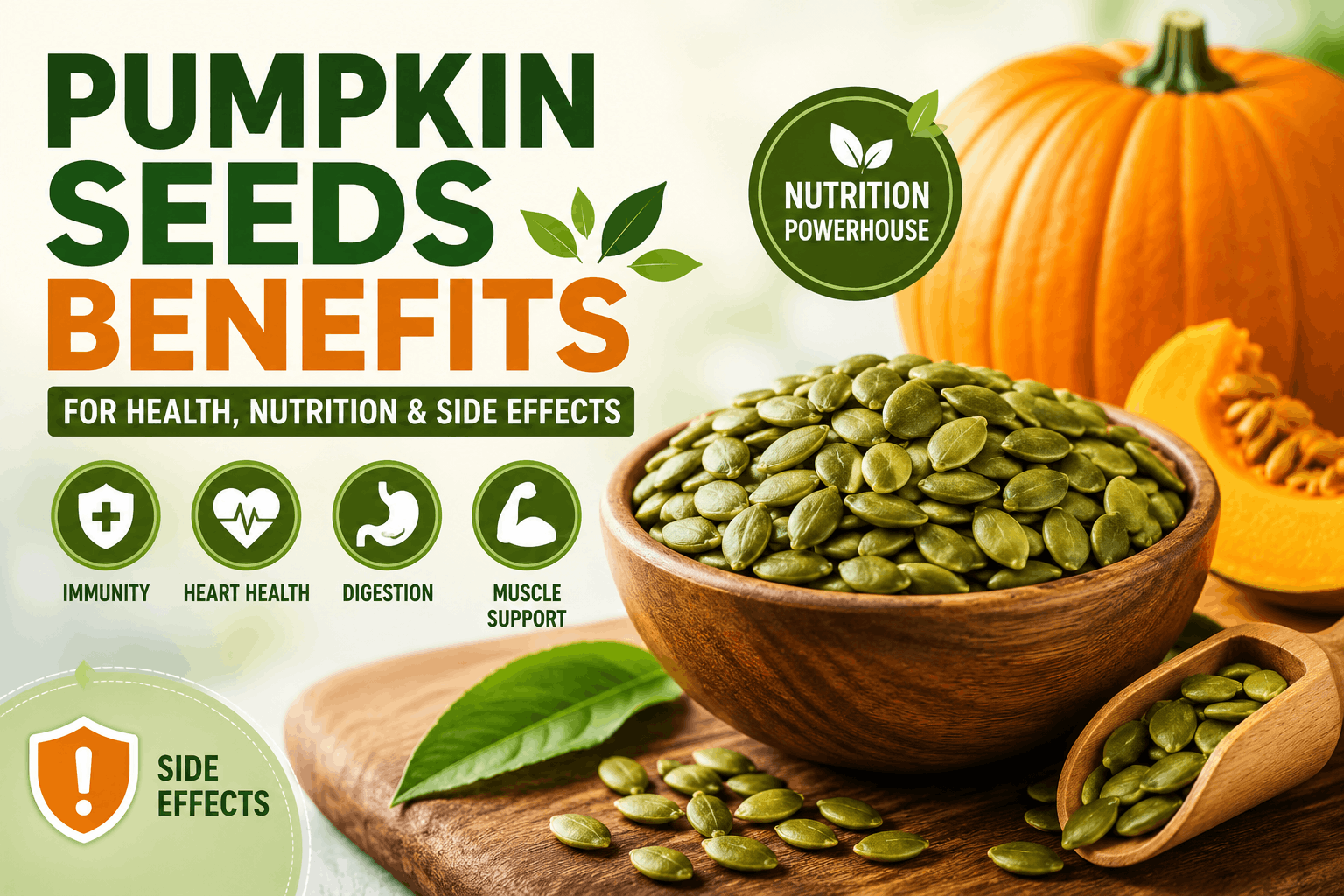

What if one of the healthiest foods you can eat fits in the palm of your hand? Tiny yet incredibly nutritious, pumpkin seeds are loaded with protein, healthy fats, essential minerals, and antioxidants that support your body in many ways. Pumpkin seeds benefits include supporting heart health, strengthening immunity, promoting better sleep, and helping you stay energized. Affordable, easy to find, and simple to add to meals, they are a smart choice for a balanced diet.
Nutrition experts recommend including a variety of nuts and seeds in your diet because they provide healthy fats, protein, fibre, vitamins, and minerals that support overall health. Pumpkin seeds are one of the most nutrient-dense options and can easily fit into a balanced eating pattern.
What Are the Benefits of Pumpkin Seeds?
Pumpkin seeds are rich in protein, healthy fats, and essential minerals like magnesium and zinc. The pumpkin seeds benefits include improved heart health, better digestion, stronger immunity, and improved sleep when consumed regularly.
Approximate Pumpkin Seeds Nutrition (Per 28g / 1 ounce)
Pumpkin seeds are considered nutrient-dense because they provide a high amount of nutrients in a small serving:
- Calories: ~150–160
- Protein: ~7 grams
- Healthy fats: ~13 grams (including omega-6 fatty acids)
- Fiber: ~1–2 grams
- Magnesium: ~35–40% of daily requirement
- Zinc: ~10–15% of daily requirement
- Iron: ~20–25% of daily requirement
This combination of nutrients makes pumpkin seeds especially beneficial for energy, metabolism, and body repair.
Top 12 Pumpkin Seeds Benefits Explained
Pumpkin seeds are small but very healthy. The pumpkin seeds benefits come from their strong nutritional profile, making them a valuable addition to a healthy diet. Pumpkin seeds are often considered a natural superfood due to their rich nutritional profile.
Looking for more nutrient-rich foods? Read our guide on 5 Powerful Superfoods That Naturally Heal Your Body.
1. Supports Heart Health
One of the most important pumpkin seeds benefits is their role in heart health. They are rich in magnesium, which helps regulate blood pressure and supports proper heart rhythm. The healthy fats present in pumpkin seeds may also help maintain cholesterol balance.
Along with pumpkin seeds, these 6 Heart-Healthy Seeds You Should Eat Daily can also support cardiovascular health.
2. Support Brain Health
Pumpkin seeds contain zinc, magnesium, and antioxidants that support brain health. These nutrients help improve cognitive function, memory, and focus while also protecting brain cells from oxidative stress.
3. Helps in Weight Management
Despite being calorie-dense, pumpkin seeds can support weight management when consumed in moderation. Their protein and fat content increase satiety, meaning you feel full longer and are less likely to overeat.
Dietitians often recommend protein- and fibre-rich snacks because they help increase fullness between meals. Eating pumpkin seeds in moderate portions may help reduce unnecessary snacking.
4. Strengthens Immunity
Zinc is a key nutrient for immune function, and pumpkin seeds are a good source of it. Regular consumption may help your body fight infections and support faster recovery. In addition to zinc, pumpkin seeds also contain antioxidants and vitamin E, which help reduce inflammation and protect immune cells from damage.
According to nutrition experts, zinc plays a key role in the normal functioning of the immune system. Regularly eating zinc-rich foods like pumpkin seeds can help meet your daily nutritional needs.
Pair pumpkin seeds with these 7 Healthy Monsoon Drinks for Immunity Boost to support your immune system.
5. Supports Bone Strength
Magnesium and phosphorus found in pumpkin seeds play a critical role in maintaining strong bones. These minerals help improve bone density and reduce the risk of weakness over time.
6. Improves Digestion
The fiber content in pumpkin seeds plays an important role in supporting healthy digestion. It helps regulate bowel movements by adding bulk to stool, making it easier for your body to process and eliminate waste. In addition, this fiber supports the growth of beneficial gut bacteria, which contributes to a more balanced and efficient digestive system. Over time, including pumpkin seeds in your diet can help reduce issues like constipation and promote overall gut health.
For more ways to improve digestion naturally, read How to Improve Gut Health Naturally.
7. Promotes Better Sleep
Pumpkin seeds contain tryptophan, an amino acid that helps produce serotonin and melatonin—hormones involved in sleep regulation. Eating a small amount in the evening may support better sleep quality.
Sleep specialists emphasise that good sleep depends on overall lifestyle, including a balanced diet and healthy sleep habits. Pumpkin seeds contain nutrients involved in normal sleep regulation, but they are not a substitute for proper sleep hygiene.
8. Supports Prostate and Hormonal Health
For men, pumpkin seeds are known for supporting prostate health due to their high zinc content. Zinc helps maintain normal prostate function and may reduce the risk of related issues over time. It also plays an important role in hormone balance for human beings, supporting overall well-being.
9. Improves Skin and Hair Health
The antioxidants, zinc, and healthy fats in pumpkin seeds contribute to healthier skin and stronger hair. These nutrients help reduce inflammation, support tissue repair, and protect skin cells from damage caused by environmental factors. Regular consumption may also help improve skin hydration and promote stronger, shinier hair over time.
10. Helps Control Blood Sugar Levels
Pumpkin seeds have a low glycemic impact and contain magnesium, which plays a role in regulating blood sugar levels. The magnesium and fibre in pumpkin seeds may help support healthy blood sugar levels as part of a balanced diet.
11. Provides Long-Lasting Energy
The combination of protein, fats, and minerals makes pumpkin seeds a good source of sustained energy. They are ideal as a midday snack to avoid energy crashes.
12. Rich in Antioxidants
Pumpkin seeds contain antioxidants that help protect cells from damage caused by free radicals. This may reduce the risk of chronic conditions over time. These antioxidants also support overall immune function and help reduce inflammation in the body. Regular consumption can contribute to better long-term health and improved cellular protection.
How to Use Pumpkin Seeds in Daily Diet
Including pumpkin seeds in your diet is simple and flexible:
-
- Eat them raw or lightly roasted as a snack
- Add them to salads, smoothies, or yogurt
- Sprinkle over oatmeal or breakfast bowls
- Mix into trail mix with nuts and dried fruits
Recommended intake: 1–2 tablespoons per day
Side Effects of Pumpkin Seeds
While the pumpkin seeds benefits are impressive, excessive consumption may cause:
- Digestive discomfort or bloating (due to fiber and fat content)
- High calorie intake if overeaten
- Allergic reactions in rare cases
Moderation is key to getting benefits without side effects.
Best Time to Eat Pumpkin Seeds
Morning: Provides energy and supports metabolism for the day.
Between Meals: A healthy snack that prevents overeating.
Evening: May support better sleep due to tryptophan content.
FAQs
Are pumpkin seeds good for daily consumption?
Yes, when eaten in moderate amounts, they provide essential nutrients that support overall health.
Can pumpkin seeds help with weight loss?
They can support weight management by increasing fullness, but portion control is important.
Are roasted pumpkin seeds healthy?
Yes, but avoid excessive salt or oil to maintain their nutritional value.
Can I eat pumpkin seeds on an empty stomach?
Yes. Pumpkin seeds can be eaten on an empty stomach or with meals. Pairing them with fruits or yoghurt can make them a more balanced snack.
Conclusion
The pumpkin seeds benefits make them one of the easiest and most practical additions to a healthy diet. They are rich in essential nutrients that support heart health, digestion, immunity, and more.
While they are not a miracle food, consistent and moderate consumption can contribute to long-term health and well-being.
Looking to build a healthier diet? Don’t miss our articles on Fresh Fruits vs Dry Fruits: Which Is Healthier?
Sources:
USDA FoodData Central – Nutrition facts for pumpkin seeds.
National Institutes of Health (NIH) – Magnesium and Zinc Fact Sheets.
American Heart Association (AHA) – Heart-healthy eating guidance.
Disclaimer: This article is for informational purposes only and is not intended as medical advice. Consult a healthcare professional for personalized guidance.