
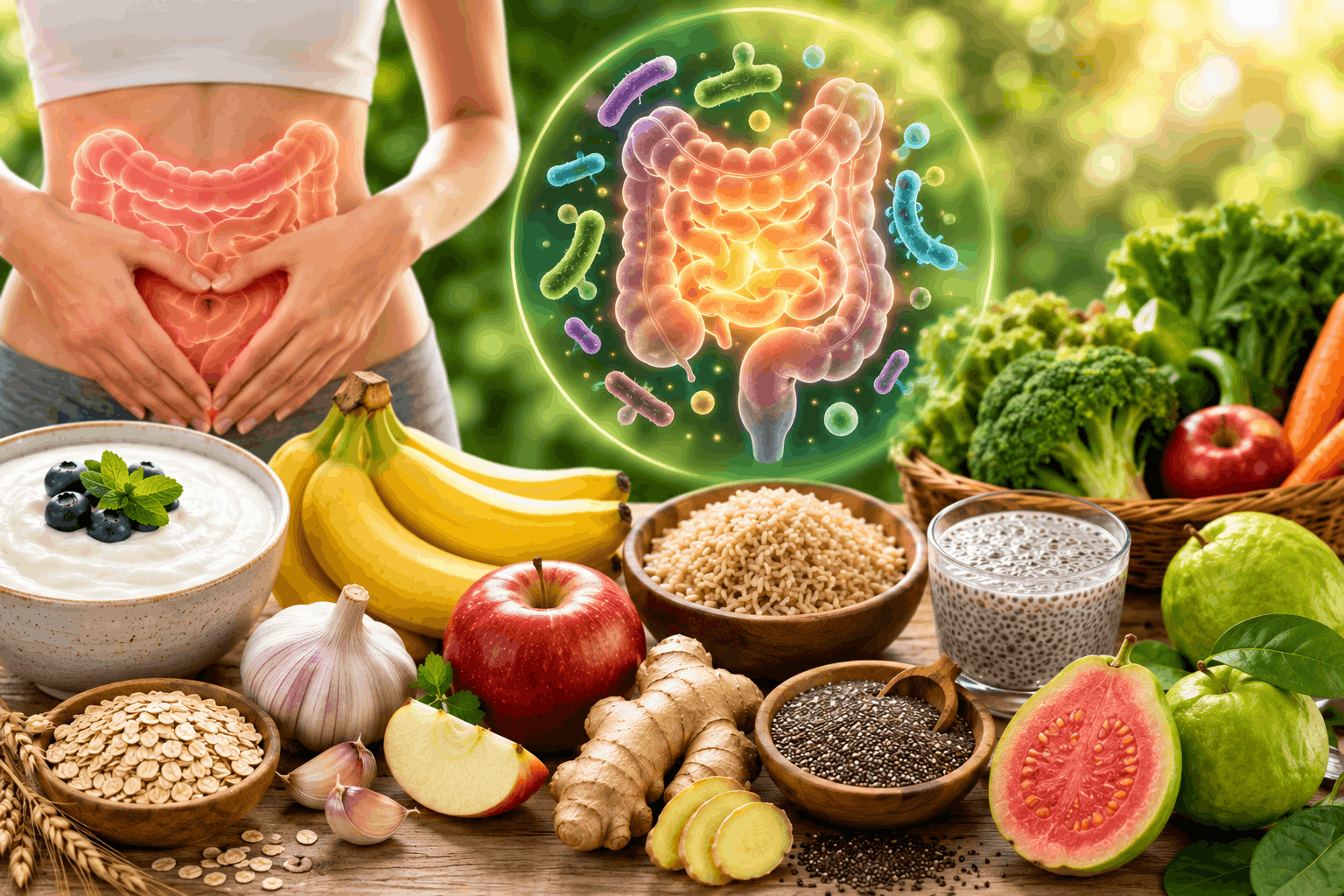

Your gut plays a major role in digestion, immunity, and overall health. It contains trillions of bacteria that must stay balanced for your body to function properly. Learning how to improve gut health naturally starts with understanding your gut microbiome.
The easiest way to improve gut health naturally is through your diet—by including the right mix of probiotics (good bacteria) and prebiotics (their food). A healthy gut microbiome helps improve digestion, reduce bloating, and support long-term health.
In this article, you’ll discover 9 powerful foods that support gut health naturally and improve digestion. These foods that improve gut health naturally help balance gut bacteria, reduce bloating, and support overall digestion.
9 Best Foods to Improve Gut Health Naturally
1. Yogurt (Best Everyday Probiotic for Gut Health)
Yogurt is one of the best foods to support gut health naturally. It contains live probiotic cultures that help maintain a healthy balance of gut bacteria. It supports smooth digestion, improves nutrient absorption, and helps reduce bloating. Regular consumption may also improve gut microbiome diversity.
2. Bananas (Best Prebiotic Food)
Bananas are one of the easiest ways to support gut health. Ripe bananas are rich in soluble fiber, while slightly underripe bananas contain resistant starch that acts as a prebiotic, feeding healthy gut bacteria. They help improve digestion, regulate bowel movements, and provide a simple, gut-friendly snack for daily use.
3. Garlic (Natural Gut Booster)
Garlic is a powerful natural gut booster that supports digestion by feeding beneficial gut bacteria. It also helps reduce harmful bacteria and supports immune function, making it a valuable addition to your daily diet.
4. Whole Grains (Fiber for Better Digestion)
Whole grains like oats and brown rice are rich in fiber, which is essential for a healthy gut microbiome. They help improve digestion, support regular bowel movements, and provide long-lasting energy while nourishing beneficial bacteria.
5. Apples (Gut-Friendly Fiber)
Apples contain pectin, a type of soluble fiber that supports digestion and gut health. They promote the growth of beneficial bacteria, help cleanse the digestive system, and contribute to overall gut balance.
6. Fiber-Rich Foods (Essential for Gut Health)
Fiber-rich foods are essential for maintaining a healthy gut. They act as prebiotics and support the growth of beneficial bacteria. Including vegetables, fruits, and whole grains in your daily diet can improve digestion, prevent constipation, and maintain gut balance.
7. Ginger (Natural Digestive Booster)
Ginger is a natural remedy that helps improve digestion and supports gut health. It reduces bloating, improves gut motility, and has anti-inflammatory properties that soothe the digestive system.
If you’re looking for a yoga pose to support gut health, try Malasana (Garland Pose), which may help improve digestion and relieve bloating.
8. Chia Seeds
Chia seeds are tiny but packed with fiber, making them one of the best foods for a healthy gut. They help improve digestion, support regular bowel movements, nourish beneficial gut bacteria, and keep you feeling full for longer. Adding chia seeds to your daily diet is a simple and natural way to support overall digestive health.
How to Consume: Soak 1–2 tablespoons of chia seeds in water for 20–30 minutes, or add them to yogurt, smoothies, oatmeal, or breakfast bowls. Drink plenty of water when consuming them.
9. Guava
Guava is a delicious, fiber-rich fruit that supports a healthy digestive system. Its high fiber content helps promote regular bowel movements, supports beneficial gut bacteria, and may help prevent constipation. Guava is also rich in vitamin C and antioxidants, making it a nutritious choice for overall health.
How to Consume: Eat one fresh guava with its skin as a snack, or add sliced guava to fruit salads or smoothies. Wash it thoroughly before eating.
Daily Tips to Improve Gut Health Naturally
- Eat probiotic foods like yogurt regularly.
- Include fiber-rich fruits, vegetables, beans, and whole grains every day.
- Drink 2–3 liters of water daily unless advised otherwise by your healthcare provider.
- Exercise for at least 30 minutes most days to support healthy digestion.
- Get 7–9 hours of quality sleep, as sleep plays an important role in gut health.
- Limit processed foods, sugary drinks, and excessive alcohol.
- Manage stress through yoga, meditation, or deep breathing.
Start small, stay consistent, and your gut health will improve over time.
FAQs About Gut Health
1. What is the fastest way to improve gut health naturally?
The fastest way to improve gut health naturally is by eating probiotic foods like yogurt and adding fiber-rich foods such as fruits, vegetables, and whole grains to your daily diet. Staying hydrated and avoiding processed foods also helps.
2. Which foods are best for gut health?
Some of the best foods for gut health include yogurt, bananas, garlic, whole grains, apples, and other fiber-rich foods. These foods support healthy gut bacteria and improve digestion.
3. How long does it take to improve gut health?
Gut health can start improving within a few days, but noticeable results usually take a few weeks of consistent healthy eating and lifestyle changes.
4. Can I improve gut health without supplements?
Yes, you can improve gut health naturally without supplements by focusing on a balanced diet rich in probiotics and prebiotics.
5. What should I avoid for better gut health?
To support gut health, avoid processed foods, excessive sugar, and artificial additives, as they can disrupt the balance of healthy gut bacteria.
Conclusion
Disclaimer: This article is for informational purposes only and is not intended as medical advice. Consult a healthcare professional for personalized guidance.