
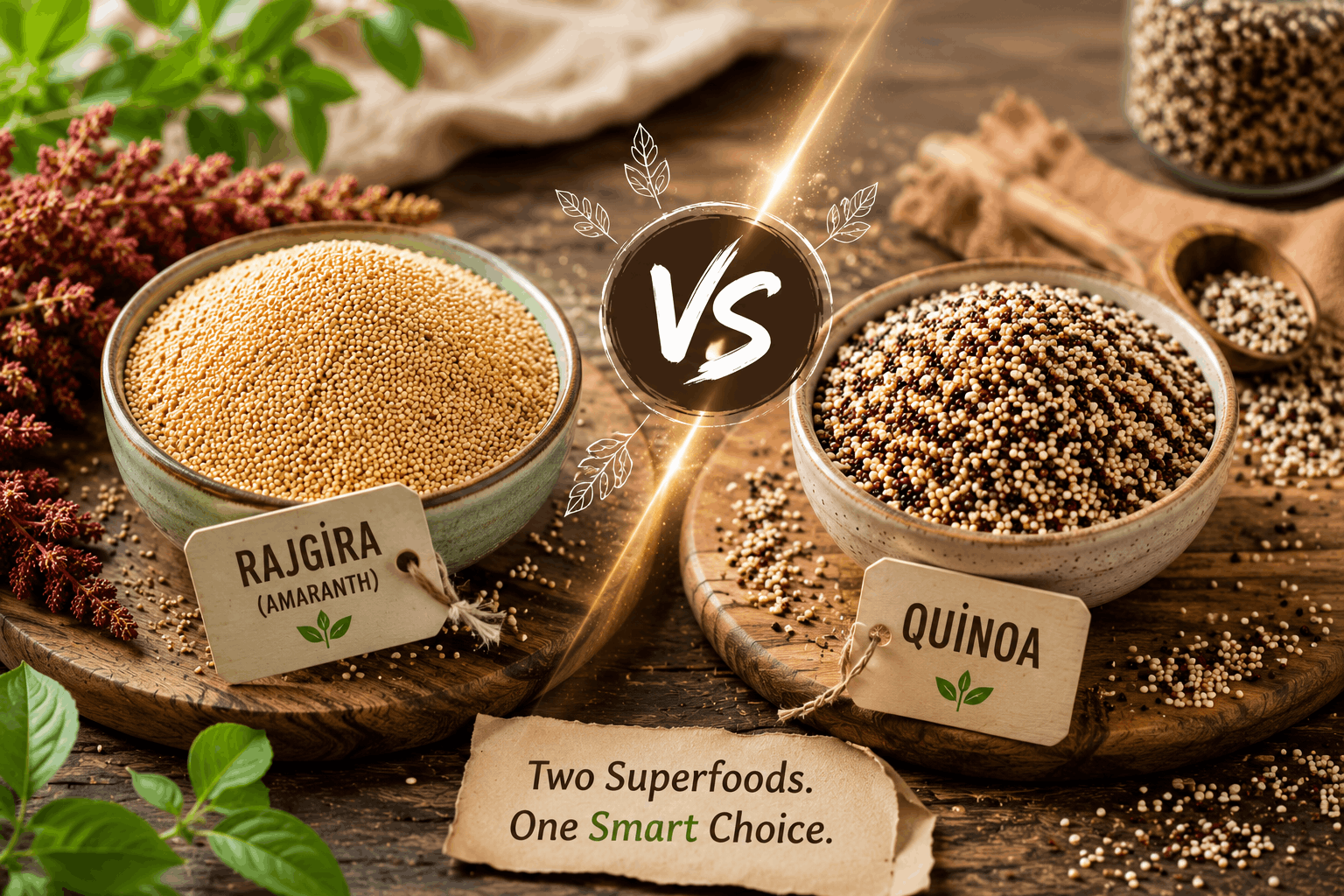

Have you been skipping quinoa because it’s too expensive? Quinoa is often praised as a superfood, but its high price can make it difficult to include in your everyday diet. The good news is that you don’t have to spend a fortune to eat healthy. Rajgira (amaranth) is a nutritious Indian superfood packed with protein, fibre, iron, calcium, and magnesium—at a much lower cost. If you’re looking for the best affordable alternative to quinoa, rajgira is a smart choice that delivers impressive nutrition without putting extra strain on your budget.
In this article, we’ll compare rajgira vs quinoa in terms of nutrition, health benefits, price, and cooking uses to help you decide which superfood offers the best value for your health and budget.
What Is Rajgira?
You’ve probably heard a lot about quinoa, but did you know India offers its own nutritious superfood? For centuries, people across India have included rajgira (amaranth) in their diets. Although many people think of rajgira as a grain, it is actually a pseudocereal—a seed that people cook and eat like a grain. Rajgira naturally provides protein, fibre, iron, calcium, and magnesium, making it a nutritious choice for everyday meals. Since Indian farmers grow rajgira locally, it usually costs much less than imported quinoa. That makes rajgira one of the best affordable alternatives to quinoa for anyone who wants to eat healthy without spending more.
Rajgira vs Quinoa: Nutrition Comparison
Both rajgira and quinoa are nutrient-rich foods that can be part of a healthy diet. However, there are some important differences.
| Nutrient (100 g Uncooked) | Rajgira | Quinoa |
|---|---|---|
| Calories | ~371 kcal | ~368 kcal |
| Protein | ~13.5 g | ~14.1 g |
| Fibre | ~6.7 g | ~7 g |
| Calcium | ~159 mg | ~47 mg |
| Iron | ~7.6 mg | ~4.6 mg |
| Magnesium | ~248 mg | ~197 mg |
| Potassium | ~508 mg | ~563 mg |
| Gluten-Free | Yes | Yes |
Values are approximate and may vary slightly depending on variety and source.
Did You Know?
Rajgira has been cultivated for thousands of years and has long been used in Indian cuisine, especially during fasting (Vrat). Today, it is gaining popularity worldwide as a nutrient-rich alternative to quinoa.
Why Rajgira Is the Best Affordable Alternative to Quinoa
1. More Affordable Without Compromising Nutrition
One of the biggest reasons people choose rajgira over quinoa is its affordability. Since rajgira is widely grown in India, it usually costs much less than imported quinoa while offering a similar nutritional profile. According to nutrition experts, healthy eating doesn’t have to rely on expensive imported superfoods—locally grown, nutrient-dense foods like rajgira can provide comparable nutritional value at a fraction of the cost. If you want to eat healthy without increasing your grocery budget, rajgira is one of the smartest choices.
2. Rich in Plant-Based Protein
Rajgira contains around 13–14 grams of protein per 100 grams, making it an excellent source of plant-based protein. Protein supports muscle maintenance, tissue repair, enzyme production, and helps you feel full for longer after meals. Dietitians recommend including a variety of plant-based protein sources in your diet, and rajgira is an excellent option for vegetarians and anyone looking to boost their daily protein intake naturally. Although quinoa contains slightly more protein, the difference is minimal for most healthy adults.
3. Naturally High in Calcium
Rajgira contains more than three times the calcium found in quinoa, making it an excellent food for supporting bone and teeth health. Calcium also plays an important role in muscle contraction and normal nerve function. Nutrition professionals recommend consuming calcium-rich foods regularly throughout life to help maintain bone health, especially as we age. Including rajgira in your meals is an easy way to increase your calcium intake naturally.
4. Packed with Iron and Magnesium
Rajgira naturally provides higher amounts of iron and magnesium than quinoa. Iron contributes to normal oxygen transport and energy production, while magnesium supports muscle function, nerve signalling, and hundreds of essential biochemical processes in the body. Health experts emphasise that obtaining these minerals from whole foods, rather than relying solely on supplements, is an effective way to support overall health as part of a balanced diet.
5. Naturally Gluten-Free
Like quinoa, rajgira is naturally gluten-free, making it a suitable choice for people with coeliac disease or anyone following a gluten-free eating pattern. Healthcare professionals advise choosing certified gluten-free products if you have coeliac disease, as this helps minimise the risk of cross-contamination during harvesting and processing. Rajgira offers a nutritious alternative to many gluten-containing grains without compromising on flavour or versatility.
6. High in Fibre for Better Digestion
Rajgira is naturally rich in dietary fibre, which supports healthy digestion, promotes regular bowel movements, and helps you stay full for longer. A fibre-rich diet also contributes to heart health and overall digestive well-being when combined with adequate fluid intake. Nutrition experts consistently recommend increasing fibre intake through whole foods because it benefits gut health and supports long-term wellness. With its impressive fibre content and affordable price, rajgira stands out as one of the best affordable alternatives to quinoa for everyday meals.
Health Benefits of Rajgira
Rajgira is more than just an affordable alternative to quinoa. Rich in protein & fibre, and essential minerals, it is a simple, nutritious, and budget-friendly addition to a balanced diet.
1. Helps Keep Your Bones Strong
Your bones need more than just calcium to stay healthy, and rajgira provides a powerful combination of calcium, magnesium, and phosphorus. These minerals work together to support strong bones, healthy teeth, and normal muscle function. Whether you’re a growing child, an active adult, or an older person, including calcium-rich foods like rajgira in your meals is a smart choice for long-term bone health.
Key Nutrients: Calcium, Magnesium and phosphorus.
2. Keeps You Feeling Full for Longer
If you often feel hungry between meals, rajgira can help. Its combination of protein and dietary fibre slows digestion and helps you stay satisfied for longer. This may reduce unnecessary snacking and make it easier to maintain healthy eating habits throughout the day. That’s one reason many nutritionists encourage choosing whole grains and seeds over refined foods.
3. Supports a Healthy Digestive System
A healthy digestive system starts with enough fibre, and rajgira is a great source. Fibre helps keep your bowel movements regular, supports healthy gut bacteria, and contributes to better digestion. Eating fibre-rich foods like rajgira regularly, along with drinking enough water, is a simple way to support your digestive health naturally.
4. A Great Source of Plant-Based Protein
Whether you’re vegetarian, vegan, or simply trying to eat more plant-based foods, rajgira is an excellent choice. It provides high-quality plant-based protein, which your body needs to build and repair tissues, maintain muscle, and carry out many everyday functions. Adding rajgira to your meals is an easy way to increase your protein intake without relying only on animal-based foods.
Protein Helps:
- Build and repair body tissues
- Maintain healthy muscles
- Produce enzymes and hormones
- Support everyday body functions
5. Loaded with Essential Minerals
Rajgira may look like a tiny seed, but it is packed with important minerals, including iron, magnesium, calcium, phosphorus, and manganese. Together, these nutrients help your body produce energy, support strong bones and muscles, and keep many essential body functions working properly. Instead of relying on a single nutrient, nutrition experts recommend eating whole foods like rajgira because they naturally provide a wide range of vitamins and minerals that work together to support overall health.
Key Minerals: Iron, magnesium, calcium, phosphorus and manganese
Easy Ways to Add Rajgira to Your Diet
You don’t need complicated recipes to enjoy rajgira.
Try it as:
- Breakfast porridge
- Rajgira khichdi
- Salad bowls
- Soup topping
- Energy laddoos (eat in moderation due to added sugar)
- Flour for rotis or pancakes
- Healthy snack bars
Tips for Cooking Rajgira
Ingredients: 1 cup rajgira, 2½ to 3 cups water
Method:
- Rinse the rajgira thoroughly.
- Bring the water to a boil.
- Add the rajgira.
- Reduce the heat and simmer for 20–25 minutes.
- Allow it to rest for 5 minutes before serving.
You can use cooked rajgira in salads, curries, breakfast bowls, or as a substitute for rice.
Conclusion
If you’re looking for the best affordable alternative to quinoa, rajgira is an excellent choice. It offers impressive nutrition, including protein, fibre, iron, calcium, and magnesium, at a much lower cost than quinoa. Add rajgira to your daily meals and enjoy a healthy, budget-friendly superfood without compromising on nutrition.
FAQs
Is rajgira healthier than quinoa?
Rajgira contains more calcium, iron, and magnesium, while quinoa has slightly more protein. Both are nutritious foods, and the better choice depends on your dietary needs.
Can rajgira completely replace quinoa?
Yes. For most recipes such as porridge, grain bowls, khichdi, and salads, rajgira can replace quinoa, although the texture and flavour are different.
Is rajgira a complete protein?
Quinoa is a complete protein because it contains all nine essential amino acids in good amounts. Rajgira also provides all essential amino acids and is a high-quality plant protein, making it an excellent choice as part of a balanced diet.
Which is cheaper: rajgira or quinoa?
In India, rajgira is generally much cheaper than imported quinoa, although prices vary by brand and location.
Can I eat rajgira every day?
Yes. Rajgira can be included as part of a balanced diet, provided your meals contain a variety of grains, pulses, fruits, vegetables, and protein sources.
Disclaimer: This article is for informational purposes only and is not intended as medical advice. Consult a healthcare professional for personalized guidance.