Why Protein Is Important: 10 Science-Backed Benefits for Your Health

Table of Contents

When people think about protein, they often picture bodybuilders drinking shakes after a workout. However, the protein benefits go far beyond fitness and muscle building. Protein is an essential nutrient that supports many important functions throughout the body.

Every cell in your body relies on protein. Your muscles, skin, hair, organs, and even your immune system need it to function properly. Without enough protein, your body cannot repair itself efficiently or maintain important daily functions.

The surprising part is that many people focus heavily on carbohydrates and fats while paying little attention to protein intake.

Why Protein Is Important in Daily Life

Protein is important in daily life because it helps your body stay strong and healthy. It supports muscle growth, repairs body tissues, keeps your skin and hair healthy, and helps your immune system fight illness. Eating enough protein every day can also help you feel full for longer and give your body the nutrients it needs to work properly.

Let’s explore why protein deserves a place on your plate every day. Here are 10 science-based reason to eat more protein in daily life.

1. Protein Helps You Feel Full Longer

Have you ever finished a meal and found yourself looking for a snack an hour later? Protein can help prevent that. Unlike foods high in refined carbohydrates or sugar, protein takes longer to digest and helps keep you feeling satisfied for a longer time. It also affects hormones that control hunger and fullness, helping reduce cravings and unnecessary snacking throughout the day. Because of this, people who eat enough protein often find it easier to manage their appetite and maintain a healthy weight. Adding protein-rich foods like eggs, yogurt, lentils, beans, fish, chicken, and nuts to your meals can help you stay fuller, more energized, and less tempted by unhealthy snacks.

Simply put, protein helps control hunger naturally and keeps you satisfied between meals. This can make healthy eating and weight management much easier.

2. Protein Helps Your Body Recover and Repair

Protein helps your body heal, rebuild, and recover every single day.

Every day, your body goes through a lot—even if you don’t realize it. From a busy day at work to a workout at the gym, your muscles and tissues experience small amounts of wear and tear. Protein helps your body fix this damage and build itself back stronger. It plays a key role in healing cuts and injuries, recovering after exercise, and keeping your muscles healthy. That’s why people who are active, recovering from illness, or healing from an injury are often encouraged to eat enough protein. Simply put, protein helps your body recover, stay strong, and be ready for whatever tomorrow brings.

Want to add more protein to your diet? Explore these high-protein foods you can eat every day.

3. Protein Supports a Healthy Metabolism

Protein helps your body burn more calories during digestion.

Nutrition experts explain that protein requires more energy to digest than carbohydrates and fats, which can slightly boost your daily calorie burn. While it’s not a weight-loss shortcut, eating enough protein may support a healthy metabolism and help your body use energy more efficiently throughout the day.

4. Reduce Unhealthy Cravings

Protein can help you stay satisfied and reduce the urge to snack on unhealthy foods.

We’ve all experienced sudden cravings for sweets, chips, or other snacks, even when we’re not truly hungry. Protein may help control these cravings by keeping you full for longer and supporting the hormones that regulate appetite and reward. Studies suggest that people who eat more protein, especially at breakfast, often experience fewer cravings and less late-night snacking. By including protein-rich foods like eggs, yogurt, beans, or nuts in your meals, you may find it easier to make healthier food choices throughout the day.

5. Protein Supports a Healthy Metabolism

Protein helps your body burn more calories while digesting food.

Your body uses energy to digest everything you eat, but protein requires more calories to process than carbohydrates and fats. Experts explain that protein can slightly boost your metabolism and support the calories your body burns for everyday functions like breathing, circulation, and even sleeping. This makes protein an important part of a healthy, balanced diet.

Looking for a protein-rich snack? Explore the protein benefits of pumpkin seeds and why they deserve a place in your daily diet.

6. Protein Helps You Stay Strong as You Age

Getting enough protein can help you maintain strength and independence as you grow older.

As we age, it’s natural to lose some muscle mass and strength, which can affect mobility, balance, and everyday activities. Eating enough protein each day helps support healthy muscles and may slow down age-related muscle loss. Combined with regular physical activity, especially strength or resistance exercises, protein can play an important role in helping you stay active, strong, and independent for longer.

7. Strong Bones Need More Than Calcium

Protein helps keep your bones strong as you age.

While calcium and vitamin D are important for bone health, protein also plays a key role in maintaining bone strength and density. Studies suggest that getting enough protein, along with regular exercise, may help support healthier bones and reduce the risk of fractures later in life.

8. Protein Does Not Harm Healthy Kidneys

Eating enough protein does not harm healthy kidneys.

Many people worry that a high-protein diet can damage the kidneys, but this is generally not true for healthy individuals. According to the National Kidney Foundation, protein is an important nutrient that helps your body build muscle, repair tissues, and stay healthy. Protein limits are usually only needed for people who already have kidney disease. If your kidneys are healthy, you can enjoy protein-rich foods as part of a balanced diet.

Which Food Is Highest in Protein?

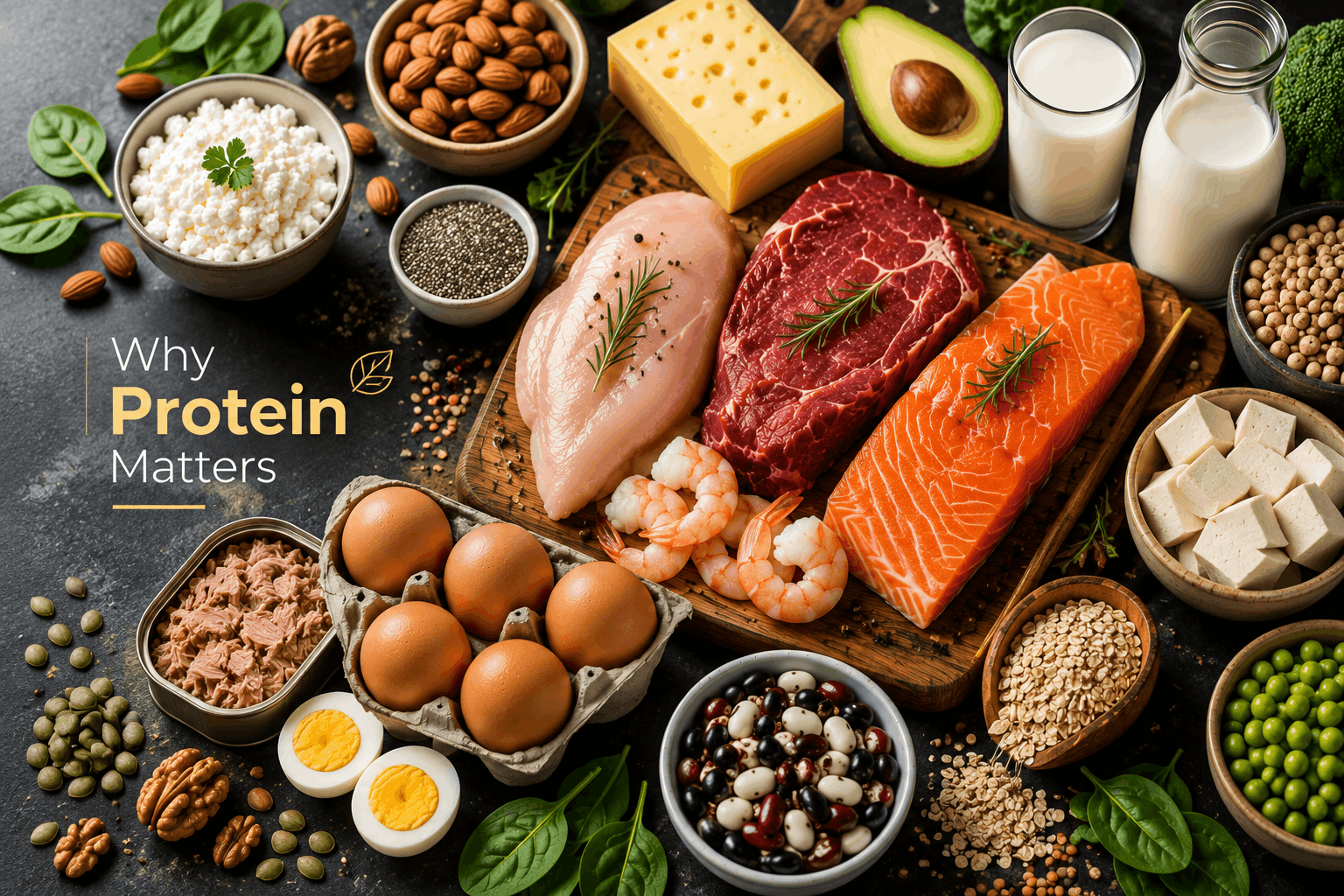
Animal-based protein foods: Chicken breast, fish, eggs, turkey, lean beef, milk, Greek yogurt, paneer, and cheese.

Plant-based protein foods: Soy chunks, tofu, lentils, chickpeas, kidney beans (rajma), quinoa, peanuts, almonds, and other nuts and seeds.

Signs You May Not Be Getting Enough Protein

  • You feel hungry again soon after eating.
  • You often feel tired or low on energy.
  • Your muscles feel weaker than usual.
  • Cuts and wounds take longer to heal.
  • Your hair may become thin or fall out more than normal.
  • Your nails may become weak and brittle.
  • You get sick more often than usual.
  • You find it harder to maintain muscle strength as you age.

If you notice several of these signs, try adding more protein-rich foods like eggs, milk, paneer, lentils, fish, chicken, or soy products to your diet.

FAQs

Why is protein important?

Protein helps build and repair muscles, supports healthy bones, and keeps your body functioning properly.

What foods are high in protein?

Eggs, chicken, fish, milk, paneer, lentils, soy chunks, beans, and nuts are good sources of protein.

Can protein help with weight loss?

Yes, protein can help you feel full for longer and may reduce unhealthy cravings.

Does protein harm healthy kidneys?

No, protein is generally safe for people with healthy kidneys.

How can I get more protein in my diet?

Include a protein source like eggs, dairy, beans, lentils, fish, or soy products in every meal.

Conclusion

Protein is an important nutrient that helps your body stay strong and healthy. It supports your muscles, bones, recovery, and overall well-being. Adding protein-rich foods to your daily meals is a simple way to support your health and feel your best every day.

Disclaimer: This article is for informational purposes only and is not intended as medical advice. Consult a healthcare professional for personalized guidance.

Related Articles

10 Early Signs of Pregnancy Before Missed Period (Implantation Symptoms Explained)

You’re waiting for your period… but something feels different. Not clearly strong enough to confirm anything—but not normal either. Early pregnancy symptoms can start as soon...

How to Improve Gut Health Naturally (7 Best Foods for Better Digestion)

Your gut plays a major role in digestion, immunity, and overall health. It contains trillions of bacteria that must stay balanced for your body...

5 Best Curds for Summer and Their Health Benefits Explained

Summer is the time when your body naturally craves light, cooling, and refreshing foods. While regular dahi is a classic summer favorite, there are...

Why Bel Sharbat Is Becoming India’s Favorite Summer Drink in 2026

As summer temperatures continue to rise, more people are searching for healthy summer drinks that help keep the body cool and refreshed naturally. That’s...
Kajal Dhameliyahttp://www.just2minutes.in
Hi, I'm Kajal Dhameliya, a passionate health and wellness writer dedicated to creating informative, easy-to-understand content on nutrition, healthy living, natural remedies, and lifestyle topics. I believe that health information should be simple, practical, and accessible to everyone. My goal is to simplify complex health concepts and present them in a reader-friendly manner backed by reliable sources and research. Through my articles, I strive to help readers make informed decisions about their health and overall well-being. I regularly write about food, fitness, Ayurveda, women's health, and seasonal wellness topics, with a focus on promoting a healthier and more balanced lifestyle.

LEAVE A REPLY

Please enter your comment!
Please enter your name here

Stay Connected

0FansLike
0FollowersFollow
0SubscribersSubscribe

Related Articles

Latest Articles