
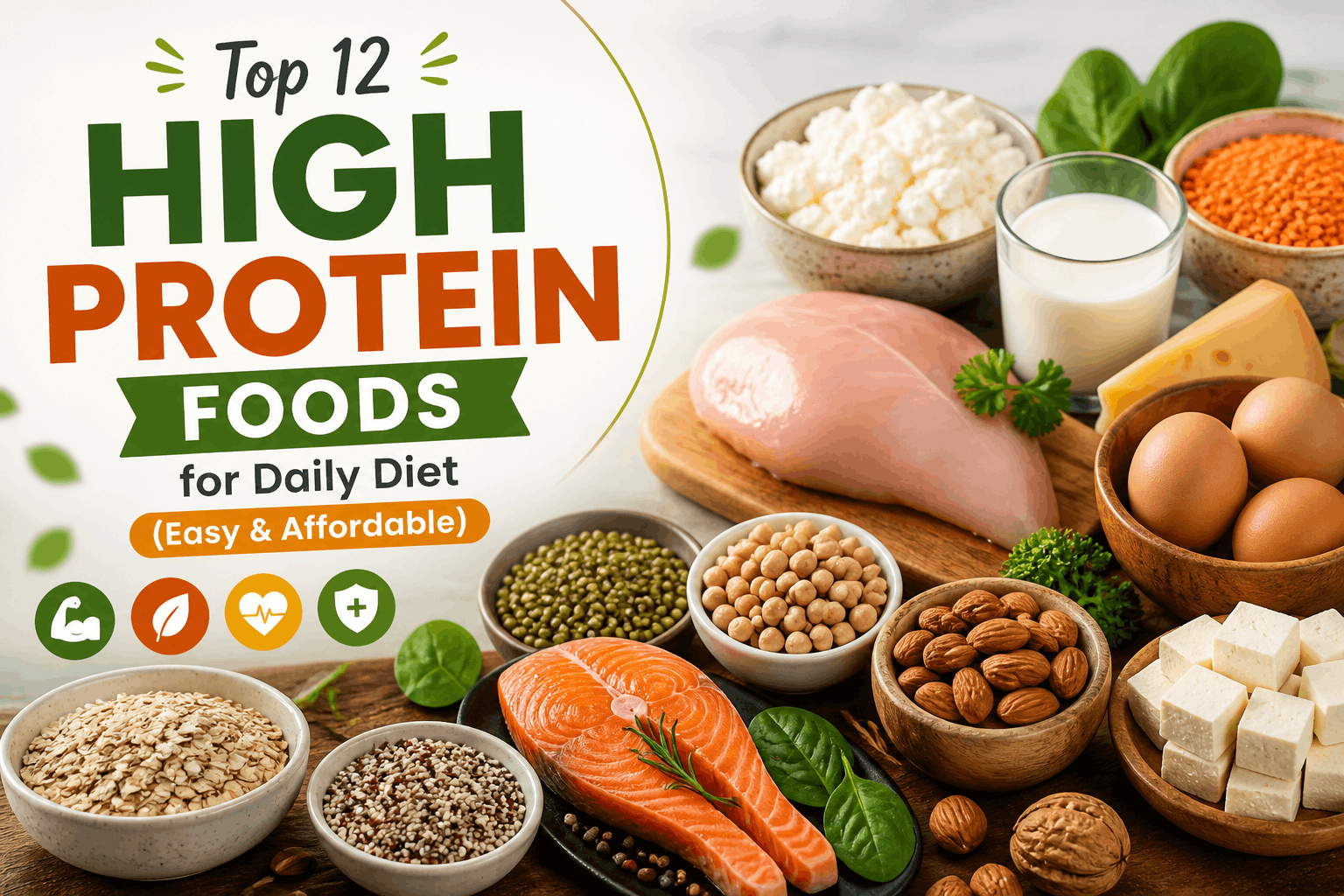
Top 12 High Protein Foods for Daily Diet (Easy & Affordable)

Table of Contents

High protein foods are an important part of a healthy daily diet. They help your body build and repair muscles, keep your energy levels steady, and support overall health. You don’t need expensive supplements to get enough protein—simple foods like eggs, lentils, milk, nuts, and grains can provide what your body needs.

Adding high protein foods to your meals helps you stay full longer and maintain better eating habits. By including protein in each meal, you can improve your strength, energy, and overall well-being.

High protein foods are foods that provide a high amount of protein per serving, such as eggs, chicken, lentils, dairy products, and nuts.

Why Protein Is Important for Your Body

Your body needs protein to grow, repair tissues, and produce important enzymes and hormones. That is why many experts include protein-rich foods for health. Protein also helps control hunger and supports balanced nutrition throughout the day.

When you consume enough protein daily, your body performs more efficiently—from digestion to energy production. Including protein-rich superfoods for health in your routine can improve fitness, strength, and long-term health naturally.

12 High Protein Foods List

High protein foods are essential for keeping your body strong, energized, and well-balanced. They support muscle repair, improve immunity, and help you stay full longer. In this guide, you’ll discover 12 simple protein foods you can easily include in your daily diet.

1. Eggs

Eggs are one of the most nutrient-dense foods you can include in your daily diet. They contain all essential amino acids your body needs and are easy to prepare in different ways.

Protein: ~6g per egg

Benefits:

  • Supports muscle repair and growth
  • Improves brain function (rich in choline)
  • Keeps you full for longer
  • Helps reduce unnecessary snacking

2. Milk and Dairy Products

Milk, yogurt, and cheese are simple yet powerful sources of protein and calcium that can easily fit into your daily routine.

Protein: ~3–10g per serving

Benefits:

  • Strengthens bones and teeth
  • Improves digestion (especially yogurt)
  • Provides steady energy
  • Supports muscle recovery

3. Lentils (Dal)

Lentils are a staple food and an excellent source of plant-based protein and fiber.

Protein: ~9g per 100g

Benefits:

  • Supports healthy digestion
  • Maintains stable energy levels
  • Keeps you full for longer
  • Ideal for vegetarian diets

4. Chickpeas (Chana)

Chickpeas are versatile and can be included in various meals like salads, curries, or snacks.

Protein: ~8–9g per 100g

Benefits:

  • Helps control hunger
  • Supports heart health
  • Provides steady energy
  • Rich in essential nutrients

5. Almonds and Nuts – Healthy Protein Snack

Nuts like almonds are packed with protein, healthy fats, and important nutrients.

Protein: ~20g per 100g

Benefits:

  • Boosts brain function
  • Provides quick and lasting energy
  • Helps control cravings
  • Supports overall health

6. Chicken

Chicken is a lean source of protein that is easy to cook and widely used in daily meals.

Protein: ~27g per 100g

Benefits:

  • Supports muscle strength
  • Helps in body repair and recovery
  • Provides long-lasting energy
  • Easy to include in diet

7. Fish

Fish like salmon and tuna provide both high-quality protein and beneficial fats.

Protein: ~20–25g per 100g

Benefits:

  • Supports heart health
  • Improves brain function
  • Provides essential nutrients
  • Helps maintain overall health

8. Paneer (Cottage Cheese)

Paneer is a rich vegetarian protein source that can be used in many dishes.

Protein: ~18g per 100g

Benefits:

  • Supports muscle growth
  • Keeps you full for longer
  • Easy to include in meals
  • Good for vegetarian diets

9. Soy Products (Tofu, Soybeans)

Soy-based foods are among the best plant-based protein sources available.

Protein: ~16–20g per 100g

Benefits:

  • Supports muscle health
  • Provides complete protein
  • Great alternative to meat
  • Helps maintain balanced nutrition

10. Oats

Oats are not only rich in fiber but also provide a good amount of protein.

Protein: ~11g per 100g

Benefits:

  • Improves digestion
  • Provides steady energy
  • Keeps you full for longer
  • Supports a healthy diet

11. Greek Yogurt

Greek yogurt is thicker and more concentrated than regular yogurt, making it a rich source of protein. It’s easy to include in your daily diet—whether as a breakfast option, snack, or part of a meal.

Protein: ~10g per serving

Benefits:

  • High in protein to support muscle health
  • Contains probiotics that improve digestion
  • Keeps you full for longer
  • Provides calcium for strong bones
  • Easy to pair with fruits or nuts for a healthy snack

12. Quinoa – Complete Plant-Based Protein

Quinoa is a highly nutritious grain that stands out as a complete plant-based protein, meaning it contains all essential amino acids your body needs. It is light, easy to digest, and works well in salads, bowls, or as a rice alternative.

Protein: ~8g per 100g

Benefits:

  • Provides complete protein for overall body support
  • Rich in fiber, helping improve digestion
  • Keeps you full and supports steady energy
  • Naturally gluten-free and easy to digest
  • Contains essential minerals like iron and magnesium

Simple Tips to Increase Protein Intake

Adding protein to your diet doesn’t have to be complicated.

  • Include a protein source in every meal
  • Choose healthy snacks like nuts or yogurt
  • Add lentils or beans to your lunch or dinner
  • Keep your meals balanced and simple

FAQs

How much protein should I eat daily?
Protein needs vary depending on age, weight, and activity level, but a balanced diet with protein in every meal is generally recommended.

Are vegetarian foods rich in protein?
Yes, foods like lentils, chickpeas, paneer, soy products, nuts, and quinoa are excellent plant-based protein sources.

Can I get enough protein without supplements?
Yes, most people can meet their daily protein needs through natural foods without using supplements.

Which food has the highest protein?
Eggs, chicken, fish, and soy products are among the highest protein-rich foods commonly included in daily diets.

Conclusion

Including high protein foods in your daily diet is one of the easiest ways to improve your overall health. You don’t need expensive plans—just focus on natural, everyday foods that nourish your body.

With small, consistent changes, you’ll notice better energy, improved strength, and a healthier lifestyle over time.

Disclaimer: This article is for informational purposes only and is not intended as medical advice. Consult a healthcare professional for personalized guidance.

Related Articles

Stop Just Exercising: The New Way to Actually Get Healthy

For years, we've been told the same advice: exercise more to stay healthy. But it's time to stop just exercising and start focusing on...

Why your diet is not working: The missing link in modern health

Have you been eating healthy, counting calories, and exercising regularly, yet still wondering why your diet is not working? You're not alone. Many people...

10 Early Signs of Vitamin B12 Deficiency You Should Never Ignore

Feeling tired all the time, forgetting things, or having tingling in your hands and feet may seem normal. However, these can be early vitamin...

Early Signs of Health Problems You Should Not Ignore (10 Warning Signals)

Most serious health conditions don’t begin with dramatic symptoms. They start quietly—subtle changes in your body that are easy to overlook or dismiss. These...
Kajal Dhameliyahttp://www.just2minutes.in
Hi, I'm Kajal Dhameliya, a passionate health and wellness writer dedicated to creating informative, easy-to-understand content on nutrition, healthy living, natural remedies, and lifestyle topics. I believe that health information should be simple, practical, and accessible to everyone. My goal is to simplify complex health concepts and present them in a reader-friendly manner backed by reliable sources and research. Through my articles, I strive to help readers make informed decisions about their health and overall well-being. I regularly write about food, fitness, Ayurveda, women's health, and seasonal wellness topics, with a focus on promoting a healthier and more balanced lifestyle.

LEAVE A REPLY

Please enter your comment!
Please enter your name here

Stay Connected

0FansLike
0FollowersFollow
0SubscribersSubscribe

Related Articles

Latest Articles