
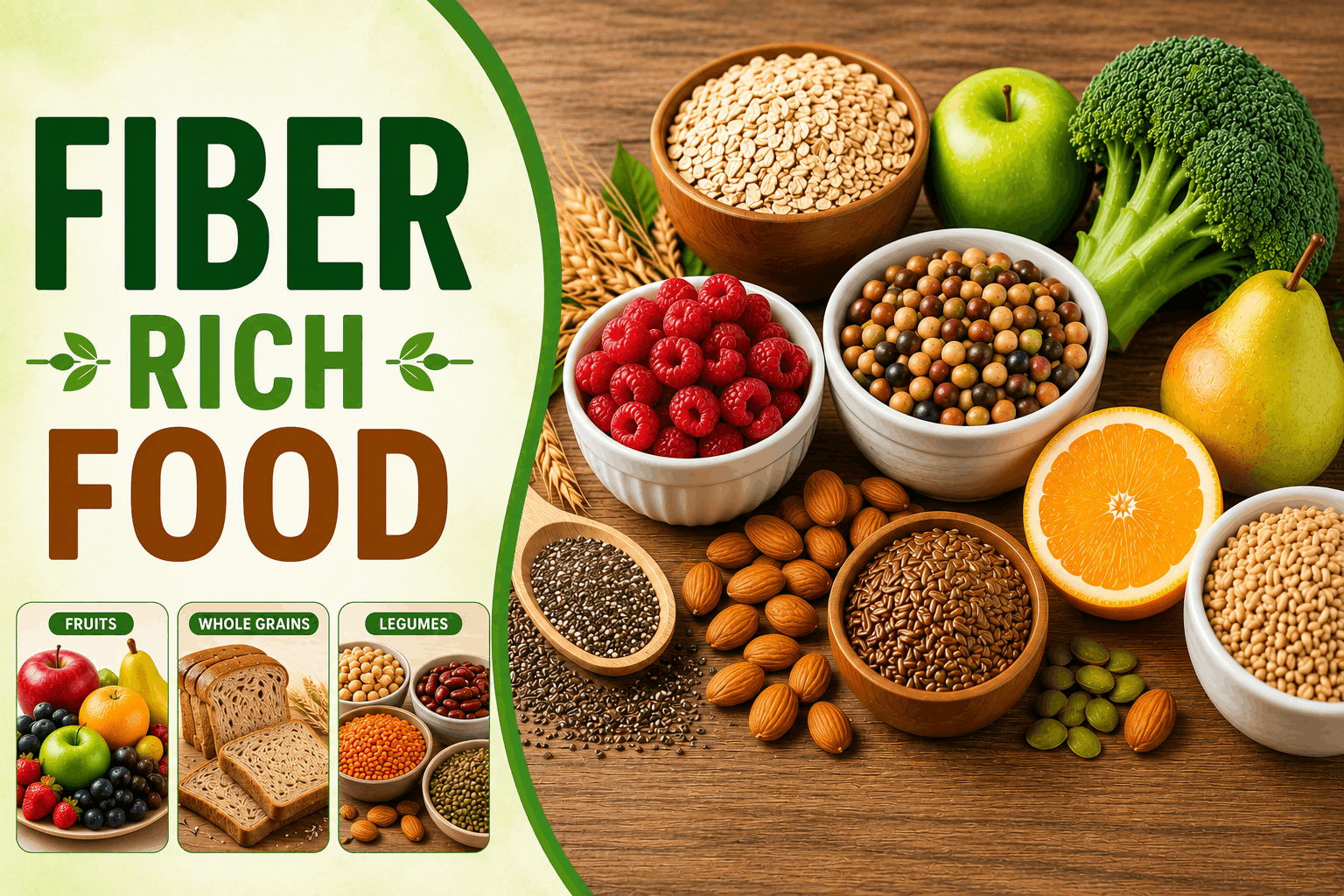

Constipation is a common digestive problem that can cause discomfort and affect daily life. One of the simplest and most effective ways to relieve constipation is by eating fiber-rich foods for constipation. Fiber helps soften stools, supports regular bowel movements, and keeps the digestive system healthy. Adding fiber-rich foods to your diet can improve gut health and naturally prevent constipation.
According to health experts, adults should consume enough dietary fiber each day to maintain healthy digestion and reduce the risk of constipation. A balanced diet rich in fruits, vegetables, whole grains, and legumes is essential for overall digestive well-being.
Understanding Constipation: Causes and Symptoms
Before understanding how fiber helps relieve constipation, it is important to know what constipation is. Constipation occurs when a person has fewer bowel movements than usual or finds it difficult to pass stools. It can happen for many reasons, such as eating too little fiber, not drinking enough water, lack of physical activity, taking certain medicines, or having some health problems.
When you’re constipated, your stools become hard and dry, making them difficult to pass. This can lead to discomfort, bloating, and a feeling of incomplete evacuation. If left untreated, chronic constipation can have a negative impact on your overall health and well-being.
How Fiber Helps Relieve Constipation
Fiber plays a crucial role in maintaining a healthy digestive system and preventing constipation. There are two types of fiber: soluble fiber and insoluble fiber. Soluble fiber absorbs water and forms a gel-like substance in the intestines, while insoluble fiber adds bulk to the stool and helps it move more easily through the digestive tract.
When you consume foods that are high in fiber, they add bulk to your stools and soften them, making them easier to pass. Fiber also helps regulate bowel movements by promoting regularity. It acts as a natural laxative, stimulating the muscles in the intestines to contract and move waste through the digestive system.
Want to improve your gut health naturally? Explore our Guide to fiber-rich foods and healthy habits for better digestion.
Best Fiber-Rich Foods for Constipation Relief
Now that we understand the importance of fiber in relieving constipation, let’s explore some fiber-rich foods that you can incorporate into your diet:
1. Fruits and Vegetables
Fruits and vegetables are excellent sources of fiber. Some fruits that are particularly high in fiber include apples, pears, berries, and oranges. When consuming fruits, it’s best to eat them with the skin whenever possible, as the skin contains a significant amount of fiber. Vegetables such as broccoli, Brussels sprouts, carrots, and spinach are also rich in fiber. Adding a variety of fruits and vegetables to your meals can help increase your fiber intake and relieve constipation.
How to consume: Add fresh fruits to breakfast or enjoy them as snacks. Include salads or cooked vegetables with lunch and dinner.
2. Whole Grains
Whole grains are another great source of fiber. Choose whole grain bread, brown rice, quinoa, and oats instead of their refined counterparts. These whole grains retain the bran and germ, which are rich in fiber and nutrients. Start your day with a bowl of high-fiber cereal or incorporate whole grains into your meals to increase your fiber intake and promote regular bowel movements.
How to consume: Replace white bread and rice with whole wheat bread and brown rice. Start your day with oatmeal or high-fiber cereal.
3. Legumes
Legumes, such as beans, lentils, and chickpeas, are not only rich in fiber but also packed with protein. They are a great addition to soups, stews, salads, and side dishes. Including legumes in your diet can help prevent and relieve constipation.
How to consume: Add beans, lentils, or chickpeas to soups, salads, and curries. You can also use them as a healthy side dish or snack.
Along with a high-fiber diet, Malasana pose may help promote healthy digestion and ease constipation.
Tips to Increase Fiber Intake Naturally
Here are some tips to help you increase your fiber intake and relieve constipation:
- Gradually increase your fiber intake to avoid digestive discomfort.
- Drink plenty of water throughout the day to help soften your stools.
- Include a variety of fiber-rich foods in your meals and snacks.
- Choose whole foods over processed foods, as they tend to be higher in fiber.
- Consider taking a fiber supplement if you’re unable to meet your daily fiber needs through diet alone.
Foods to Avoid During Constipation
Some foods can make constipation worse. Processed foods like chips, fast food, and packaged snacks are usually low in fiber and may slow digestion. Refined foods such as white bread, white rice, and pastries also contain less fiber than whole grains. Eating too many fried foods, sugary drinks, or dairy products may lead to constipation in some people. To keep your digestive system healthy, choose fiber-rich foods and drink plenty of water every day.
Health experts recommend increasing fiber intake gradually to avoid bloating and digestive discomfort. Drinking enough water is also important because fiber works best when the body is well hydrated.
FAQs
1. How much fiber should adults consume daily?
Most adults should consume about 25–38 grams of fiber per day, depending on age and sex.
2. Can eating too much fiber cause problems?
Yes. Increasing fiber too quickly may cause bloating, gas, or stomach discomfort. It is best to increase fiber gradually and drink plenty of water.
3. Which fruits are best for relieving constipation?
Fruits such as apples, pears, berries, oranges, and prunes are rich in fiber and may help relieve constipation.
4. Is drinking water important for constipation?
Yes. Water helps soften stools, making them easier to pass. Fiber works best when combined with adequate fluid intake.
5. When should I see a doctor for constipation?
You should consult a doctor if constipation lasts for several weeks, is severe, or is accompanied by symptoms such as blood in the stool, weight loss, or severe abdominal pain.
Conclusion
Fiber is a natural remedy for constipation that can help promote regular bowel movements and relieve discomfort. Including fiber-rich foods for constipation in your daily diet can support digestive health and promote regular bowel movements. By incorporating fiber-rich foods into your diet and following the tips mentioned, you can effectively manage and prevent constipation. Remember to consult with a healthcare professional if you have chronic or severe constipation that doesn’t improve with dietary changes.
Disclaimer : This article is for informational purposes only and is not intended to replace professional medical advice, diagnosis, or treatment.
Disclaimer: This article is for informational purposes only and is not intended as medical advice. Consult a healthcare professional for personalized guidance.