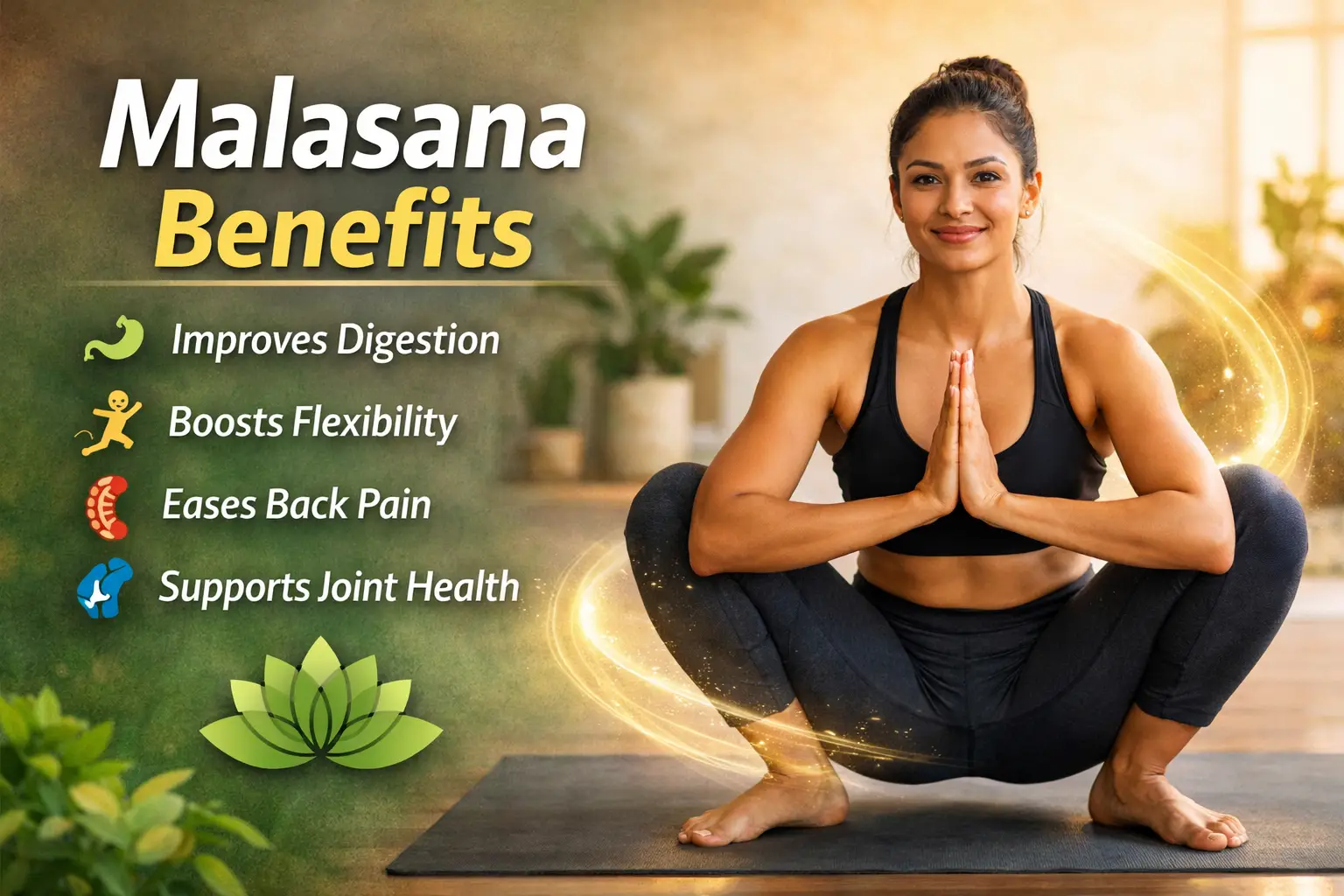
Malasana, also known as Yoga Squat or Garland Pose, is a powerful yoga pose that helps improve digestion, flexibility, and overall body balance naturally. This simple yet effective asana stretches the hips, relieves lower back pain, and supports healthy posture. Discover the top 7 Malasana pose benefits and why it is becoming a popular yoga pose for beginners and wellness enthusiasts.
Many yoga experts recommend practicing Malasana regularly to improve pelvic mobility, support digestive health, and maintain better body posture. Regular practice may also help reduce stiffness caused by long hours of sitting.
What Is Malasana?
Malasana, also known as the yoga squat or Garland Pose, is a simple pose that improves digestion, relieves constipation, increases hip flexibility, and reduces lower back pain. It also supports joint health and overall mobility.
Top 7 Malasana Pose Benefits
In this article, we’ll explore seven science-backed benefits of Malasana (Garland Pose) and how it can support your overall health.
1. Improves Hip Flexibility
2. Strengthens the Lower Body
3. Supports Healthy Digestion
In Malasana, your abdomen is gently compressed. This acts like a natural massage for your digestive organs, helping to:
Add slow breathing, and the benefits get even better.
4. Relieves Lower Back Pain
Too much sitting leads to tight, weak lower back muscles.
5. Supports Joint Health & Mobility
6. Improves Balance & Body Awareness
Malasana (Yoga Squat) or Garland Pose helps improve balance and body awareness by strengthening the lower body and engaging the core muscles. Holding this deep squat posture encourages better posture, stability, and coordination during movement. Yoga experts believe that regular practice of Malasana may help improve overall body control and support better physical alignment naturally.
7. Promotes Calm & Grounding
Being close to the ground has a natural calming effect.
Malasana helps you feel:
- More stable
- More relaxed
- More connected to your body
It’s a simple way to slow down and reset—physically and mentally.
After Malasana, many practitioners like to relax in Child’s Pose (Balasana) to gently stretch the back and release tension.
How to Do Malasana :
- Stand with feet slightly wide, toes a little outward
- Slowly squat down
- Keep heels on the ground (use support if needed)
- Open knees and place elbows inside
- Join hands in front of chest
- Keep back straight and breathe
Tip: Hold for 30 seconds to 2 minutes. Stay relaxed, don’t force the pose.
- Start slow—don’t go too deep
- Use support under your heels if needed
- Keep your back straight, not rounded
- Breathe slowly and stay relaxed
- Practice daily for better results
Consistency matters more than perfection.
Who Should Avoid Malasana
- People with severe knee pain or recent knee surgery
- Those with ankle injuries or severe stiffness
- Anyone with serious lower back issues
- If you feel pain (not stretch), stop immediately
If unsure, practice under guidance or consult a professional.
FAQs
What are the main benefits of Malasana?
Malasana may help improve digestion, increase flexibility, strengthen pelvic muscles, reduce lower back discomfort, and support better body posture naturally.
Can beginners do Malasana every day?
Yes, beginners can practice Malasana daily for a few seconds at a time. Regular practice may gradually improve flexibility and comfort in the pose.
Does Malasana help with digestion?
Malasana gently compresses the abdominal area, which may support better digestion and help reduce bloating or constipation when practiced regularly.
Is Malasana useful for lower back pain?
Malasana can help stretch and relax the lower back and hips, which may reduce stiffness and mild back discomfort caused by prolonged sitting.
How long should you hold the Malasana pose?
Most people can hold Malasana for 20 to 60 seconds while breathing comfortably. Beginners can start with shorter durations and increase gradually.
Who should avoid doing Malasana yoga pose?
People with severe knee injuries, hip problems, or recent lower body surgery should avoid Malasana or practice it only under professional guidance.
Conclusion
Malasana, or the Yoga Squat, is a simple yet powerful yoga pose that offers multiple health benefits for digestion, flexibility, posture, and pain relief. Regular practice may help strengthen the lower body, improve hip mobility, and support overall wellness naturally. Whether you are a beginner or an experienced yoga practitioner, practice Malasana regularly with proper form and breathing to enjoy its full benefits. Over time, this simple yoga pose can help improve flexibility, posture, digestion, and overall well-being.
Disclaimer: This article is for informational purposes only and is not intended as medical advice. Consult a healthcare professional for personalized guidance.