
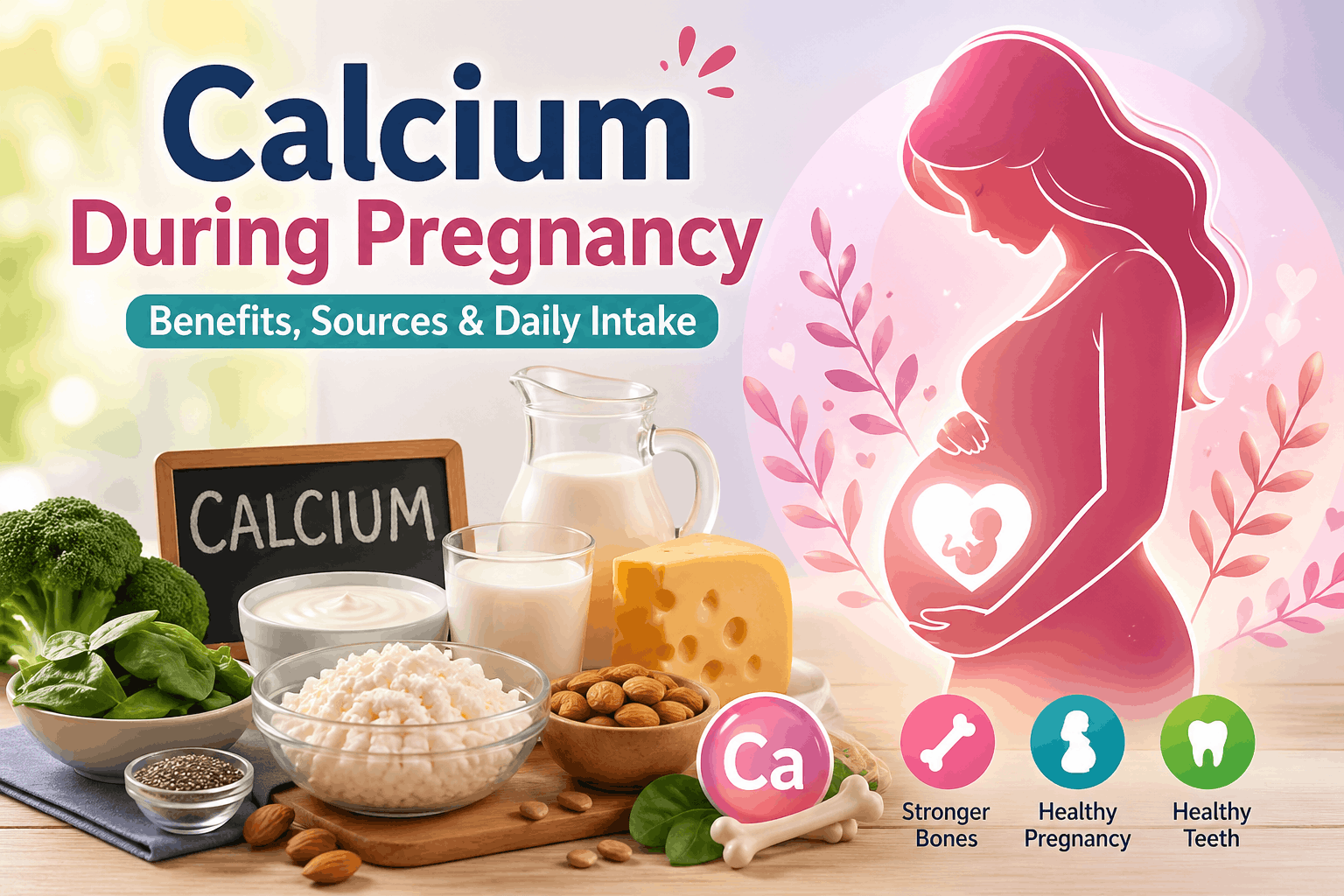

Pregnancy is a crucial phase that requires proper nutrition to support both the mother and the developing baby. Among all essential nutrients, calcium during pregnancy plays a vital role in building strong bones, supporting body functions, and ensuring overall health.
Calcium is essential for both fetal growth and maternal well-being. If your body does not receive enough calcium from your diet, it will begin to take calcium from your bones to meet the baby’s needs. This can weaken your bones over time and affect your long-term health.
Maintaining adequate calcium intake ensures that both you and your baby receive the nutrients needed for healthy development.
Key Benefits of Calcium During Pregnancy
Supports Baby’s Bone Development
Calcium is critical for the formation of your baby’s bones and teeth. Adequate intake ensures proper skeletal growth and reduces the risk of weak bone development in the baby.
Maintains Maternal Bone Health
When calcium intake is low, the body draws calcium from the mother’s bones. This can weaken bone density over time. Consuming enough calcium helps protect maternal bone strength and reduces the risk of osteoporosis.
Supports Muscle and Nerve Function
Calcium helps muscles contract and relax properly while supporting nerve communication. It plays an important role in overall body coordination and is especially important during labor.
Helps in Blood Clotting
Calcium is necessary for proper blood clotting, which is essential during childbirth. It helps prevent excessive bleeding and supports recovery after delivery.
May Reduce Risk of Pre-eclampsia
Adequate calcium intake has been linked to a reduced risk of pre-eclampsia, a condition characterized by high blood pressure during pregnancy. Maintaining proper calcium levels supports healthy blood pressure regulation.
Prevents Maternal Bone Loss
During pregnancy and breastfeeding, the demand for calcium increases significantly. Sufficient intake helps preserve bone density and protects long-term maternal health.
What Happens If Calcium Is Low During Pregnancy
Weak Bone Development in Baby
Low calcium levels can affect the proper formation of the baby’s bones and teeth. Without enough calcium, the baby may not develop a strong skeletal structure, which can impact growth.
Maternal Bone Weakness
If calcium intake is insufficient, the body takes calcium from the mother’s bones. Over time, this can lead to bone loss and increase the risk of future bone-related conditions.
Muscle Cramps and Discomfort
Calcium deficiency can cause muscle cramps, stiffness, and body aches. These symptoms are commonly experienced in the legs, especially during the night.
Nerve Function Issues
Low calcium levels may affect nerve signaling, leading to tingling sensations, numbness, or weakness. Proper calcium intake supports a healthy nervous system.
Higher Risk of Preeclampsia
Insufficient calcium intake may increase the risk of high blood pressure during pregnancy. This condition can be harmful if not properly managed.
Risk of Excessive Bleeding
Calcium plays a key role in blood clotting. Low levels may increase the risk of heavy bleeding during childbirth.
Long-Term Health Effects
Calcium deficiency during pregnancy can have lasting effects, including weak bones, fatigue, and dental problems. Maintaining proper intake helps support long-term health.
Daily Requirements Calcium During Pregnancy
Pregnant lady aged 19–50 typically need around 1,000 mg of calcium per day. Meeting this requirement through diet is essential for both maternal and fetal health.
Best Sources of Calcium
You can easily meet your calcium needs by including these foods in your daily diet:
- Milk, yogurt, and cheese
- Fortified plant-based milk
- Leafy green vegetables like kale, broccoli, and spinach
- Almonds and seeds
- Calcium-fortified foods
It is always recommended to consult a healthcare professional before taking calcium supplements.
FAQs
How much calcium is needed during pregnancy?
Most pregnant lady need about 1,000 mg of calcium daily.
What happens if calcium is low during pregnancy?
Low calcium can affect the baby’s bone development and weaken the mother’s bones.
Can I take calcium supplements during pregnancy?
Yes, but only under the guidance of a healthcare provider.
Which trimester needs the most calcium?
Calcium is important throughout pregnancy, but the third trimester requires higher intake as the baby’s bones develop rapidly.
Conclusion
Calcium during pregnancy is essential for the healthy development of your baby and the well-being of the mother. From building strong bones to supporting vital body functions, calcium plays a key role in a healthy pregnancy. By including calcium-rich foods in your daily diet, you can ensure proper nutrition and support both your health and your baby’s growth.
Disclaimer: This article is for informational purposes only and is not intended as medical advice. Consult a healthcare professional for personalized guidance.