
Every summer, watermelon becomes a favorite fruit—but its seeds often create confusion. Some people believe they are harmful, while others consider them a powerful superfood. So, what is the real truth in 2026?
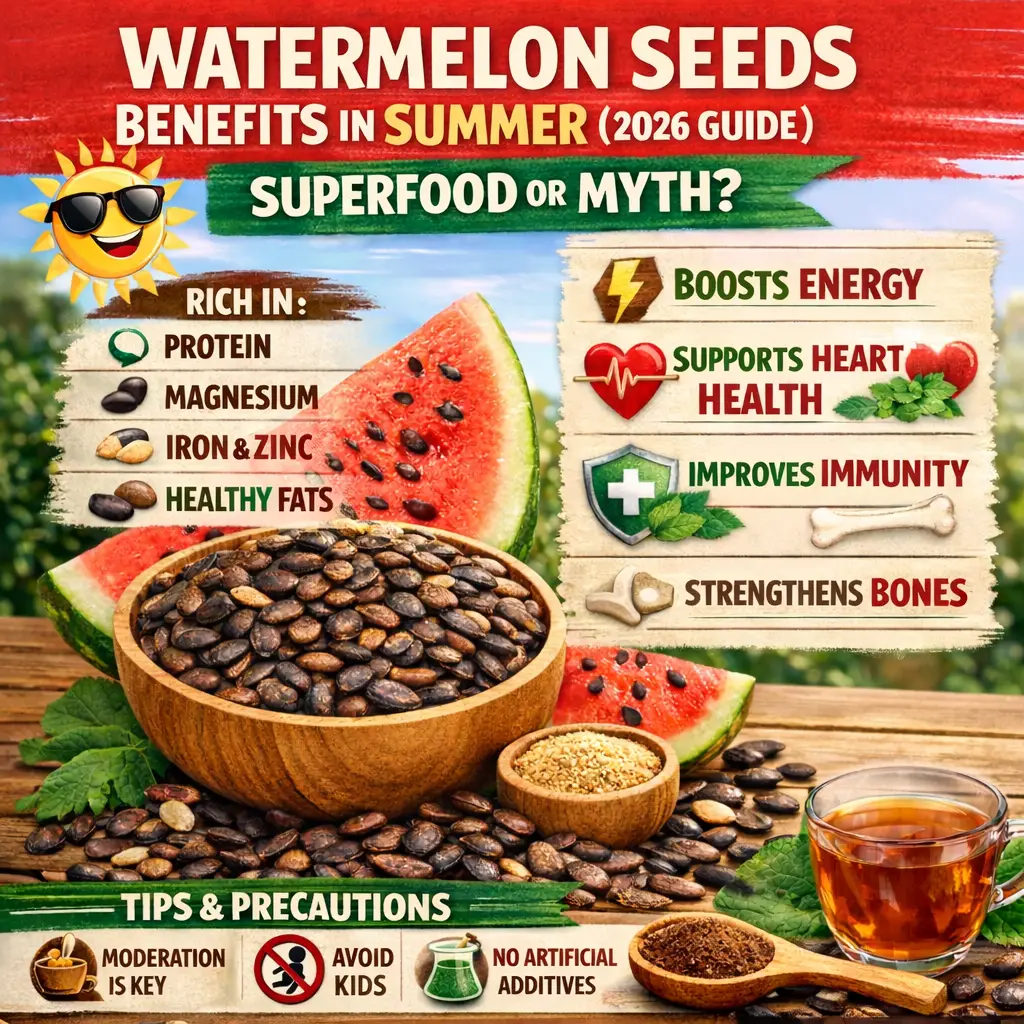
Watermelon seeds are completely safe and highly nutritious when consumed in moderation. Watermelon seeds are rich in protein, healthy fats, magnesium, iron, and zinc. They may support energy, heart health, muscle function, and immunity when consumed in moderation during summer.
Nutritional Value of Watermelon Seeds
Watermelon seeds are packed with essential nutrients that support overall health:
- High in protein for energy and muscle support
- Rich in magnesium for heart and nerve function
- Contains iron and zinc for immunity
- Provides healthy fats for long-lasting energy
A more reliable approximate range per 100 g of dried edible watermelon seed kernels is:
| Nutrient | Approx. Value |
|---|---|
| Calories | 550–600 kcal |
| Protein | 28–30 g |
| Fat | 47–52 g |
| Carbohydrates | 13–18 g |
| Fiber | 3–5 g |
| Magnesium | 500–560 mg |
| Iron | 7–8 mg |
| Zinc | 9–10 mg |
| Phosphorus | 700–800 mg |
| Potassium | 600–650 mg |
Benefits of Watermelon Seeds in Summer
Boosts Energy During Summer
Hot weather can reduce energy levels. Watermelon seeds provide protein and healthy fats that help maintain stamina throughout the day.
Supports Heart Health
Magnesium and good fats help:
- Regulate blood pressure
- Lower bad cholesterol (LDL)
Improves Immunity
Nutrients like iron and zinc:
- Strengthen the immune system
- Help reduce fatigue
Promotes Bone Strength
Minerals such as magnesium and phosphorus support strong bones and improve skeletal health.
Enhances Skin & Hair Health
Antioxidants and healthy fats:
- Reduce inflammation and acne
- Improve skin glow and hair strength
Aids in Weight Management
Watermelon seeds help you feel full longer, reducing unhealthy snacking and supporting a balanced diet.
Important Precautions When Consuming Watermelon Seeds
- Always choose seeds free from artificial colors or chemical dyes
- Avoid overeating, as high fat content may cause discomfort
- Seeds can be a choking hazard for children
- People with digestive issues should consume them in limited amounts
- Pregnant lady can safely eat watermelon seeds in small quantities
Tip: Watermelon seed tea can be a healthier alternative to fried or heavily roasted seeds.
Best Ways to Eat Watermelon Seeds
- Roast them for a crunchy, healthy snack
- Grind into powder and add to smoothies
- Mix with nuts for a nutritious snack
FAQs
Are watermelon seeds good for health?
Yes, watermelon seeds contain protein, healthy fats, magnesium, iron, and zinc that may support overall health when eaten in moderation.
Can you eat watermelon seeds in summer?
Yes, eating watermelon seeds in summer is generally safe and can provide nutrients and energy. Roasted seeds are commonly consumed as a healthy snack.
Do watermelon seeds cause stomach problems?
Eating too many watermelon seeds may cause bloating or digestive discomfort in some people, especially if consumed in large quantities.
Are black watermelon seeds safe to eat?
Yes, black watermelon seeds are safe to eat. Many people roast or sprout them to improve taste and digestion.
What are the benefits of watermelon seeds?
Watermelon seeds may help support heart health, energy levels, muscle function, and immunity because they contain minerals, protein, and healthy fats.
Can watermelon seeds help in weight loss?
Watermelon seeds may support weight management because they are rich in protein and fiber, which can help you feel full longer when eaten in controlled portions.
Conclusion
Watermelon seeds are not harmful—they are a hidden summer superfood. Watermelon seeds are small but surprisingly nutritious. Rich in protein, healthy fats, magnesium, and iron, they can be a smart addition to your summer diet when eaten in moderation. Instead of being a harmful myth, watermelon seeds are closer to a natural superfood with several health benefits.
Disclaimer: This article is for informational purposes only and is not intended as medical advice. Consult a healthcare professional for personalized guidance.