
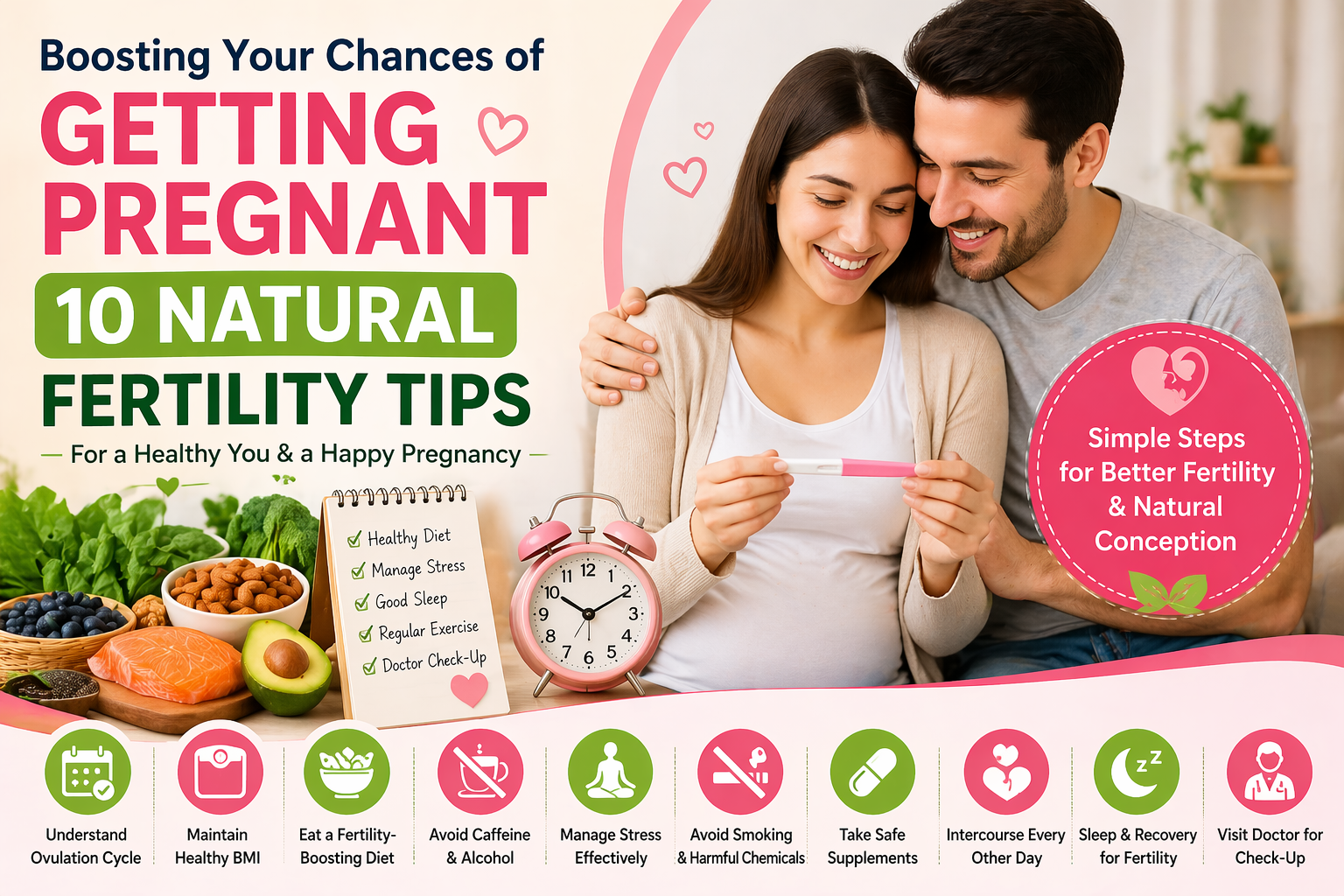

Trying to conceive can be exciting, but it often takes time and the right approach. Many couples look for ways to get pregnant naturally and increase their chances of pregnancy. Factors like ovulation timing, lifestyle, and overall health play a key role in fertility. By understanding your cycle and making simple changes—such as improving diet, reducing stress, and maintaining a healthy routine—you can boost your chances of getting pregnant.
In this guide, we’ll share 10 natural ways to improve fertility and support your journey to pregnancy.
Boosting Your Chances of Getting Pregnant: 10 Natural Fertility Tips
Understand Your Ovulation Cycle to Get Pregnant
Ovulation is when your body releases an egg, and this is the most fertile time to conceive. In a 28-day cycle, ovulation usually happens around day 14, but it can vary. The egg lives only 12–24 hours, so timing matters a lot.
Your fertile window is the few days before ovulation and the day it happens. If you’re not sure about your cycle, have intercourse on alternate days like day 8, 10, 12, 14, and 16 or day 9, 11, 13, 15, and 17 to cover the fertile period. Tracking your cycle helps you time better and increases your chances of getting pregnant naturally.
Maintain a Healthy BMI for Better Fertility
Maintaining a healthy BMI (18.5–24.9) is key for fertility, as it keeps hormones balanced and ovulation regular. Being underweight or having a higher body weight can disrupt menstrual cycles and reduce the chances of pregnancy. A balanced diet and regular exercise help achieve this, making your body more ready for natural conception.
Eat a Fertility-Boosting Diet for Natural Conception
A healthy diet supports hormones, ovulation, and egg quality, which can improve your chances of getting pregnant naturally.
Include fruits, vegetables, whole grains, lentils, nuts, seeds, and lean proteins. These provide key nutrients like folic acid, iron, zinc, and antioxidants that support fertility. Add healthy fats such as olive oil, nuts, and omega-3 rich foods for better hormone balance.
Avoid too much junk food, sugar, and processed foods, as they can affect hormonal health. A simple, balanced diet helps prepare your body for a healthy pregnancy.
Avoid Caffeine and Alcohol
Too much caffeine and alcohol can lower fertility and reduce your chances of getting pregnant. High caffeine intake may affect hormones and ovulation, so keep it limited to about 1 cup of coffee per day or less. Alcohol can also reduce egg and sperm quality, so it is best to avoid it completely while trying to conceive. Cutting back on both helps improve reproductive health and supports a healthier pregnancy.
Stress Management Techniques to Improve Fertility
High stress can affect your hormones and may delay ovulation, which can make it harder to get pregnant. Stress can negatively affect your chances of conceiving by disrupting reproductive hormones.
While trying to conceive, stay relaxed and positive. Simple habits like walking, yoga, deep breathing, meditation, and proper sleep can help reduce stress. Even small daily moments of calm can support hormone balance and improve your chances of natural conception.
Avoid Smoking and Harmful Chemicals
Smoking seriously reduces fertility and lowers the chances of getting pregnant by damaging egg and sperm quality. Exposure to harmful chemicals, including pesticides and BPA (found in some plastics), can disrupt hormones and affect reproductive health. For better results, it is important to quit smoking completely and reduce contact with toxic substances as much as possible. A clean, healthy body significantly improves your chances of natural conception.
Safe Fertility Supplements
Studies suggest that key supplements can play a powerful role in supporting fertility health for people trying to conceive. For women, folic acid, vitamin B12, vitamin D, iron, and omega-3 fatty acids may help strengthen egg quality, support hormonal balance, and promote a healthy uterine environment. For men, nutrients like zinc, vitamin C, and coenzyme Q10 may help enhance sperm quality, improve motility, and support overall reproductive function. However, supplement needs are highly individual, so it is essential to consult a doctor before starting any routine to ensure safety, effectiveness, and the correct dosage.
Intercourse Every Other Day (Fertile Window)
Having intercourse on alternate (every other) days during the fertile window is a simple and effective way to increase the chances of pregnancy. Instead of stressing about exact timing, couples can focus on consistency from about day 8 to 16 of a typical cycle. For example, if your cycle is 28 days, you can have intercourse on day 8, 10, 12, and 14 or 9, 11, 13, and 15. This ensures sperm is regularly present in the body when ovulation occurs, increasing the likelihood of fertilization.
Sleep and Recovery for Fertility
Good sleep and recovery are very important for fertility. Aim for 7–8 hours of quality sleep every night, as it helps balance hormones and supports healthy egg and sperm function. Stress-free sleep is mandatory for conceiving pregnancy because poor sleep and stress can reduce the chances of conception by affecting reproductive health. Rest well, relax, and let your body recover to create the best conditions for natural pregnancy.
Visit a Doctor for a Preconceptional Check-Up
A preconceptional check-up helps identify health issues, optimize hormone levels, and guide lifestyle and supplements. Seeing a doctor early can boost fertility, reduce risks, and improve chances of a healthy pregnancy.
FAQs
How long should I try before seeing a doctor?
- Fertility is generally highest in the 20s and early 30s. However, if you are under 35, you can try for up to 12 months before seeing a doctor. If you are 35 or older, it is recommended to consult a doctor after 6 months of trying.
Do supplements guarantee pregnancy?
- No, they support fertility but don’t guarantee conception.
How often should I have intercourse?
- Every 1–2 days during the fertile window (about days 9–16 of a 28-day cycle).
Is sleep really that important for fertility?
- Yes, stress-free sleep is mandatory for hormone balance and reproductive health.
Can BMI affect fertility?
- Yes, staying in a healthy BMI range (18.5–24.9) supports ovulation and increases chances of natural conception.
Conclusion
A healthy lifestyle, proper supplements, timed intercourse, good sleep, and regular check-ups all work together to boost fertility naturally and prepare your body for conception. Start small, stay consistent, and take control of your fertility journey today.
Disclaimer: This article is for informational purposes only and is not intended as medical advice. Consult a healthcare professional for personalized guidance.