
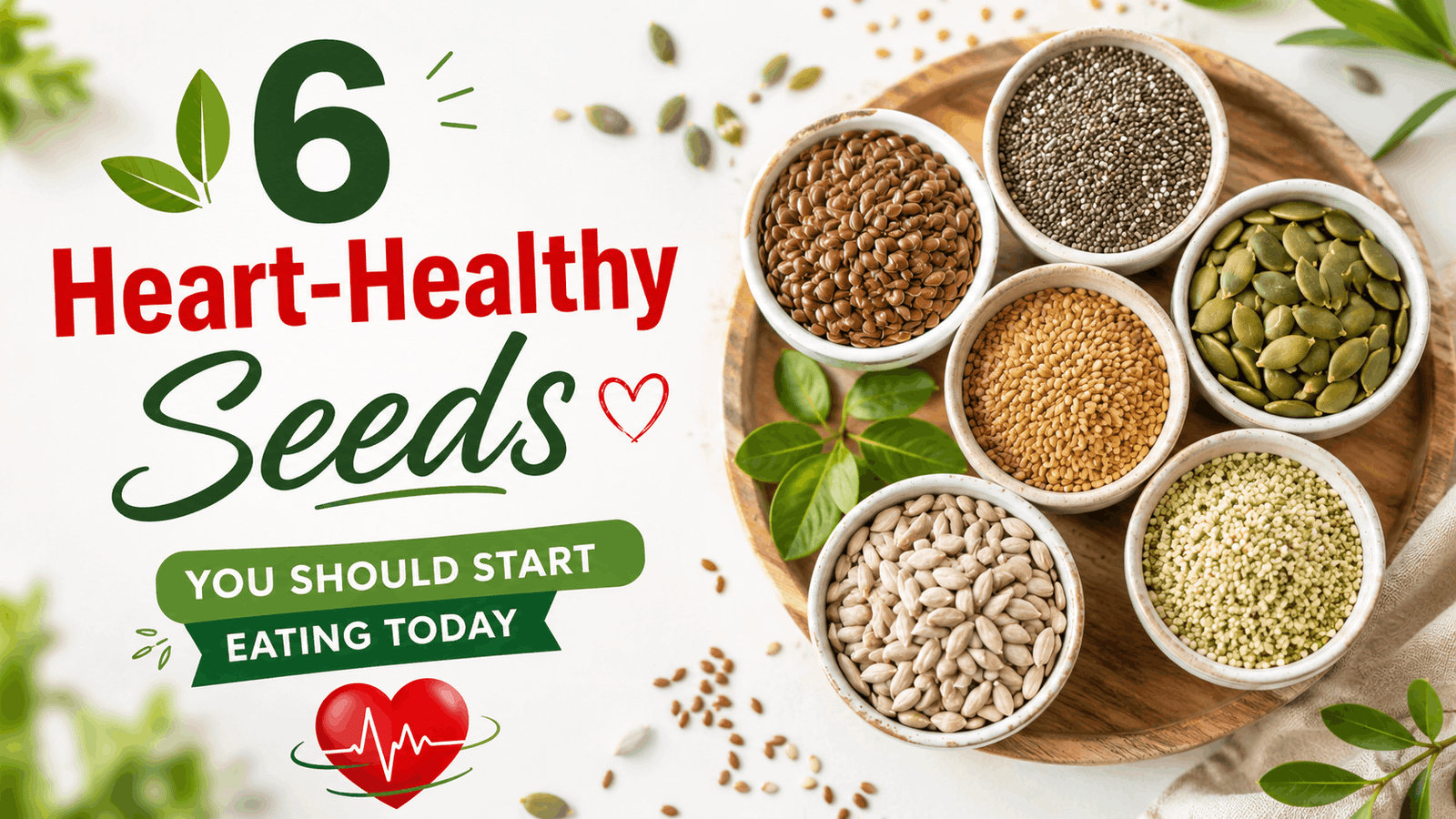

Your heart works 24/7, and the foods you eat every day can make a real difference. Adding heart-healthy seeds to your diet is a simple way to get healthy fats, fiber, and essential minerals that support cardiovascular health.
Health experts recommend eating more whole foods instead of processed ones to support a healthy heart. Superfoods like flaxseeds, pumpkin seeds, walnuts, oats, berries, and salmon are rich in fiber, healthy fats, and antioxidants. Combined with regular exercise and a balanced lifestyle, these seeds can help support your heart and overall well-being.
Best Heart-Healthy Seeds to Add to Your Daily Diet
1. Flaxseeds
Flaxseeds are a simple superfood that can help support heart health. They are rich in plant-based omega-3 (ALA), fiber, protein, magnesium, and antioxidants called lignans, which support cardiovascular wellness. Research suggests that regularly eating flaxseeds may help maintain healthy cholesterol levels and support heart health as part of a balanced diet. Add 1–2 tablespoons of ground flaxseeds to oatmeal, smoothies, yogurt, or salads for an easy heart-friendly boost.
2. Chia Seeds
Chia seeds are a tiny superfood packed with nutrients that support heart health. They are rich in plant-based omega-3 (ALA), fiber, protein, calcium, magnesium, and antioxidants, making them a great addition to a heart-friendly diet. Research suggests that regular chia seed consumption may help support healthy cholesterol levels and blood pressure as part of a balanced diet. Add 1–2 tablespoons to smoothies, yogurt, oatmeal, or soak them overnight to make chia pudding.
3. Pumpkin Seeds
Pumpkin seeds are a crunchy and nutritious snack that supports overall heart health. They are rich in magnesium, zinc, healthy fats, protein, fiber, and antioxidants, which help support normal heart function. Studies indicate that diets rich in magnesium are associated with better cardiovascular health. Enjoy a small handful as a snack or sprinkle them over salads, soups, or breakfast bowls.
4. Sesame Seeds
Sesame seeds are small but loaded with nutrients that are good for your heart. They contain healthy fats, calcium, magnesium, iron, fiber, and lignans, which help support cardiovascular wellness. Research suggests that sesame seeds may help maintain healthy cholesterol levels when included in a balanced diet. Sprinkle them over salads, vegetables, stir-fries, or use them in homemade chutneys and tahini.
5. Sunflower Seeds
Sunflower seeds are a delicious way to add heart-friendly nutrients to your meals. They are rich in vitamin E, healthy fats, protein, magnesium, selenium, and antioxidants, which help protect cells and support heart health. Studies suggest that replacing unhealthy snacks with nutrient-rich seeds may contribute to better heart health as part of an overall healthy diet. Eat a handful as a snack or add them to oatmeal, yogurt, salads, or homemade trail mix.
6. Hemp Seed
Hemp seeds are a nutrient-dense superfood that can be a great addition to a heart-healthy diet. They are rich in plant-based protein, omega-3 and omega-6 fatty acids, magnesium, iron, zinc, and vitamin E, all of which support overall cardiovascular health. Research suggests that diets rich in unsaturated fats and magnesium can help support heart health when combined with a balanced lifestyle. Sprinkle 1–2 tablespoons of hemp seeds over smoothies, yogurt, oatmeal, salads, or blend them into homemade energy bars.
Quick Comparison of Heart-Healthy Seeds
| Seed | Main Nutrient | Best Known For |
|---|---|---|
| Flaxseed | Omega-3 | Heart Health |
| Chia | Fiber | Digestion |
| Pumpkin | Magnesium | Heart Function |
| Sesame | Calcium | Bone Support |
| Sunflower | Vitamin E | Antioxidants |
| Hemp | Protein | Plant Nutrition |
Things to Keep in Mind Before Adding These Seeds to Your Diet
These seeds are healthy, but eating them the right way is important.
- Start with 1–2 tablespoons a day instead of eating too much at once.
- Drink plenty of water, especially when eating flaxseeds or chia seeds, as they are high in fiber.
- Choose plain, unsalted seeds for the best health benefits.
- Store seeds in an airtight container to keep them fresh.
- If you have a seed allergy or any medical condition, talk to your doctor before adding them to your diet.
- Remember, these seeds work best as part of a balanced diet and healthy lifestyle, not as a replacement for other nutritious foods.
Tip: Add a mix of flaxseeds, chia seeds, pumpkin seeds, sesame seeds, sunflower seeds, and hemp seeds to your meals instead of relying on just one type. Variety gives you a wider range of nutrients.
Frequently Asked Questions (FAQs)
1. Which seed is best for heart health?
There isn’t a single “best” seed. Flaxseeds, chia seeds, pumpkin seeds, sesame seeds, sunflower seeds, and hemp seeds all offer different nutrients that support heart health.
2. Can I eat these seeds every day?
Yes. Most healthy adults can enjoy 1–2 tablespoons of mixed seeds daily as part of a balanced diet.
3. Should I eat these seeds raw or roasted?
Both are good options. Choose unsalted and dry-roasted seeds whenever possible to avoid extra sodium and unhealthy oils.
4. Which seed is highest in omega-3?
Flaxseeds and chia seeds are among the richest plant-based sources of omega-3 fatty acids (ALA).
5. Can these seeds help lower cholesterol?
These seeds contain fiber and healthy fats that may help maintain healthy cholesterol levels when eaten regularly as part of a balanced diet.
6. Can people with diabetes eat these seeds?
Yes. These seeds are generally suitable for people with diabetes because they are rich in fiber and healthy fats. However, it’s best to consult your healthcare provider for personalized advice.
7. What’s the easiest way to include these seeds in my diet?
You can sprinkle them over oatmeal, yogurt, smoothies, salads, soups, or homemade energy bars. They also make a healthy topping for breakfast bowls.
8. Are there any side effects of eating too many seeds?
Eating large amounts may cause bloating or digestive discomfort, especially if you’re not used to a high-fiber diet. Start with small portions and drink plenty of water.
Conclusion
Taking care of your heart doesn’t have to be complicated. Adding nutrient-rich seeds like flaxseeds, chia seeds, pumpkin seeds, sesame seeds, sunflower seeds, and hemp seeds to your daily diet is a simple way to support heart health. These seeds provide healthy fats, fiber, protein, vitamins, and minerals that your body needs. Combine them with regular exercise, enough sleep, and a balanced diet to keep your heart healthy for years to come.
Disclaimer: This article is for informational purposes only and is not intended as medical advice. Consult a healthcare professional for personalized guidance.