
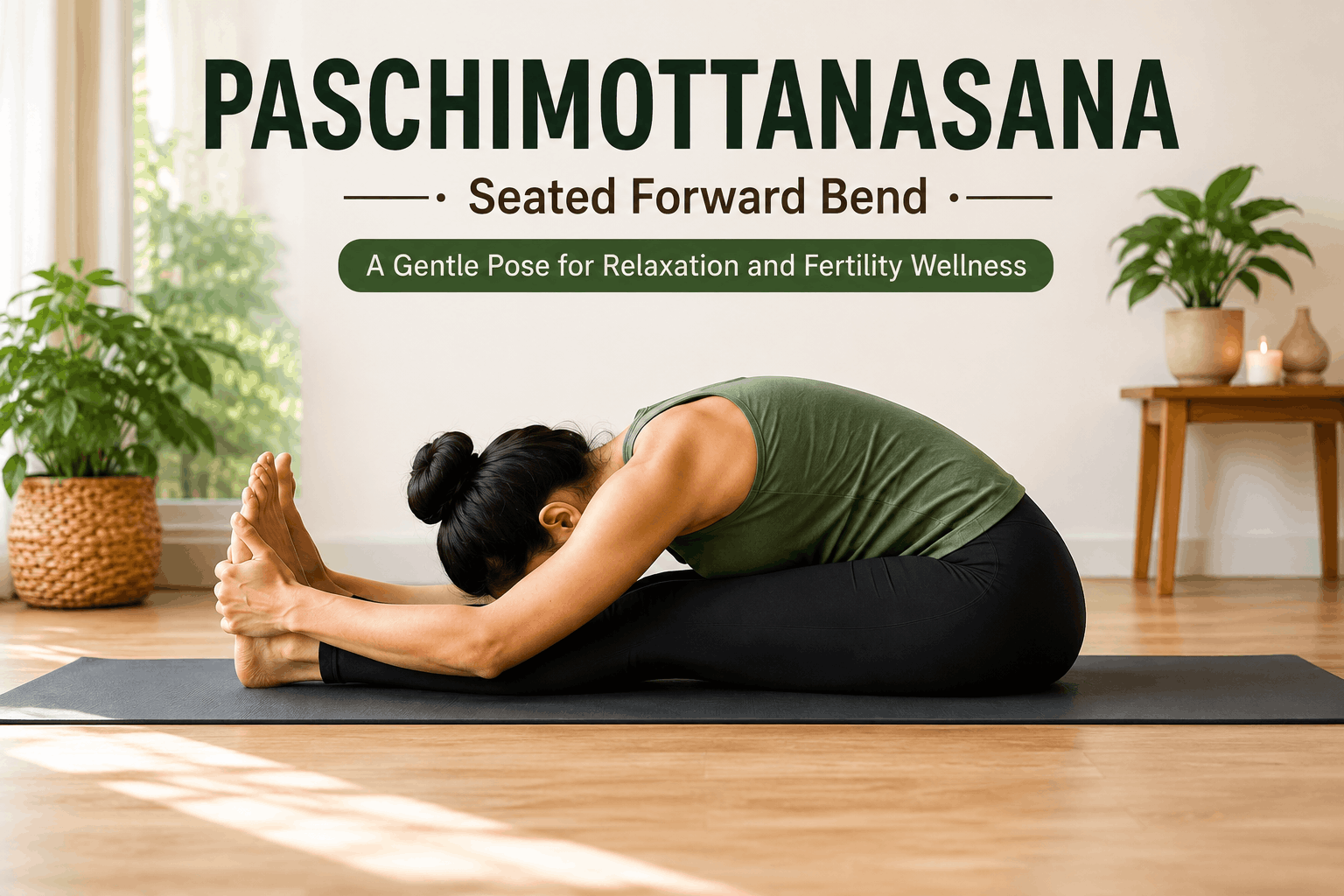

Could a simple forward bend become a calming part of your fertility journey? If you’re trying to conceive, it’s natural to explore healthy habits that support your overall well-being. Paschimottanasana, also known as Seated Forward Bend, is a gentle yoga pose that helps stretch the back, hips, and hamstrings while encouraging slow, deep breathing. Many women include it in their wellness routine because it promotes relaxation and helps ease everyday stress, which is important for overall reproductive health. While Paschimottanasana cannot treat infertility or guarantee pregnancy, practising it regularly alongside a balanced diet, healthy lifestyle, and medical guidance may support your fertility journey. In this article, you’ll learn the benefits of Paschimottanasana for fertility, how to do it correctly, and the precautions to follow.
According to yoga experts, Paschimottanasana (Seated Forward Bend) is a calming yoga pose that gently stretches the body while encouraging relaxation and mindful breathing. Although there is no strong scientific evidence that it directly improves fertility, regular practice may support overall reproductive wellness by helping reduce stress and promoting a healthy lifestyle.
Paschimottanasana for Fertility at a Glance
- Difficulty: Beginner to Intermediate
- Best Time: Morning or on an empty stomach
- Hold Time: 20–60 seconds
- Repetitions: 2–3 times
- Main Benefits: Stress relief, improved flexibility, gentle spinal stretch, relaxation
- Good For: Overall wellness and flexibility
- Avoid If: You have severe back injuries, slipped disc, recent abdominal surgery, or severe sciatica unless advised by your healthcare provider.
What Is Paschimottanasana?
Paschimottanasana, also known as Seated Forward Bend, is a simple yoga pose in which you sit with your legs straight and gently bend forward to reach toward your feet. It provides a deep stretch for the back, hips, hamstrings, and spine while encouraging slow, relaxed breathing.
Because of its calming and restorative nature, Paschimottanasana is often included in yoga routines for women trying to conceive. While it cannot improve fertility on its own, regular practice may support overall reproductive wellness by helping reduce stress and improve flexibility as part of a healthy lifestyle.
Can Paschimottanasana Support Fertility?
If you’re trying to conceive, Paschimottanasana can be a gentle addition to your wellness routine. While there is no strong scientific evidence that it directly improves fertility or increases the chances of pregnancy, this relaxing yoga pose may help reduce stress, improve flexibility, and encourage mindful breathing. When practised regularly alongside a healthy lifestyle and medical guidance, Paschimottanasana for fertility may support your overall reproductive wellness.
Benefits of Paschimottanasana for Fertility
While Paschimottanasana cannot treat infertility, practising it regularly may support your overall health and well-being. Its benefits mainly come from helping your body relax, improving flexibility, and reducing stress. Here are some ways Paschimottanasana for fertility may support your wellness journey.
1. Helps Reduce Stress
Trying to conceive can sometimes feel stressful and emotionally tiring. Paschimottanasana helps calm the mind through slow, deep breathing and gentle stretching, leaving you feeling more relaxed. According to yoga experts, reducing everyday stress through regular yoga practice can support overall emotional well-being, which is an important part of a healthy lifestyle.
Looking for a complete routine? Explore our 8 Best Yoga Poses for Fertility guide. ⭐
2. Encourages Deep Breathing
This pose naturally encourages slow and steady breathing. Deep breathing helps your body relax, reduces mental tension, and leaves you feeling calmer after your yoga practice. According to yoga experts, focusing on slow, mindful breathing during the pose helps you relax more deeply and improves your overall yoga experience.
3. Improves Flexibility
Paschimottanasana gently stretches your back, hips, hamstrings, and legs. With regular practice, it may improve flexibility and make everyday movements feel easier. According to yoga experts, flexibility develops gradually, so it’s important to move gently and avoid forcing the stretch.
Improve hip flexibility with our guide to Butterfly Pose for Fertility.
4. May Support Healthy Blood Circulation
Relaxing yoga poses like Paschimottanasana may help encourage healthy blood circulation throughout the body. While it doesn’t directly improve fertility, good circulation supports your overall health. According to yoga experts, practising this pose with slow, controlled breathing may help the body relax and promote healthy circulation.
5. Supports Overall Reproductive Wellness
Fertility depends on many factors, including healthy eating, quality sleep, regular exercise, and stress management. Paschimottanasana can be a simple addition to a healthy lifestyle that supports your overall reproductive wellness. According to yoga experts, yoga works best when combined with other healthy habits rather than being relied on as a single solution.
6. Relieves Muscle Tightness
If your back, hips, or legs often feel stiff, this pose can help. The gentle stretch relaxes tight muscles and helps your body feel more comfortable after a long day. According to yoga experts, never stretch to the point of pain. A gentle, comfortable stretch is enough to experience the benefits.
7. Improves Posture
Regular practice helps stretch the spine and improve posture. Better posture can reduce stiffness and support a healthy back, especially if you spend long hours sitting. According to yoga experts, maintaining proper alignment during the pose is more important than bending as far forward as possible.
8. Supports Overall Well-Being
Practising Paschimottanasana regularly may help you feel calmer, more flexible, and refreshed. When combined with a healthy lifestyle and medical guidance, it can become a valuable part of your fertility wellness routine. According to yoga experts, practising yoga consistently for a few minutes each day is more beneficial than doing long sessions only once in a while.
Discover another beginner-friendly stretch in our Cobra Pose for Fertility guide.
How to Do Paschimottanasana
Follow these simple steps to practise safely:
- Sit on a yoga mat with your legs stretched straight in front of you.
- Keep your back straight and your toes pointing upward.
- Take a deep breath and raise both arms overhead.
- Exhale and slowly bend forward from your hips.
- Reach toward your feet, ankles, or shins—whichever feels comfortable.
- Keep your spine as long as possible without forcing the stretch.
- Breathe slowly and hold the pose for 20–60 seconds.
- Inhale and slowly return to the starting position.
- Relax for a few seconds and repeat 2-3 times.
Tips to Get the Most Benefits
- Practise on an empty stomach.
- Warm up before doing the pose.
- Breathe slowly and naturally.
- Avoid forcing the stretch.
- Keep your spine long instead of rounding your back.
- Practise regularly for better flexibility.
- Eat a healthy, balanced diet.
- Consult your doctor if you have fertility concerns.
Best Time to Practise
- Morning is the best time to practise.
- You can also practise in the evening after 3–4 hours of eating.
- Wear comfortable clothing.
- Use a yoga mat on a flat surface.
- Focus on slow, relaxed breathing.
Common Mistakes to Avoid
- Rounding your back too much.
- Pulling yourself forcefully toward your feet.
- Holding your breath.
- Locking your knees tightly.
- Ignoring pain or discomfort.
According to yoga experts, it’s better to keep your back long and bend only as far as your body feels comfortable.
Who Should Avoid Paschimottanasana?
Avoid Paschimottanasana if you have:
- Severe lower back pain.
- Slipped disc.
- Recent abdominal surgery.
- Severe sciatica.
- Hamstring injuries.
According to yoga experts, beginners and people with medical conditions should practise this pose under the guidance of a qualified yoga instructor or after consulting their healthcare provider.
What Does Research Say?
Research suggests that yoga may help reduce stress and support overall well-being. However, there is no strong scientific evidence that Paschimottanasana alone improves fertility or increases the chances of pregnancy. Experts recommend practising yoga as part of a healthy lifestyle alongside appropriate medical care.
FAQs
Can Paschimottanasana help me get pregnant?
No. Paschimottanasana cannot guarantee pregnancy or treat infertility. However, it may help reduce stress and support your overall well-being, which is important for reproductive health.
How long should I hold Paschimottanasana?
Most beginners can comfortably hold the pose for 20–60 seconds while breathing slowly and naturally.
Can I practise Paschimottanasana every day?
Yes. Most healthy adults can practise Paschimottanasana daily if they use the correct technique and avoid overstretching.
Is Paschimottanasana safe during pregnancy?
This pose is generally not recommended during pregnancy, especially as the pregnancy progresses, because it involves a deep forward bend. Always consult your healthcare provider before practising yoga during pregnancy.
Which yoga poses are good for fertility?
Cobra Pose (Bhujangasana), Child’s Pose (Balasana), Butterfly Pose (Baddha Konasana), Malasana (Garland Pose) and Bridge Pose (Setu Bandhasana). While these poses may support relaxation and overall wellness, no single yoga pose has been proven to improve fertility on its own.
Disclaimer: This article is for informational purposes only. Consult your healthcare provider before starting any new yoga practice, especially if you are pregnant, have a medical condition, or are undergoing fertility treatment.
Looking beyond yoga? Read our How to Get Pregnant Naturally guide for practical lifestyle tips that may support your fertility journey.
Paschimottanasana for Fertility is a gentle yoga practice that helps improve flexibility, reduce stress, and promote relaxation. While it cannot treat infertility or guarantee pregnancy, practising Paschimottanasana regularly may support your overall fertility journey as part of a healthy lifestyle. For the best results, combine yoga with a balanced diet, regular exercise, quality sleep, and guidance from a healthcare professional to support your overall reproductive wellness.
Disclaimer: This article is for informational purposes only and is not intended as medical advice. Consult a healthcare professional for personalized guidance.