
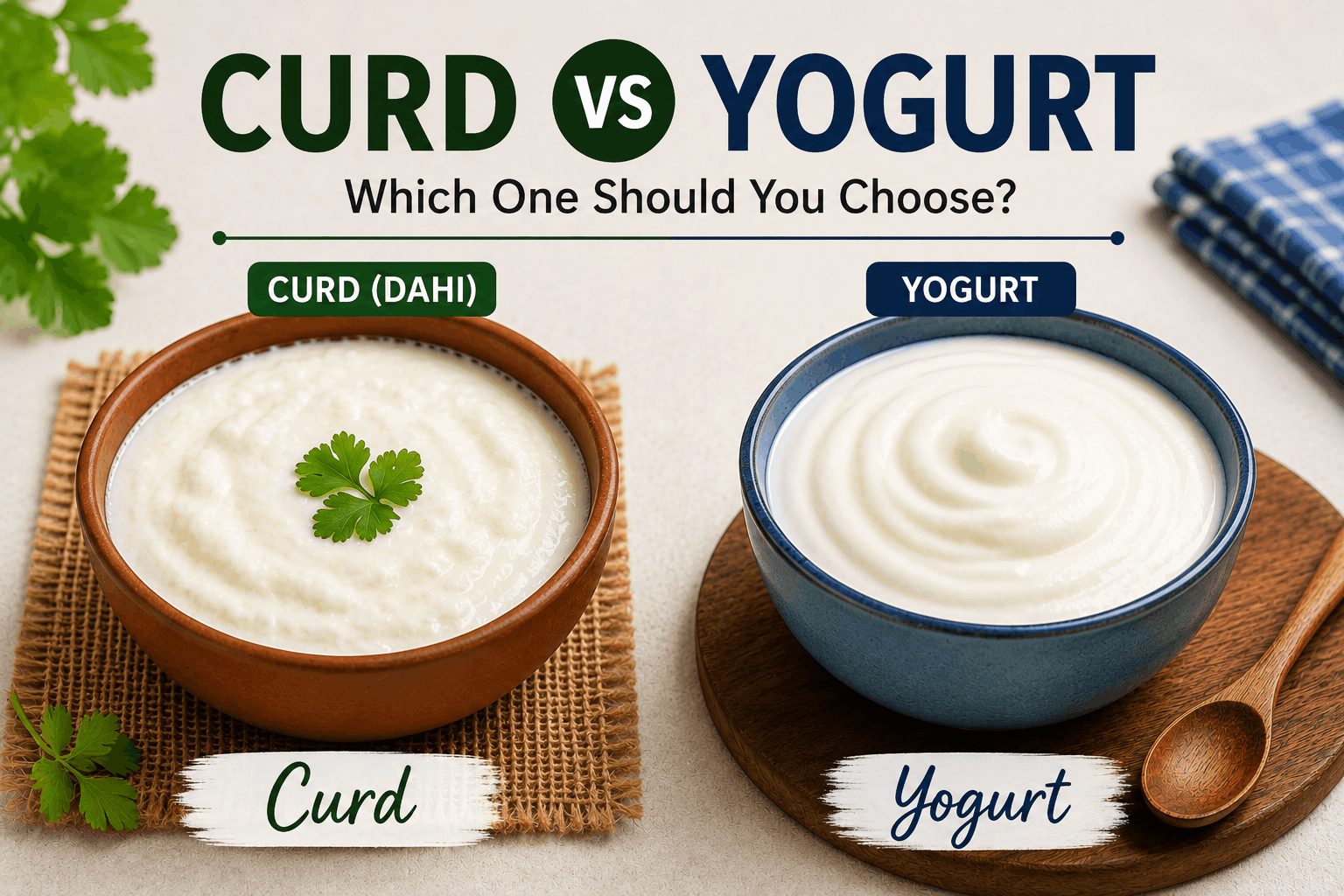

Walk into a supermarket and you may notice something interesting: a small tub of yogurt can cost much more than a packet of curd. But does the higher price mean yogurt is healthier than everyday dahi (curd)?
The truth is, curd and yogurt have a lot in common. Both are fermented dairy foods that provide protein, calcium, and other nutrients. However, they can differ in the cultures used, taste, texture, protein content, sugar, and how they are made.
So, curd vs yogurt—which one is better for you? Let’s look at the simple differences and find out which one suits your everyday diet.
Both can easily fit into a balanced food routine.
Curd vs Yogurt at a Glance
| Feature | Curd (Dahi) | Yogurt |
|---|---|---|
| Made with | Milk fermented with a curd starter | Milk fermented with specific starter cultures |
| Cultures | Can vary depending on the starter and preparation | Standard yogurt uses specific cultures |
| Texture | Usually soft and creamy, but can vary | Usually more consistent |
| Taste | Mild to moderately sour | Usually tangy and consistent |
| Protein | Varies by milk and preparation | Varies; Greek yogurt is usually higher |
| Sugar | Plain curd contains naturally occurring milk sugar | Plain yogurt contains naturally occurring milk sugar |
| Cost | Usually cheaper, especially homemade | Often more expensive |
| Best for | Everyday meals, raita, chaas and cooking | Breakfast, snacks and higher-protein options |
Nutrition varies by brand, milk type, recipe, and preparation method.
What Is Curd or Dahi?
Curd, or dahi, is made by adding a little curd to warm milk and leaving it to ferment. Homemade dahi can taste and feel different depending on the starter, temperature, and fermentation time. It is a simple everyday food that goes well with rice, roti, paratha, pulao, raita, and chaas.
What Is Yogurt?
Yogurt is made by fermenting milk with specific live cultures, mainly Streptococcus thermophilus and Lactobacillus bulgaricus. Because the process is carefully controlled, packaged yogurt usually has a smooth texture and consistent taste. Greek yogurt is thicker and usually contains more protein because much of the liquid whey is removed.
Curd vs Yogurt: What Is the Real Difference?
1. The Bacterial Cultures Are Different
One key difference is the type of bacteria used. Yogurt is made with specific cultures, while homemade dahi can contain a mix of bacteria from the starter and fermentation process. This doesn’t mean dahi is automatically healthier. Both can be good choices when they are fresh and contain live cultures.
For more practical tips on supporting your digestive health, see How to Improve Gut Health Naturally.
2. Protein Content
Curd and regular yogurt usually have similar amounts of protein, although it can vary depending on the milk and how they are made. Greek yogurt usually has more protein because it is thicker and more concentrated. If you’re looking for more protein, check the nutrition label rather than choosing based only on the name.
3. Are Curd and Yogurt Probiotics?
Both curd and yogurt can contain live bacteria, but not every fermented food is automatically a probiotic. Fresh dahi and yogurt with live cultures can be good choices, but the type and amount of bacteria can vary. If you specifically want live cultures, check the product label.
4. Lactose Content
Fermentation breaks down some of the lactose in milk, so curd and yogurt may be easier to digest than milk for some people. However, everyone’s tolerance is different. If you are lactose intolerant, start with a small amount and see how your body feels.
5. Sugar Content
Plain curd and plain yogurt contain naturally occurring milk sugar. The bigger concern is added sugar in flavoured yogurt. If you’re choosing yogurt regularly, check the label and choose plain or unsweetened options when possible.
6. Cost
Homemade dahi is usually much cheaper than packaged yogurt because you mainly need milk and a little starter curd. Yogurt, especially Greek yogurt, can cost more because of processing, packaging, and convenience. If you’re on a budget, homemade dahi is an easy and affordable option.
Which Is Healthier: Curd or Yogurt?
For most people, there isn’t a single winner.
Fresh homemade curd is an excellent everyday choice because it is affordable, versatile, and easy to prepare. It works particularly well with traditional Indian meals and can be used to make raita, chaas, marinades, and simple snacks.
Plain yogurt can be a convenient choice when you want a consistent product that is easy to carry or store.
Greek yogurt can be useful when protein is your priority because it is generally more concentrated than regular yogurt.
The important thing is not whether the container says “curd” or “yogurt.” Look at the ingredients, nutrition information, added sugar, portion size, and your overall diet.
For summer meals, you can also read our guide to Best Curds for Summer.
Health Benefits of Curd and Yogurt
Curd and yogurt are nutritious foods that can easily be part of a balanced diet.
-
- Protein: Helps support muscles and keeps you satisfied.
- Calcium: Helps maintain strong bones and teeth.
- Easier digestion: Fermentation reduces some lactose, so some people find curd and yogurt easier to digest than milk.
- Live cultures: Fresh curd and yogurt may contain live microorganisms.
- Easy to enjoy: Add them to meals, raita, chaas, smoothies, or marinades.
How to Set Perfect Curd at Home
Making fresh, thick dahi at home is simple. Just follow these easy steps:
1. Boil the Milk: Boil the milk and let it cool until it is warm, not hot.
2. Add the Starter: Add about 1 teaspoon of fresh curd per cup of milk and mix gently.
3. Let It Set: Cover the container and keep it in a warm place for about 6–8 hours. Don’t move it while it is setting.
4. Refrigerate: Once the curd is set, put it in the refrigerator. This helps keep it fresh and prevents it from becoming too sour.
Simple Troubleshooting
Curd is watery: The milk, starter, temperature, or fermentation time may need adjustment.
Curd did not set: The milk may have been too cool, or the starter may not have been active enough.
Curd is too sour: It may have fermented for too long or at a warmer temperature.
Want thicker curd? Full-fat milk and a suitable container can help, but the starter and fermentation temperature are also important.
When Is the Best Time to Eat Curd?
Curd can be enjoyed at any time of the day. It goes well with lunch, makes a refreshing afternoon snack, and can be enjoyed as raita or chaas. Some people prefer not to eat it at night because it may feel heavy or due to traditional Ayurvedic practices. The best time is simply when it feels comfortable and suits your daily routine.
For another popular Indian dairy drink, see our guide to Buttermilk vs Lassi.
Curd vs Yogurt: Which One Should You Choose?
It depends on what you need.
Homemade curd is affordable and perfect for everyday Indian meals, raita, and chaas.
Plain yogurt is a convenient choice when you want a consistent taste and texture.
Greek yogurt is a good option if you want more protein and a thicker texture.
Whichever you choose, plain or unsweetened options are generally a better everyday choice than heavily sweetened ones.
FAQs
1. Is curd the same as yogurt?
Not exactly. Both are fermented milk products, but they can be made with different cultures and methods.
2. Which has more protein, curd or yogurt?
Regular curd and yogurt are usually similar, while Greek yogurt generally contains more protein.
3. Is homemade curd healthy?
Yes. Fresh homemade curd can provide protein, calcium, and live cultures as part of a balanced diet.
4. Can lactose-intolerant people eat curd?
Some people tolerate curd better than milk because fermentation reduces some lactose. Tolerance varies from person to person.
5. Is Greek yogurt better than curd?
Not necessarily. Greek yogurt is higher in protein, while homemade curd is affordable, versatile, and easy to include in everyday meals.
Conclusion
When it comes to curd vs yogurt, there is no need to choose a winner for everyone.
Fresh homemade dahi is affordable and easy to enjoy with everyday Indian meals, while plain yogurt offers convenience and a consistent taste. If you want more protein, Greek yogurt can be a good option. Whatever you choose, check the protein, added sugar, ingredients, live cultures, and price. For many people, simple homemade dahi is still a healthy and practical everyday choice.
Disclaimer: This article is for general informational purposes only and is not a substitute for professional medical advice. People with a milk allergy, significant lactose intolerance, or a diagnosed digestive condition should speak with a qualified healthcare professional about their individual diet.
Disclaimer: This article is for informational purposes only and is not intended as medical advice. Consult a healthcare professional for personalized guidance.