

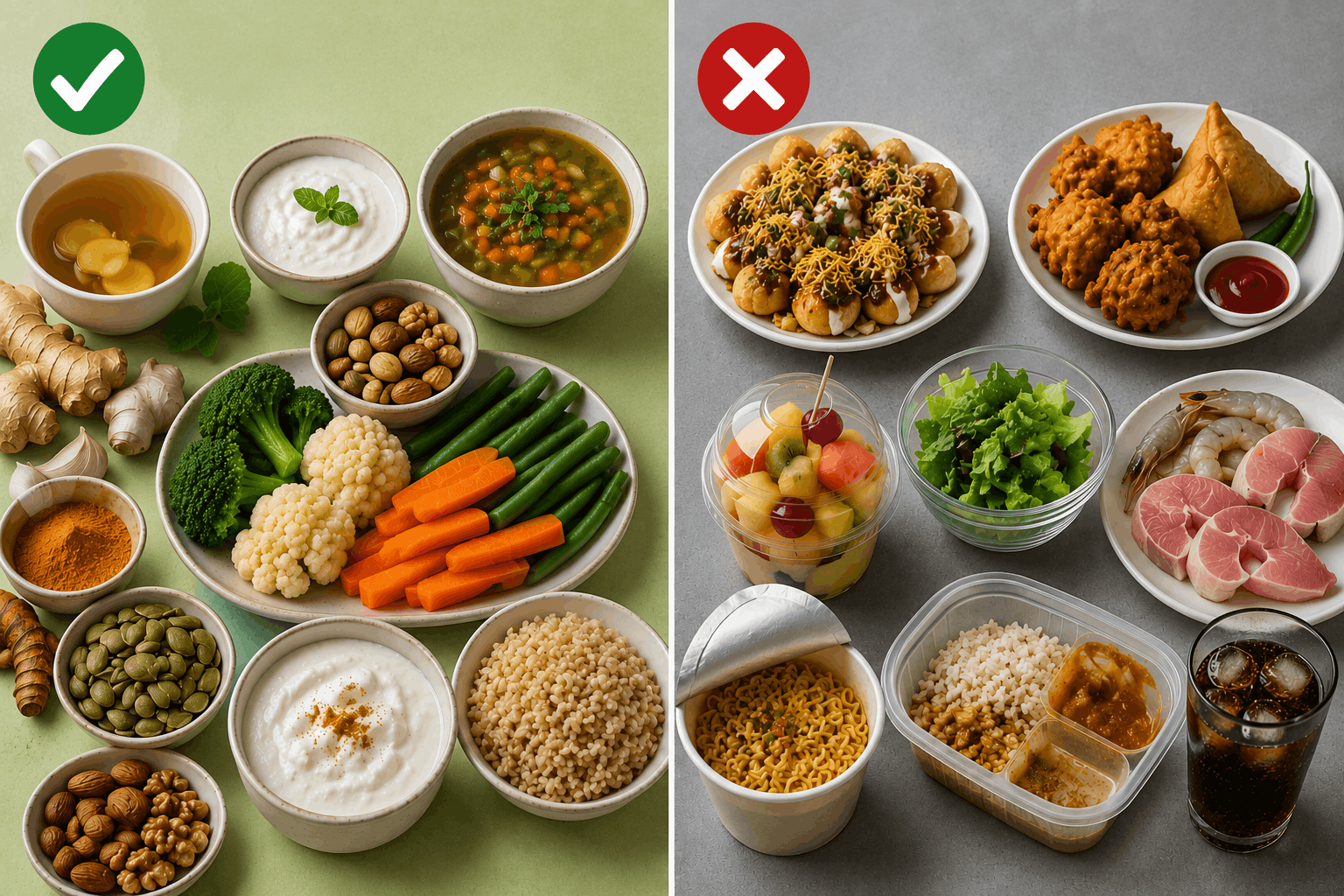

The rainy season brings cooler weather and a welcome break from the summer heat, but it also comes with a higher risk of seasonal infections, stomach problems, and food contamination. That’s why following a healthy monsoon diet is important during this time. Choosing fresh, home-cooked, and nutritious foods while avoiding unhygienic or easily spoiled items can help you enjoy the season more safely. In this article, you’ll discover 15 foods to eat and avoid during the rainy season, along with simple diet tips to help you make smarter food choices throughout the monsoon.
Why Is a Healthy Monsoon Diet Important?
Did you know your food choices matter even more during the rainy season? The extra humidity can cause some foods to spoil faster, increasing the risk of foodborne illness if they’re not handled properly. Following a healthy monsoon diet by choosing fresh, home-cooked meals and avoiding stale or unhygienic food is a simple way to enjoy the season while making healthier food choices.
8 Best Foods to Eat During Monsoon
1. Ginger
Ginger is one of the best foods to include in your monsoon diet. Its natural compounds, including gingerol, give it its distinctive flavor and make it a popular ingredient during the rainy season. A cup of warm ginger tea or adding fresh ginger to your meals can make rainy days more comforting while adding natural flavor to your diet.
How to consume: Add fresh ginger to tea, soups, dals, curries, or warm water.
2. Turmeric (Haldi)
Turmeric is a staple spice in Indian kitchens and an important part of a healthy monsoon diet. It contains curcumin, a natural plant compound with antioxidant properties. Besides adding a rich color and earthy flavor to dishes, turmeric is an easy way to make everyday meals more nutritious.
How to consume: Add turmeric to curries, dals, vegetables, soups, or warm milk. Pair it with a pinch of black pepper to help improve curcumin absorption.
3. Garlic
Garlic is another kitchen staple that’s perfect during the rainy season. It contains natural sulfur compounds that contribute to its unique flavor and aroma. Garlic pairs well with soups, dals, curries, and stir-fried vegetables, making home-cooked meals both delicious and satisfying.
How to consume: Use fresh garlic in curries, soups, stir-fries, or roasted vegetables.
4. Seasonal Fruits
Fresh seasonal fruits such as jamun, pears, plums, apples, and pomegranates provide vitamins, minerals, fiber, and antioxidants that support a balanced diet. Always wash fruits thoroughly before eating them and choose fresh, undamaged produce whenever possible.
How to consume: Enjoy whole seasonal fruits as a healthy snack or with breakfast.
5. Steamed Vegetables
Steamed vegetables are light, nutritious, and easy to digest. Cooking vegetables thoroughly can also help reduce the risk of foodborne illness by lowering the chance of consuming harmful microorganisms that may be present on raw produce.
How to consume: Steam or lightly cook vegetables and season them with herbs and spices.
6. Soups
Warm homemade soups are comforting during cool, rainy weather. They are an easy way to include vegetables, legumes, or lean protein in your meals while helping you stay hydrated. Freshly prepared soups are generally a healthier choice than highly processed instant soups.
How to consume: Prepare fresh vegetable, tomato, lentil, or chicken soup at home.
7. Curd (Yogurt)
Fresh curd is a nutritious food that provides protein, calcium, and beneficial bacteria. Many people enjoy curd throughout the year, including during the monsoon. If you prefer, have it at room temperature instead of very cold, depending on your comfort and tolerance.
How to consume: Eat plain curd with lunch or dinner, or prepare homemade raita.
8. Nuts and Seeds
A handful of almonds, walnuts, pumpkin seeds, or flaxseeds makes a healthy addition to your monsoon diet. These foods provide healthy fats, protein, fiber, vitamins, and minerals that complement a balanced eating pattern.
How to consume: Enjoy them as a snack or sprinkle them over yogurt, oatmeal, or salads.
7 Foods to Avoid During the Rainy Season
1. Street Food
Street food is tempting during the rainy season, but food prepared or stored in unhygienic conditions may have a higher risk of contamination. Choosing freshly cooked food from clean, trusted places is generally a safer option.
Why avoid: It may increase the risk of foodborne illness if hygiene standards are poor.
2. Raw Leafy Vegetables
Leafy vegetables are nutritious, but during the rainy season they may be harder to clean thoroughly because of mud, insects, and moisture. Cooking them properly can reduce food safety risks.
Why avoid: They may carry dirt or microorganisms if not washed and cooked properly.
3. Cut Fruits from Street Vendors
Pre-cut fruits exposed to dust, flies, or warm temperatures may spoil more quickly. It’s usually safer to buy whole fruits and cut them fresh at home.
Why avoid: Freshly cut fruits are more likely to become contaminated if left uncovered.
4. Deep-Fried Foods
Pakoras, samosas, and other fried snacks are popular during monsoon, but eating them too often can add excess calories, saturated fat, and sodium to your diet.
Why avoid: Frequent consumption may not support a balanced diet.
5. Raw Seafood
Raw or undercooked seafood may carry harmful microorganisms if not handled or cooked properly. During the rainy season, it’s best to ensure seafood is fresh and thoroughly cooked.
Why avoid: Proper cooking helps reduce the risk of foodborne illness.
6. Stale Leftovers
Food stored for long periods or left at room temperature can spoil more quickly in humid weather. Freshly prepared meals are generally the safest choice.
Why avoid: Improperly stored leftovers can increase food safety risks.
7. Sugary Soft Drinks
Soft drinks and other sugar-sweetened beverages provide plenty of sugar but very little nutritional value. Water, fresh homemade juices, and soups are healthier options for staying hydrated.
Why avoid: They can increase added sugar intake without providing important nutrients.
Healthy Monsoon Diet Tips
Want to stay healthy during the rainy season? According to health experts, eating fresh, home-cooked meals and following a healthy monsoon diet can help you make safer and healthier food choices. Here are some easy tips to follow.
- Eat freshly cooked meals whenever possible.
- Wash fruits and vegetables thoroughly before eating.
- Drink clean, safe, or boiled water.
- Store leftovers properly and reheat them thoroughly before eating.
- Limit oily, fried, and highly processed foods.
- Choose seasonal fruits and cooked vegetables.
- Maintain good kitchen hygiene while preparing meals.
- Stay hydrated by drinking enough water and healthy homemade drinks.
Conclusion
A healthy monsoon diet is all about making smart food choices during the rainy season. Eating fresh, home-cooked meals, staying hydrated, and avoiding unhygienic or stale food can help you enjoy the season with confidence. Small changes to your daily diet can go a long way toward supporting your overall health and well-being.
FAQs
1. What is the best monsoon diet?
A healthy monsoon diet includes fresh, home-cooked meals, seasonal fruits, cooked vegetables, whole grains, legumes, and plenty of safe drinking water.
2. Which foods should I avoid during the rainy season?
It’s best to avoid stale food, unhygienically prepared street food, cut fruits from vendors, raw seafood, and sugary drinks.
3. Can I eat fruits during monsoon?
Yes. Fresh seasonal fruits can be part of a healthy diet. Wash them thoroughly and eat freshly cut fruits prepared at home.
4. Why is food safety important during monsoon?
The humid weather can cause some foods to spoil more quickly if they aren’t stored or handled properly, so good food hygiene is especially important.
5. How can I stay healthy during the rainy season?
Eat a balanced monsoon diet, stay hydrated, choose freshly prepared foods, maintain good hygiene, and stay physically active.
Disclaimer: This article is for informational purposes only and is not intended as medical advice. Consult a healthcare professional for personalized guidance.