
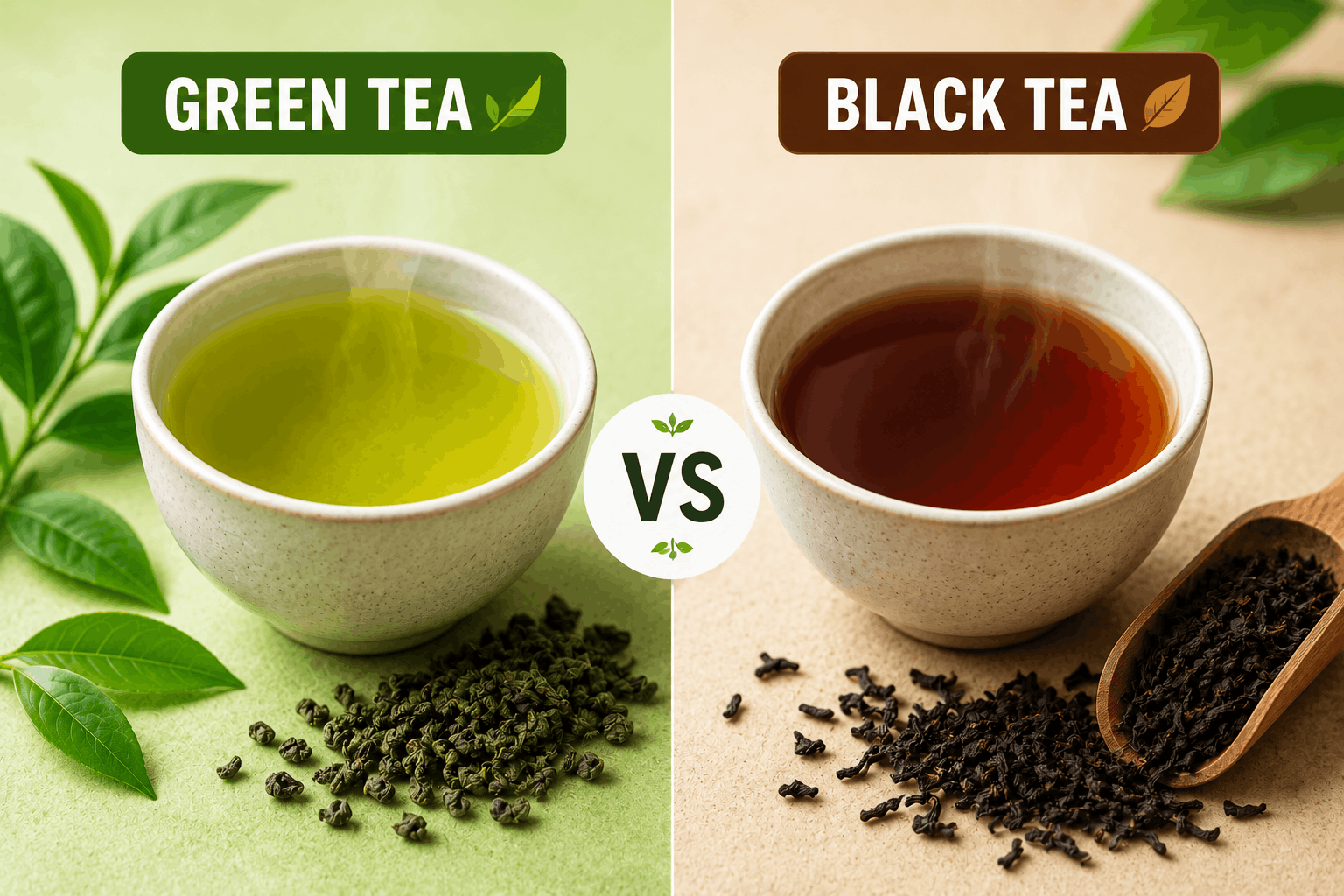

Green tea is often called the healthier tea, but is it really better than black tea? This popular green tea vs black tea debate comes down to more than just taste.
Both come from the same plant, Camellia sinensis. The main difference is how the leaves are processed. Green tea is heated soon after picking, while black tea is allowed to oxidize longer, giving it a darker colour and stronger flavour.
This also affects their taste, caffeine and natural plant compounds.
So, which is better: green tea or black tea? There is no clear winner. Green tea is a good choice if you prefer a lighter drink and less caffeine, while black tea suits those who enjoy a stronger cup or traditional Indian chai.
Green Tea vs Black Tea: Quick Comparison
| Feature | Green Tea | Black Tea |
|---|---|---|
| Processing | Less oxidized | Fully oxidized |
| Taste | Light and slightly grassy | Strong and rich |
| Caffeine | Usually lower | Usually higher |
| Main compounds | Catechins, including EGCG | Theaflavins and thearubigins |
| Milk | Usually without milk | Often taken with milk |
| Best time | Morning or afternoon | Morning or early afternoon |
The exact caffeine content depends on the type of tea, amount used and brewing method.
What Is the Difference Between Green Tea and Black Tea?
The main difference is how the tea leaves are processed.
Green tea is heated soon after picking to slow oxidation, while black tea is allowed to oxidize longer. This gives black tea its darker colour and stronger flavour.
The process also changes their natural plant compounds.
Same plant, different processing, different tea. Both can be healthy choices.
Green Tea Benefits
Green tea is loved for its light taste and natural plant compounds, especially catechins like EGCG. It can be a healthy addition to your daily routine when enjoyed without too much sugar.
Looking for healthy drinks to start your day? Check out our guide to 7 Morning Drinks for Glowing Skin in Summer.
1. Rich in Antioxidants
Green tea contains catechins with antioxidant properties. These compounds are widely studied for their possible health benefits.
2. May Support Weight Management
Green tea may have a small effect on metabolism because of its caffeine and catechins. But it does not directly burn belly fat or cause weight loss on its own.
Drinking unsweetened green tea instead of sugary drinks can be a simple way to reduce extra calories.
3. Provides a Gentle Energy Boost
Green tea generally contains less caffeine than black tea. It also provides L-theanine, which may contribute to a calm and focused feeling.
Want to add more healthy drinks to your routine? Read our guide to 10 Morning Drinks for Energy Without Caffeine.
4. May Support Heart Health
Regular tea consumption has been linked with some heart-health benefits. However, green tea is not a treatment for heart disease, high blood pressure or high cholesterol.
5. May Support Oral Health
Green tea contains natural compounds with antimicrobial properties that may support oral health. For better results, avoid adding too much sugar to your tea.
Black Tea Benefits
Black tea is fully oxidized, which gives it a stronger taste and darker colour.
It contains natural plant compounds, particularly theaflavins and thearubigins.
1. Usually More Caffeine
Black tea generally contains more caffeine than green tea, making it a popular morning drink for a stronger boost of alertness.
However, caffeine levels vary depending on the tea and brewing method. If caffeine affects your sleep, avoid strong black tea later in the day.
2. Contains Antioxidant Compounds
Black tea contains theaflavins and thearubigins, which have antioxidant properties and are being studied for their possible health benefits.
So, black tea is not simply the “less healthy” option. It is simply different from green tea.
3. May Support Heart Health
Regular tea consumption has been linked with some heart-health benefits. Black tea’s natural plant compounds may be one reason it is being studied for cardiovascular health.
4. Can Fit Into a Healthy Diet
Black tea can be part of a healthy diet, especially when you keep added sugar low.
For regular tea drinkers, the amount of sugar added to each cup may matter more than choosing green tea over black tea.
Looking for another healthy drink option? Learn about the Benefits of Drinking Hot Water
5. Works Well With Milk and Spices
Black tea is the traditional base for Indian chai. It pairs well with milk, ginger, cardamom, cinnamon and other spices.
For many people, chai is more than a drink—it is part of their daily routine.
Is Indian Chai Healthy?
Yes, chai can be part of a healthy diet. The main thing to watch is the amount of added sugar.
If you drink several cups of very sweet chai every day, the extra sugar and calories can quickly add up.
You don’t have to give up chai. Try reducing the sugar gradually so your taste buds can adjust.
You can also replace one cup with unsweetened green tea when you want a lighter option.
If you want to reduce your tea or coffee habit, read How to Quit Tea or Coffee Without a Headache.
Green Tea vs Black Tea for Weight Loss
If you’re trying to lose weight, you may have heard that green tea can help with weight loss. It may have a small effect on metabolism, but it won’t cause weight loss on its own.
Black tea can also fit into a healthy weight-loss diet, especially when you drink it with little or no sugar.
The bigger difference is often what you add to your tea. Replacing sugary drinks with unsweetened green or black tea can be a simple way to cut extra calories.
So, enjoy your tea—but don’t depend on it to burn fat.
Green Tea vs Black Tea for Caffeine
If you want more caffeine, black tea is generally the stronger choice.
Choose green tea for a lighter caffeine boost, especially in the afternoon.
Choose black tea if you prefer a stronger morning drink.
Keep in mind that caffeine levels vary by tea type and brewing method. If caffeine affects your sleep, avoid tea close to bedtime.
Which Has More Antioxidants?
Green tea and black tea both contain beneficial plant compounds, but they are different.
Green tea is rich in catechins such as EGCG, while black tea contains theaflavins and thearubigins.
So, there is no clear winner. Both can be a healthy choice, depending on your taste and daily routine.
Does Tea Affect Iron Absorption?
Yes. Green and black tea can reduce the absorption of non-heme iron, the type mainly found in plant foods.
If you have low iron, avoid drinking tea with your meals. Instead, enjoy your tea between meals.
For more ideas, check out Iron Rich Foods for Vegetarians.
If you have iron deficiency, follow your doctor’s advice.
Can You Drink Tea on an Empty Stomach?
Some people can drink tea on an empty stomach without any problem, while others may experience acidity, nausea or stomach discomfort. If tea doesn’t suit you before eating, have it after breakfast or later in the morning.
You don’t need to drink green tea on an empty stomach to enjoy its benefits.
Green Tea or Black Tea: Which Should You Choose?
It really comes down to what you enjoy and when you like to drink tea.
Choose green tea if you prefer a lighter taste and a gentler caffeine boost, especially in the afternoon.
Choose black tea if you enjoy a stronger flavour, more caffeine, or a comforting cup of milk tea or chai.
Why choose just one? You can enjoy black tea or chai in the morning and switch to green tea in the afternoon.
Conclusion
There is no clear winner. Green tea is lighter and usually lower in caffeine, while black tea is stronger and generally has more caffeine.
Both can be healthy choices. If you love chai, simply cut back on sugar and enjoy it in moderation.
Choose the tea you enjoy and that fits your daily routine.
FAQs
1. Is green tea healthier than black tea?
Neither is clearly healthier for everyone. Green tea is rich in catechins such as EGCG, while black tea contains theaflavins and thearubigins. Both can be part of a healthy diet.
2. Which is better for weight loss, green tea or black tea?
Green tea has been studied for small effects on metabolism, but neither tea causes significant weight loss by itself. Unsweetened tea can be a better choice than sugary drinks.
3. Which has more caffeine, green tea or black tea?
Black tea generally contains more caffeine than green tea, although the exact amount depends on the type of tea, serving size and brewing method.
4. Can I drink green tea and black tea on the same day?
Yes. You can enjoy both. For example, you can have black tea or chai in the morning and green tea in the afternoon. Just keep your total caffeine intake in mind.
5. Can tea affect iron absorption?
Yes. Both green and black tea can reduce the absorption of non-heme iron, which is mainly found in plant foods. If you have low iron, avoid drinking tea directly with iron-rich meals.
Disclaimer: This article is for general informational purposes and is not a substitute for professional medical advice. If you have iron deficiency, significant acidity or reflux, caffeine sensitivity or another medical condition, speak with a qualified healthcare professional about your tea intake.
Disclaimer: This article is for informational purposes only and is not intended as medical advice. Consult a healthcare professional for personalized guidance.