
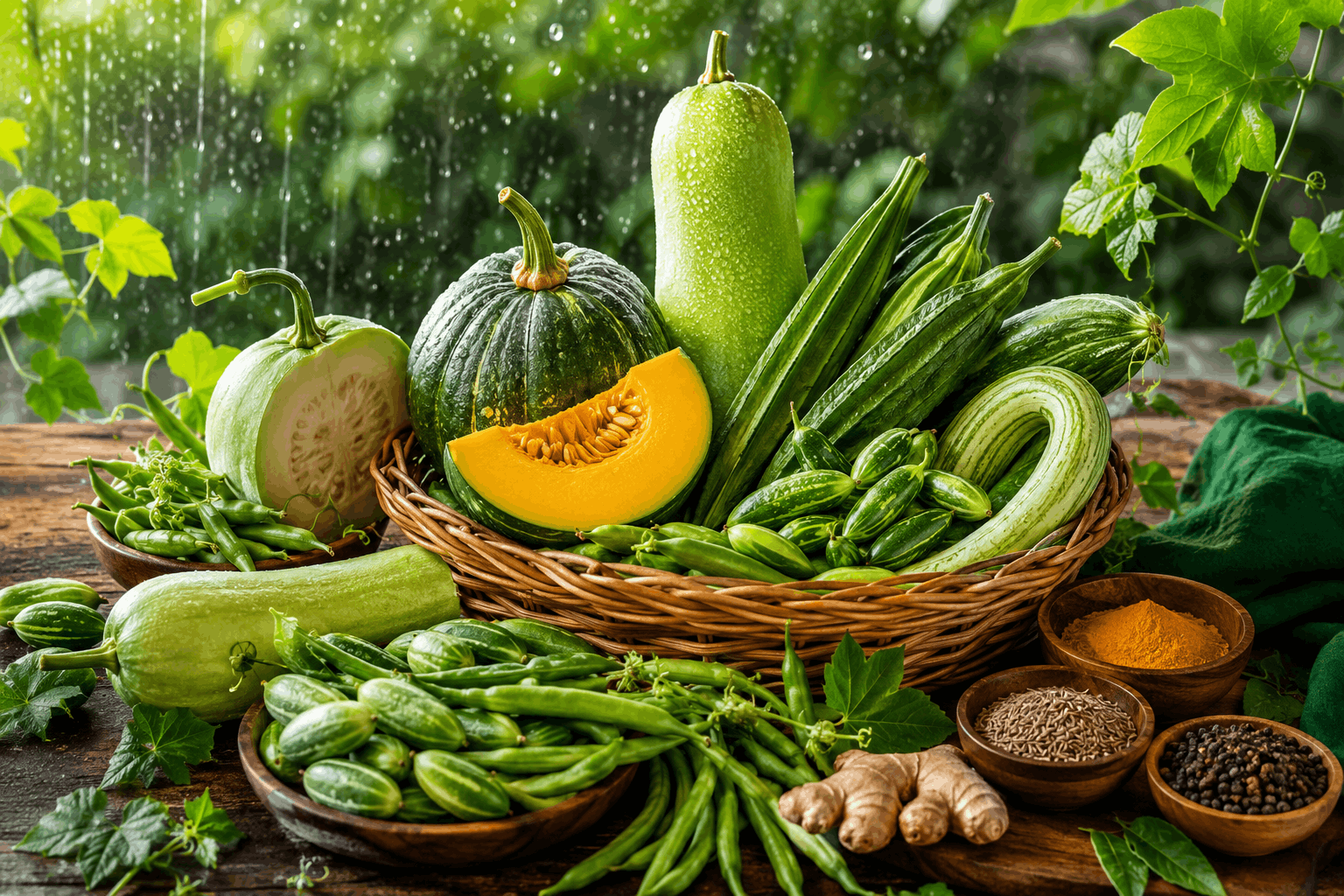

The rainy season is the perfect time to enjoy fresh monsoon vegetables that are naturally available during this time of year. According to Ayurveda, eating seasonal vegetables can help support digestion and overall well-being when the weather changes. Monsoon season brings pleasant weather, but it also increases the risk of digestive problems, infections, and seasonal illnesses. According to Ayurveda, our digestive fire, known as Agni, becomes weaker during the monsoon due to increased humidity and changes in the environment. This makes it important to choose foods that are light, freshly cooked, and easy to digest.
Including the right monsoon vegetables in your daily meals can help strengthen digestion, support immunity, and provide essential vitamins and minerals. Ayurveda recommends eating seasonal vegetables because they naturally suit the body’s needs during each season.
Why Ayurveda Recommends Seasonal Vegetables During Monsoon
Ayurveda believes that every season affects the body’s balance of Vata, Pitta, and Kapha doshas. During the monsoon, digestion tends to become sluggish, making heavy, oily, and stale foods harder to process. Fresh seasonal vegetables are generally easier to digest and provide nutrients that support the body’s natural adaptation to the rainy season. Cooking vegetables with spices such as ginger, cumin, turmeric, black pepper, and hing (asafoetida) may also aid digestion and enhance flavor.
7 best monsoon vegetables according to Ayurveda
1. Bottle Gourd (Lauki)
Bottle Gourd (Lauki) is a light and refreshing monsoon vegetable that is widely recommended in Ayurveda for its easy digestibility and hydrating properties. It is commonly used in soups, curries, and dals during the rainy season.
Food Value: It is rich in dietary fibre, vitamin C, potassium, and water content, making it a nutritious choice for digestion and hydration.
Quick Indian Recipe: Heat a little oil, add cumin seeds, ginger, and chopped bottle gourd. Cook with turmeric, coriander powder, and salt until soft. Garnish with fresh coriander and serve with chapati or rice.
2. Ridge Gourd (Turai)
Ridge Gourd (Turai) is a soft, low-calorie vegetable that is easy to digest and suitable for the monsoon season. Ayurveda values it for supporting healthy digestion and overall wellness.
Food Value: It provides dietary fibre, vitamin C, iron, and antioxidants while being naturally low in calories.
Quick Indian Recipe: Sauté cumin seeds, onions, and tomatoes with turmeric and coriander powder. Add chopped ridge gourd and cook until tender. Serve hot with roti.
3. Pumpkin (Kaddu)
Pumpkin (Kaddu) is a naturally sweet and nutritious vegetable that is commonly enjoyed during the rainy season. Ayurveda considers it nourishing and beneficial for maintaining overall health.
Food Value: It is rich in beta-carotene, vitamin A, vitamin C, fibre, and potassium, which support eye health and immunity.
Quick Indian Recipe: Temper cumin seeds, add pumpkin cubes, turmeric, coriander powder, and a pinch of jaggery. Cook until soft and finish with fresh coriander leaves.
4. Ash Gourd (Petha)
Ash Gourd (Petha) is a mild-flavoured vegetable known for its cooling and hydrating properties. When cooked with digestive spices, it becomes a healthy addition to a balanced monsoon diet.
Food Value: It contains dietary fibre, vitamin C, calcium, and plenty of water while remaining low in calories.
Quick Indian Recipe: Cook ash gourd cubes with ginger, cumin, turmeric, and tomatoes until tender. Garnish with coriander and serve warm with steamed rice.
5. Snake Gourd (Chichinda)
Snake Gourd (Chichinda) is a long, slender vegetable that is popular during the rainy season. Ayurveda recommends it as a light and fibre-rich vegetable that supports healthy digestion.
Food Value: It is a good source of dietary fibre, vitamin C, antioxidants, and essential minerals.
Quick Indian Recipe: Stir-fry chopped snake gourd with mustard seeds, curry leaves, onions, turmeric, and grated coconut. Serve with chapati or rice.
6. Cluster Beans (Guar)
Cluster Beans (Guar) are nutritious green pods that provide a good amount of fibre and plant-based nutrients. When cooked well, they make a wholesome monsoon vegetable.
Food Value: They are rich in dietary fibre, protein, iron, calcium, and folate, making them a healthy choice for balanced meals.
Quick Indian Recipe: Sauté cumin, onions, and garlic, then add chopped cluster beans with turmeric and coriander powder. Cook until tender and serve with roti.
7. Ivy Gourd (Tindora)
Ivy Gourd (Tindora) is a crunchy green vegetable widely eaten during the monsoon. It is valued for its nutritional benefits and versatility in Indian cooking.
Food Value: It contains dietary fibre, vitamins A and C, antioxidants, and small amounts of calcium and iron.
Quick Indian Recipe: Heat oil, add mustard seeds and curry leaves, then stir-fry sliced ivy gourd with turmeric, chilli powder, and salt until lightly crisp. Serve hot with dal and rice.
🥒 Don’t Miss: Best Summer Vegetables According to Ayurveda
Expert Tips for Eating Monsoon Vegetables
Follow these Ayurvedic-inspired tips to get the most benefit from your meals:
- Choose fresh, seasonal vegetables whenever possible.
- Wash vegetables thoroughly before cooking.
- Eat warm, freshly cooked food instead of refrigerated leftovers.
- Use digestive spices such as ginger, turmeric, cumin, black pepper, coriander, and hing.
- Prefer steaming, boiling, or light sautéing instead of deep frying.
- Drink warm water with meals rather than ice-cold drinks.
- Avoid overeating, as digestion may be weaker during the rainy season.
Common Mistakes to Avoid During Monsoon
Many people unknowingly make food choices that can affect digestion during the rainy season. Avoid these common mistakes:
- Eating stale or reheated vegetables frequently.
- Consuming excessive fried or oily foods.
- Eating unwashed vegetables.
- Relying heavily on raw salads during periods of heavy rainfall.
- Drinking very cold beverages with meals.
- Eating large portions late at night.
- Ignoring seasonal eating habits.
Nutritional Value of Monsoon Vegetables (Approximate per 100g)
| Vegetable | Calories | Fiber | yle=”width: 11.4075%;” align=”right”>Vitamin C | Vitamin A | Potassium |
|---|---|---|---|---|---|
| Bottle Gourd | 15 kcal | 1.2 g | 10 mg | Low | 150 mg |
| Ridge Gourd | 20 kcal | 1.1 g | 12 mg | Low | 140 mg |
| Pumpkin | 26 kcal | 0.5 g | 9 mg | High | 340 mg |
| Ash Gourd | 13 kcal | 0.6 g | 13 mg | Low | 230 mg |
| Snake Gourd | 18 kcal | 2.0 g | 18 mg | Moderate | 170 mg |
| Cluster Beans | 16 kcal | 3.2 g | 49 mg | Moderate | 190 mg |
| Ivy Gourd | 18 kcal | 1.6 g | 24 mg | Moderate | 150 mg |
Note: Nutritional values are approximate and may vary depending on variety and preparation method.
FAQs
1. Which vegetables are best during the monsoon according to Ayurveda?
Bottle gourd, ridge gourd, pumpkin, ash gourd, snake gourd, cluster beans, and ivy gourd are commonly recommended because they are generally easier to digest when cooked properly.
2. Why does Ayurveda recommend cooked vegetables during the rainy season?
Ayurveda suggests that digestion tends to become weaker during the monsoon. Warm, freshly cooked meals are generally easier to digest than raw foods.
3. Which spices are useful during the monsoon?
Common digestive spices include ginger, cumin, turmeric, coriander, black pepper, and hing (asafoetida).
4. Can these vegetables help improve immunity?
These vegetables provide vitamins, minerals, antioxidants, and fiber that support overall health. A balanced diet, along with healthy lifestyle habits, contributes to normal immune function.
5. Which cooking method is healthiest?
Steaming, boiling or light sautéing with minimal oil helps preserve nutrients while making vegetables easier to digest.
Conclusion
Eating fresh monsoon vegetables is a simple way to stay healthy during the rainy season. According to Ayurveda, seasonal vegetables like bottle gourd, pumpkin, ridge gourd, and ivy gourd are easier to digest when cooked fresh with mild spices. Include them in your daily meals along with a balanced diet and healthy lifestyle to enjoy a healthier and more comfortable monsoon.
Disclaimer: This article is for informational purposes only and is not intended as medical advice. Consult a healthcare professional for personalized guidance.