

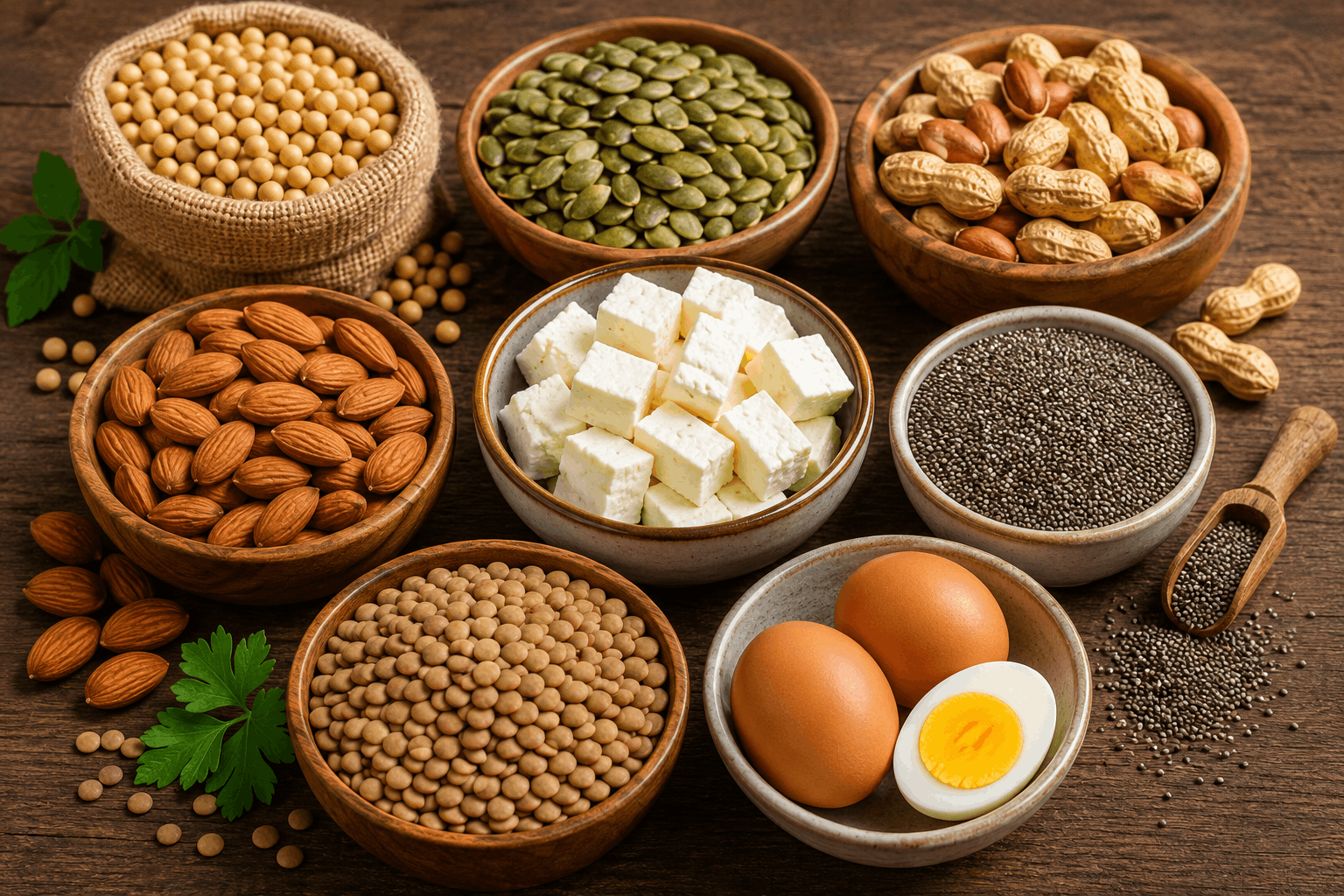

Eggs are often the first food that comes to mind when we think about protein. They’re healthy, affordable, and easy to add to everyday meals. But did you know there are several superfoods with more protein than eggs? If you’re looking to build muscle, stay full for longer, or simply eat a healthier diet, these protein-rich foods are worth adding to your plate.
According to the World Health Organization (WHO) and FAO/UNU, healthy adults generally need around 0.83 g of protein per kilogram of body weight per day, although individual needs may be higher depending on age, health, pregnancy, or physical activity.
Top 7 Superfoods With More Protein Than Eggs
In this article, you’ll discover the top 7 high protein superfoods with than eggs, compare their protein content per 100 g, and learn how each one can support muscle growth, weight management, and overall health.
1. Soybeans
Protein: About 36 g per 100 g (dry soybeans)
Soybeans are one of the richest plant-based protein sources, providing all nine essential amino acids. They’re also packed with fiber, iron, and calcium, making them a great choice for building muscle, supporting bone health, and staying healthy. Add tofu, soy milk, or boiled soybeans to your meals for an easy protein boost. They are also low in saturated fat and can be included in a balanced diet. Regularly eating soy-based foods may help you meet your daily protein needs.
2. Pumpkin Seeds
Protein: About 30 g per 100 g
Don’t let their small size fool you—pumpkin seeds are loaded with protein, healthy fats, magnesium, and zinc. They make a crunchy, nutritious snack that supports muscle recovery, heart health, and immunity. Sprinkle them over salads, yogurt, or oatmeal for extra nutrition. A small handful each day is an easy way to add more protein to your diet.
3. Peanuts
Protein: About 26 g per 100 g
Peanuts are an affordable and tasty way to boost your protein intake. They also provide healthy fats, fiber, and antioxidants, helping keep you full and energized throughout the day. Enjoy them as a snack or spread natural peanut butter on whole-grain bread. Choose unsalted peanuts whenever possible for a healthier option.
4. Almonds
Protein: About 21 g per 100 g
Almonds are rich in protein, fiber, and vitamin E, making them a healthy snack for any time of the day. They support heart health, help control hunger, and provide long-lasting energy. They’re easy to carry, making them perfect for busy days. Eating a handful of almonds can also help satisfy cravings between meals.
5. Paneer (Cottage Cheese)
Protein: About 18–20 g per 100 g
Paneer is a popular vegetarian protein that’s rich in calcium and easy to include in meals. It supports muscle growth, keeps you feeling full, and is a great option for a high-protein diet. You can add it to curries, salads, or grilled dishes for a healthy meal. Homemade paneer is often lower in preservatives and can be a nutritious choice.
6. Chia Seeds
Protein: About 17 g per 100 g
Chia seeds are packed with protein, fiber, omega-3 fats, and antioxidants. Sprinkle them over yogurt, smoothies, or oatmeal for an easy way to increase both protein and nutrition. They absorb water and form a gel, which may help you feel full for longer. Adding just a spoonful to your breakfast is a simple way to boost your nutrient intake.
7. Lentils
Protein: About 24–26 g per 100 g (dry)
Lentils are a staple in many households and an excellent source of plant-based protein. They’re also rich in fiber, iron, and folate, making them great for digestion, heart health, and maintaining steady energy levels. They can be used in soups, curries, salads, and stews, making them easy to include in everyday meals. Pairing lentils with whole grains can provide a balanced and satisfying meal.
Protein Comparison: Superfoods vs Eggs (Per 100 g)
| Food | Protein (per 100 g) |
|---|---|
| Soybeans (dry) | 36 g |
| Pumpkin Seeds | 30 g |
| Peanuts | 26 g |
| Lentils (dry) | 24–26 g |
| Almonds | 21 g |
| Paneer | 18–20 g |
| Chia Seeds | 17 g |
| Eggs | 13 g |
Note: Protein values are approximate and may vary depending on the variety, brand, and cooking method. Comparisons are based on protein per 100 g, which is the standard way to compare foods.
At a glance: Dry soybeans contain the highest amount of protein among the foods on this list, followed by pumpkin seeds, peanuts, lentils, almonds, paneer, and chia seeds. Eggs provide about 13 g of protein per 100 g, making them a nutritious option, though several of these foods contain more protein on an equal-weight basis.
How Do These Compare With Eggs?
A whole egg contains about 13 g of protein per 100 g (roughly 6–7 g per large egg). Compared on a 100-gram basis, dry soybeans, pumpkin seeds, peanuts, dry lentils, almonds, chia seeds, and paneer all contain more protein than eggs.
Which Superfood Is Best?
The best choice depends on your dietary needs.
- For vegetarians: Soybeans and paneer are excellent complete protein sources.
- For healthy snacking: Almonds and pumpkin seeds are convenient options.
- For weight management: Chia seeds and lentils are rich in protein and fiber, helping you stay full for longer.
- For muscle building: Soybeans, paneer, and peanuts are among the best choices.
A balanced diet that includes a variety of protein-rich foods is usually more beneficial than relying on just one source.
Conclusion
Eggs are an excellent source of protein, but they’re not the only option. Foods like soybeans, pumpkin seeds, peanuts, lentils, almonds, paneer, and chia seeds provide even high protein per 100 g while also offering fiber, healthy fats, vitamins, and minerals. The best protein source is the one that fits your lifestyle and nutritional needs. Eating a variety of protein-rich foods can help support muscle growth, overall health, and a balanced diet.
Including a mix of these protein-rich superfoods in your daily diet can help you meet your protein needs while providing a wide range of essential nutrients.
FAQs
1. Which food has the highest protein among these?
Dry soybeans contain the highest protein, with approximately 36 grams per 100 grams.
2. Is paneer healthier than eggs?
Both are nutritious choices. Paneer contains more protein per 100 g, while eggs provide high-quality complete protein along with important nutrients like vitamin B12 and choline. The healthier option depends on your dietary needs and overall eating pattern.
3. Can vegetarians get enough protein without eggs?
Yes. Foods like soybeans, paneer, lentils, dairy products, nuts, and seeds can provide adequate protein when eaten as part of a balanced diet.
4. Are pumpkin seeds good for muscle building?
Yes. Pumpkin seeds provide protein, magnesium, zinc, and healthy fats that support muscle recovery and overall health.
5. How much protein should an adult eat daily?
Protein needs vary depending on age, body weight, health, and activity level. According to the WHO/FAO/UNU, healthy adults generally need around 0.83 g of protein per kilogram of body weight per day. People who exercise regularly, are pregnant, or are recovering from illness may require more.
References
- World Health Organization (WHO) & FAO/UNU. Protein and Amino Acid Requirements in Human Nutrition.
2. U.S. Department of Agriculture (USDA) FoodData Central – Nutrient values for soybeans, pumpkin seeds, peanuts, almonds, chia seeds, paneer (or equivalent dairy data), lentils, and eggs.
Disclaimer: This article is for informational purposes only and is not intended as medical advice. Consult a healthcare professional for personalized guidance.